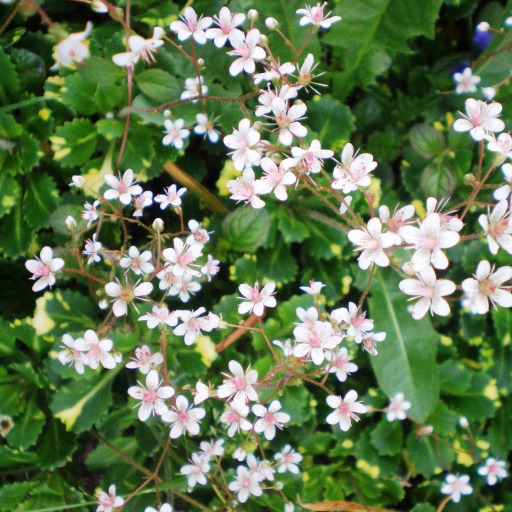
Plant Overview
Affectionately known as "London Pride" or "St. Patrick’s Cabbage," this resilient evergreen perennial is a classic of the cottage garden. A hybrid of two wild mountain species, it earned its fame during the 1940s for its remarkable ability to bloom amongst the rubble of bombed London sites. It is a symbol of endurance, offering delicate beauty in even the most neglected, shady corners of the city.
🔍 How to Identify
- 🍃 The Rosettes: It forms low-growing, dense mats of leathery, spoon-shaped leaves with distinctively scalloped or "toothed" edges.
- 🌸 The Flowers: In late spring, wiry reddish stems shoot up to hold airy clouds of tiny, star-shaped white flowers, often speckled with minute pink or yellow dots.
- 🌱 The Habit: It spreads via short runners (stolons), creating a lush green carpet that stays vibrant even through the winter months.
🏡 In Your Garden
- ☁️ Shadow Dweller: This is one of the few flowering plants that genuinely thrives in deep shade. It’s the perfect solution for that "difficult" spot under a north-facing wall or beneath the canopy of a large tree.
- 🧱 Gap Filler: Because it is so hardy, it is frequently used to soften the edges of stone paths or to fill crevices in rock gardens. It prefers moist, well-drained soil but is famously tolerant of urban pollution and poor conditions.
⚠️ Safety & Toxicity
- ✅ Safe for All: Saxifraga x urbium is generally considered non-toxic to humans, cats, and dogs.
- 👐 Skin Sensitivity: While not poisonous, the sap can occasionally cause very mild skin irritation in sensitive individuals. It is always a good practice to wash your hands after thinning out a dense patch.
✨ Fun Fact
During World War II, the playwright Noël Coward wrote a famous patriotic song titled "London Pride" to boost morale. He chose this plant as his subject because it continued to flower in the cracks of ruined buildings after the Blitz, representing the resilience of the London people.

Detailed Care Instructions
To grow Saxifraga x urbium plant, also known as London pride or St. Patrick's cabbage, follow these steps:
- Choose a suitable location: Saxifraga x urbium prefers partial shade to full sun. Select a spot in your garden that receives 4-6 hours of sunlight each day. The soil should be well-draining and rich in organic matter.
- Prepare the soil: Before planting, loosen the soil and remove any weeds or rocks. Add compost or well-rotted manure to improve soil fertility and drainage.
- Planting: Dig a hole slightly larger than the root ball of the plant. Place the Saxifraga x urbium in the hole, ensuring the soil level is the same as that of the nursery container. Gently firm the soil around the plant and water thoroughly.
- Watering: Saxifraga x urbium prefers consistently moist soil. Keep the soil evenly moist, but not waterlogged. Water deeply whenever the top inch of soil feels dry.
- Mulching: Apply a layer of organic mulch, such as shredded bark or compost, around the base of the plant. Mulching helps conserve moisture, suppress weeds, and regulate soil temperature.
- Fertilizing: Saxifraga x urbium generally doesn't require heavy feeding. However, you can apply a balanced, slow-release fertilizer in early spring to promote healthy growth. Follow the package instructions for application rates.
- Pruning: Trim back any dead or damaged leaves or flowers as needed. Regularly removing spent flowers can help promote continuous blooming.
- Propagation: You can propagate Saxifraga x urbium by division. Dig up the plant in early spring or fall and divide it into several clumps. Replant the divisions in separate locations or share them with gardening friends.
- Pests and diseases: Saxifraga x urbium is relatively resistant to pests and diseases. However, keep an eye out for slugs, snails, and aphids. If necessary, use organic pest control methods or insecticidal soap.
- Winter care: Saxifraga x urbium is hardy in USDA zones 5-9. In colder regions, apply a layer of mulch in late fall to protect the plant's roots from freezing temperatures. In areas with harsh winters, consider potting the plant and overwintering it indoors.
By following these steps, you should be able to successfully grow Saxifraga x urbium and enjoy its beautiful foliage and delicate flowers.

Place in a window with dappled sun or a spot in the middle of a room. Or directly in a window facing west or east.

To water this plant, you should first ensure that the soil is completely dry before watering again. When it is time to water, pour water gently and slowly over the soil until it is moist but not soaking wet. Avoid getting water on the leaves or flowers as this can cause rot or damage. Water only when necessary as overwatering can lead to root rot and other issues. Additionally, be sure to use a well-draining soil mix to allow excess water to escape and prevent waterlogging.
- Begin fertilizing in early spring, once new growth begins to appear.
- Use a balanced, water-soluble fertilizer.
- Dilute the fertilizer according to the instructions on the packaging.
- Apply the fertilizer to the soil around the base of the plant.
- Avoid getting fertilizer on the foliage of the plant, as this can cause damage.
- Repeat fertilizing every 2-3 weeks during the growing season.
- Stop fertilizing in late summer as the plant begins to prepare for dormancy.
- Resume fertilizing in early spring of the following year.
The ideal soil for this plant is a well-draining soil mix that is high in organic matter. It should be slightly acidic with a pH of 5.5 to 6.5. The soil should be moist but not waterlogged, as this can cause root rot. The plant prefers soil that is rich in nutrients, but not overly fertile. It is important to avoid using heavy clay soils or sandy soils that do not retain moisture well. A good soil mix can be created by combining equal parts of peat moss, perlite, and sand. This will provide good drainage, aeration, and moisture retention for the plant. Adding a slow-release fertilizer to the soil mix can also provide essential nutrients for the plant.
To propagate this plant, you will need to take stem cuttings in the spring or early summer. Use a sharp, sterilized blade to cut a stem that is several inches long with a few leaves attached. Remove the bottom set of leaves and dip the cut end into rooting hormone. Plant the cutting in a pot with well-draining soil and keep it moist but not too wet. Cover the pot with a plastic bag or dome to create high humidity and place it in a bright, but not direct, light. Rooting should occur in 4-6 weeks. Once the cutting has rooted, remove the plastic bag or dome and gradually acclimate the plant to lower humidity.
Common pests of the londonpride include Aphids. Make a habit of checking your londonpride frequently for pests so that any infestations can be caught and managed early.








