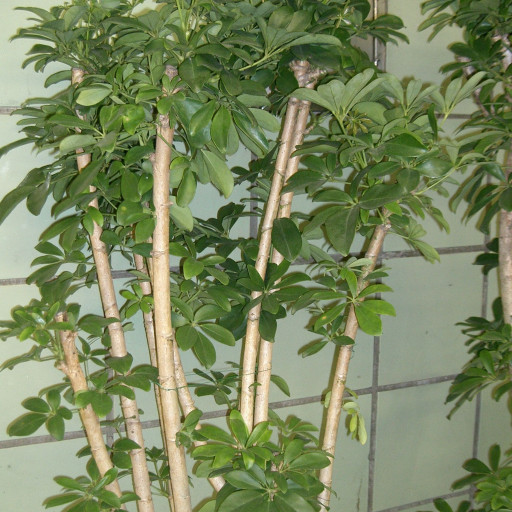
Plant Overview
Often called the Dwarf Umbrella Tree, this resilient evergreen is a favorite for those who want a miniature forest vibe in their living room. Originating from the humid forests of Taiwan, its glossy, hand-shaped leaves spread out like tiny parasols, earning it a reputation as one of the most stylish and adaptable houseplants in the world. Whether grown as a bushy shrub or trained into a tall indoor tree, it brings a lush, tropical energy to any space.
🔍 How to Identify
- 🌿 Leaf Shape: Each leaf is "palmate," meaning it consists of 7–9 oval leaflets radiating from a central point, mimicking the ribs of an umbrella.
- ✨ Texture & Color: The foliage is thick, leathery, and features a high-shine finish. While the classic version is deep emerald, variegated varieties feature splashes of creamy yellow or white.
- 🪵 Growth Habit: It starts as a flexible shrub but eventually develops a sturdy, woody trunk. This allows it to be easily shaped or even grown as a large-scale indoor bonsai.
🏡 In Your Garden & Home
- ⛅ The Light Shuffle: While it is famous for "surviving" in dark corners, it truly thrives in bright, indirect light. If the plant starts to look leggy or sparse, it is a signal that it is reaching out for more sunshine.
- 💧 The Drought Defense: This plant prefers its soil to dry out significantly between waterings. It is much better to forget to water it than to drown it; yellow, dropping leaves are usually a cry for help regarding soggy roots.
- ✂️ Pruning Potential: It is incredibly forgiving of "haircuts." If it gets too tall or unruly, you can prune the top to encourage a bushier, fuller appearance, which the plant handles with ease.
⚠️ Safety & Toxicity
- 🚫 Toxicity Status: Toxic to pets and humans.
- 🐾 The Details: The plant contains insoluble calcium oxalate crystals. If chewed or swallowed by cats, dogs, or curious children, it causes intense mouth irritation, swelling, drooling, and vomiting. It is best kept on a high shelf or in a room restricted from pets.
✨ Fun Fact
In its native tropical habitat, Schefflera arboricola often grows as an "epiphyte"—a plant that lives on the branches of taller trees for support, catching nutrients and moisture from the air rather than the ground!

Detailed Care Instructions
| Color | White, Pink, Or Red |
| Soil Ph | Acidic To Slightly Alkaline |
| Humidity | High |
| Lighting | Part Sun |
| Toxicity | Poisonous |
| Soil Type | Rich And Moist |
| Bloom Time | Summer |
| Difficulty | Easy |
| Plant Type | Evergreen Shrub |
| Hibernation | Cold Period |
| Mature Size | 12 To 15 Feet Tall |
| Native Area | Taiwan |
| Temperature | 18°C - 25°C |
| Sun Exposure | Bright, Indirect Light |
| Hardiness Zones | 10, 11 |
Growing a Schefflera Arboricola plant, also known as dwarf umbrella tree or Hawaiian umbrella tree, involves providing the plant with the right conditions and care. Here are some steps to help you grow your Schefflera Arboricola:
- Light: Place the plant in a spot with bright, indirect sunlight. Schefflera Arboricola prefers bright light but avoid direct sunlight, as it can scorch the foliage.
- Temperature: The plant thrives in average room temperatures ranging from 65-75°F (18-24°C). Keep it away from drafts and cold air.
- Watering: Water the plant thoroughly once the top inch of soil feels dry to the touch. Ensure adequate drainage to prevent waterlogging, as it can lead to root rot. Mist the leaves occasionally to provide humidity.
- Soil: Use well-draining potting soil that retains moisture without becoming waterlogged. A mixture of peat moss, perlite, and sand can be suitable.
- Fertilizer: Feed the plant with a balanced houseplant fertilizer every two weeks during spring and summer. Dilute the fertilizer to half strength to prevent over-fertilization, which can damage the plant.
- Pruning: To promote bushiness and maintain a desirable shape, prune the plant regularly. Regularly remove dead or yellowing leaves to prevent pest infestation and maintain overall plant health.
- Repotting: When the roots become crowded (usually every 1-2 years), repot the plant into a larger container using fresh potting soil. Take care not to damage the roots during the process.
- Propagation: Schefflera Arboricola can be propagated through stem cuttings. Take a 4-6 inch (10-15 cm) long cutting with a few leaves, remove the lower leaves, and dip the cut end in rooting hormone. Plant the cutting in a suitable potting mix and keep it warm and moist until rooted.
- Pests: Inspect the plant regularly for pests such as aphids, scale insects, or spider mites. Treat any infestations promptly with natural or chemical pest control methods.
Remember, every plant has unique needs, so closely monitor your Schefflera Arboricola and make adjustments as necessary.

Place in a window with dappled sun or a spot in the middle of a room. Or directly in a window facing west or east.

To water this plant, you should check the soil moisture level by inserting your finger into the soil up to your first knuckle. If the soil feels dry, water the plant thoroughly until water runs out of the drainage holes at the bottom of the pot. Avoid letting the plant sit in standing water, as this can lead to root rot. It is best to allow the soil to dry out slightly between watering, as overwatering can also harm the plant. Additionally, this plant prefers moderate to high levels of humidity, so you may want to mist the leaves or use a humidifier to maintain the appropriate moisture levels.
To fertilize this plant, use a balanced liquid fertilizer with equal parts nitrogen, phosphorus, and potassium. Dilute the fertilizer with water, following the package instructions. Apply the fertilizer to the soil around the plant, making sure not to get any on the leaves. Fertilize once every two weeks during the growing season (spring and summer) and once a month during the dormant season (fall and winter). Water the plant thoroughly after fertilizing.
For Schefflera Arboricola, it is important to use a well-draining soil mix that is rich in organic matter. The soil should have a pH range around 6.0-7.5, as this will provide the right level of acidity for the plant to grow and thrive. It is also recommended to use a soil mix that contains perlite or vermiculite, which will help to improve drainage and aeration. Additionally, it is important to ensure that the soil is kept moist, but not overly watered, as this can lead to root rot and other problems. Overall, the soil should provide a healthy growing environment with good drainage and sufficient nutrients to help the plant grow and thrive.
To propagate this plant, you will need to take stem cuttings. Look for healthy stems that are at least 6 inches long and have several leaves on them. Cut the stem at a 45-degree angle using clean, sharp pruning shears.
Remove the leaves from the lower half of the stem, leaving only a few at the top. Dip the cut end of the stem in rooting hormone powder, which will help it develop roots. Then, insert the stem into a pot filled with moist soilless potting mix.
Cover the pot with a plastic bag to create a humid environment, which will encourage the cutting to root. Make sure the bag isn't touching the plant, as this can cause rotting. Place the pot in a bright, warm spot, but out of direct sunlight.
Check the cutting regularly and mist it with water if the soil starts to dry out. After a few weeks, gently tug on the stem to test for root growth. Once the cutting has developed roots, gradually acclimate it to brighter light and less humidity.
Once the cutting has grown enough, transplant it into a larger pot with well-draining soil and continue to care for it as you would an adult plant.
Common pests of the dwarf umbrella-tree include Scale insect, mealybugs, thrips. Make a habit of checking your dwarf umbrella-tree frequently for pests so that any infestations can be caught and managed early.








