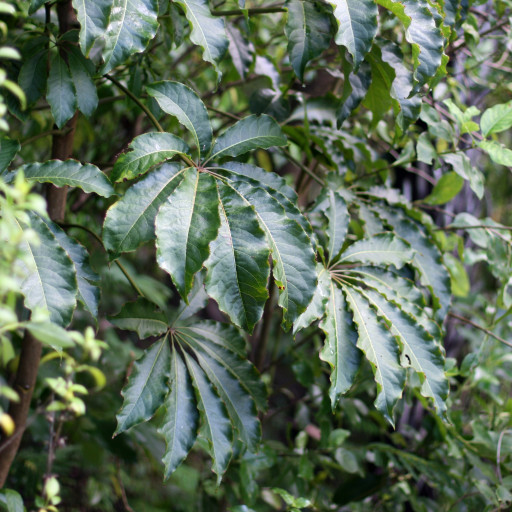
Plant Overview
Known as Patē or the Seven-finger plant by the Māori people of New Zealand, Schefflera digitata is a lush, woodland gem. Unlike its more common, leathery-leaved relatives found in offices worldwide, this species has a delicate, soft appearance that evokes the misty temperate rainforests of its homeland. It is a plant steeped in history, traditionally used in New Zealand for both medicine and the ancient art of fire-making.
🔍 How to Identify
- 🌿 The "Hand" Leaf: It features palmate leaves—meaning they spread out like fingers from a palm—typically arranged in groups of seven, though this can range from five to nine.
- 🪚 Serrated Edges: Unlike the smooth-edged Umbrella Tree, the leaflets of the Patē have finely toothed or serrated margins, which are especially prominent when the plant is young.
- 🍇 Ghostly Berries: In late summer, it produces large, drooping clusters of tiny greenish flowers that eventually turn into dark purple-black, fleshy berries that birds find irresistible.
🏡 In Your Garden
- ☁️ The Shade Seeker: This plant is a true "understory" species. It evolved to live under the canopy of giant trees, meaning it thrives in cool, dappled light and will quickly scorch if left in the direct, harsh afternoon sun.
- 💧 Humidity is Key: Because it hails from damp New Zealand forests, it dislikes dry "central heating" air. It prefers consistently moist (but not soggy) soil and high humidity; if the tips of the leaves turn brown, it’s likely a cry for more moisture in the air.
⚠️ Safety & Toxicity
- 🐾 Status: Mildly toxic to pets and humans.
- 🚫 Details: Like all members of the Aralia family, it contains calcium oxalate crystals. If any part of the plant is chewed, it can cause intense mouth irritation, drooling, and swelling. The sap may also cause a mild skin rash (dermatitis) for some gardeners, so gloves are a good idea during pruning.
✨ Fun Fact
In Māori tradition, the dry wood of the Patē was the preferred material for the kaunoti (the base board) used to create fire through friction. Its soft wood would catch the spark perfectly!

Detailed Care Instructions
To grow Schefflera digitata, also known as Pate or Umbrella Tree, follow these steps:
- Choose the right location: Select a location that receives bright, indirect sunlight. Schefflera digitata can also tolerate partial shade.
- Soil: Use well-draining soil that is rich in organic matter. A mix of potting soil, perlite, and peat moss works well. Good drainage is important to prevent waterlogging and root rot.
- Planting: Select a suitable pot with drainage holes. Place a layer of gravel or small stones at the bottom of the pot to enhance drainage. Plant the Schefflera digitata at the same depth as it was growing in its previous container.
- Watering: Water the plant thoroughly, allowing the soil to dry out slightly between watering. Do not overwater or let the roots sit in soggy soil. Schefflera digitata prefers moderately humid conditions.
- Temperature and humidity: Keep the plant in a warm environment with temperatures between 65-85°F (18-29°C). Regular household humidity is generally sufficient, but misting the leaves occasionally can help increase humidity.
- Fertilizer: Feed your Schefflera digitata with a balanced liquid fertilizer every 2-4 weeks during the growing season (spring and summer), following the package instructions. Reduce the frequency during the dormant period (fall and winter).
- Pruning: Trim the plant regularly to maintain its shape and encourage bushy growth. Pinch off the top of the stem to promote lateral branching and prevent it from becoming too leggy.
- Repotting: As Schefflera digitata grows, it may outgrow its container. Repot the plant in a slightly larger pot with fresh soil every 2-3 years, preferably during the spring.
- Pest control: Monitor your plant for common pests like aphids, mealybugs, and spider mites. If detected, treat with organic or chemical insecticides according to the product's instructions.
- Propagation: Schefflera digitata can be propagated from stem cuttings. Take a 4-6 inch cutting with several leaves, remove the lower leaves, and dip the cut end in rooting hormone powder. Plant the cutting in a pot with moist, well-draining soil and keep it in a warm location. Provide high humidity by covering the pot with a plastic bag until roots develop.
By following these guidelines, you should be able to successfully grow Schefflera digitata and enjoy its attractive foliage.

Place in a bright room that is sun drenched almost all day. Or directly in a south-facing window.

When it comes to watering this particular plant, it's important to pay attention to a few key factors to ensure it receives the appropriate amount of moisture. Firstly, it's important to take note of the plant's natural environment. Is it accustomed to a damp, moisture-rich setting, or does it thrive in a drier one? Once you've established this, you'll have a better idea of how frequently you should water it.
Another factor to consider is the size of the pot or container in which it's growing. Larger pots will hold more moisture, and as a result, you may need to water less frequently than you would a plant growing in a smaller container. You'll also want to take into account the type of soil you're using and how well it absorbs and retains water. Sandy soils will dry out faster than heavier clay soils, for example.
When it comes to actually watering the plant, it's generally best to give it a deep soak, allowing the water to penetrate deeply into the soil. Depending on the size of the plant and the container it's growing in, this may mean watering until water runs through the drainage holes in the bottom of the pot. However, be careful not to let the plant sit in standing water for too long, as this can lead to root rot.
Overall, the key to successfully watering this plant is to pay close attention to its individual needs and adjust your watering schedule accordingly. Over time, you'll get a better sense of what works best for your Schefflera Digitata, and your plant will thrive as a result.
To fertilize the plant, use a balanced fertilizer with a ratio of 10-10-10 or a slightly higher nitrogen ratio. Dilute the fertilizer to half strength and apply every two weeks during the growing season (spring and summer) and stop fertilizing during the dormant season (fall and winter). Be sure to water the plant thoroughly before and after fertilizing to avoid root burn.
Schefflera Digitata requires a well-draining soil that is rich in organic matter. The soil should have a pH level of 6.0 to 7.5, which is slightly acidic to slightly alkaline. It is recommended to use a good quality potting mix that is formulated for tropical plants. The soil should also be moist but not waterlogged as this can cause root rot. It is important to avoid using heavy clay soils or soils that do not drain well, as this can lead to problems with the plant’s roots. The soil should be kept consistently moist but not waterlogged, and the plant should be fertilized regularly during the growing season to promote healthy growth and development.
To propagate this plant, begin by taking a cutting from a healthy and mature stem. Choose a stem that has at least three leaves and is about 4-6 inches long. Use sharp and sterile pruning shears to make a clean cut just below a node - this is where the leaves emerge from the stem.
Remove the two lower leaves and trim the remaining one to reduce the water loss from the cutting. Dip the cut end of the stem into rooting hormone powder to enhance the chances of rooting.
Prepare a well-draining potting mix with equal parts of peat moss and perlite or vermiculite. Moisten the soil mix slightly and create a hole in the center using a pencil.
Insert the stem cutting into the hole and firm the soil mix around the cutting. Place the pot in a bright, warm, and humid spot but avoid direct sunlight. Mist the cutting regularly to keep the soil moist and maintain the humidity around the plant.
After a few weeks, the cutting should start to develop roots and new leaves. Check the soil moisture regularly and water as needed without overwatering.
Once the new plant has established roots, you can transplant it into a larger pot or outdoors in a well-draining soil in a shaded area. Remember to keep the soil moist but not waterlogged and provide fertilizer and occasional pruning to maintain a healthy and vibrant Schefflera Digitata plant.








