Plant Overview
Often called the Peruvian Peppertree or Mollar, Schinus areira is a majestic evergreen known for its romantic, weeping silhouette. While it looks delicate with its lace-like foliage, it is a rugged survivor of arid landscapes and rocky slopes. In its native South America, it was once considered a sacred tree by the Incas, who utilized every part of the plant from its shade to its spicy resin.
🔍 How to Identify
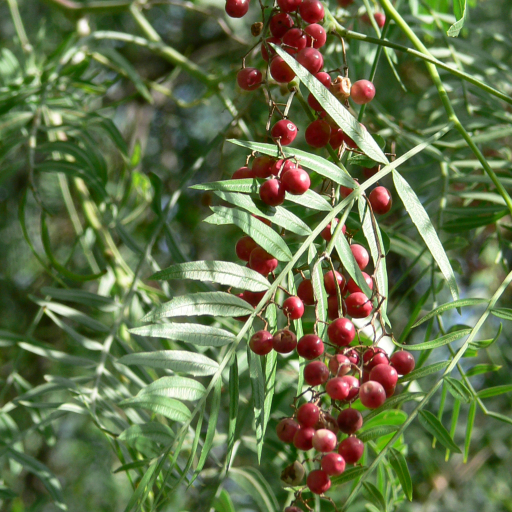
- 🍃 Lacy Foliage: It features long, fern-like compound leaves that hang in graceful, weeping curtains, swaying easily in the breeze.
- 🍒 Peppery Fruits: From autumn to winter, the tree produces drooping clusters of small, round berries that turn a vibrant rose-pink to woody red.
- 🪵 Gnarled Bark: The trunk is a work of art, becoming deeply fissured, twisted, and grayish-brown as the tree matures, often oozing a sticky, aromatic resin.
🏡 In Your Garden
- ☀️ Drought Warrior: This tree is "tough as nails" and thrives in poor soil with very little water. It actually prefers a bit of neglect, as overwatering can lead to root rot or weak, spindly growth.
- 🏗️ Root Awareness: Because it is designed to survive in dry climates, it develops a very aggressive and wide-reaching root system. Always plant it far away from swimming pools, underground pipes, or home foundations to prevent structural damage.
⚠️ Safety & Toxicity
- 🚫 Not True Pepper: While the berries look and smell like peppercorns, they are not the source of traditional black pepper. Ingesting large quantities can cause stomach upset, especially in children.
- 🐾 Pet & Livestock Warning: The leaves and berries can be toxic to horses and poultry if consumed in significant amounts. Additionally, the milky sap may cause skin irritation or "contact dermatitis" for gardeners with sensitive skin.
✨ Fun Fact
The Incas referred to this tree as the "Tree of Life." They used the sugary outer coating of the berries to brew a traditional fermented ale called Chicha de Molle, which is still produced in some Andean villages today!

Detailed Care Instructions
To grow a Schinus Areira plant, also known as the Brazilian pepper tree or pink pepper tree, follow these steps:
- Climate: Make sure you live in a suitable climate for the Schinus Areira plant. It thrives in temperate to subtropical climates with mild winters and moderate humidity.
- Sunlight: Choose a location with full sun or partial shade. The tree prefers direct sunlight for at least six hours a day.
- Soil: The plant can grow in various soil types but prefers well-draining, fertile soil with a pH level of 6-8. Ensure the soil is not waterlogged as this can cause root rot.
- Watering: Water the plant regularly, especially during the growing season. Provide enough water to keep the soil moist but not soggy. Reduce watering in winter to avoid waterlogging.
- Fertilizer: Apply a balanced fertilizer during the growing season to promote healthy growth. Follow the instructions on the fertilizer packaging for the appropriate dosage.
- Pruning: Prune the plant to maintain its shape and remove any dead or damaged branches. Pruning is best done in late winter or early spring before new growth begins.
- Pests and diseases: Monitor the plant for common pests like aphids, spider mites, and scale insects. Treat infestations promptly with organic or chemical insecticides. Watch for diseases such as root rot or powdery mildew and take appropriate measures to prevent or treat them.
- Propagation: The Schinus Areira plant can be propagated through seeds or cuttings. If using seeds, soak them in warm water for 24 hours before planting. Sow the seeds in a seed-starting mix or potting soil and keep them moist until germination occurs. Cuttings can be taken from semi-hardwood stems and rooted in a well-draining rooting medium.
- Winter protection: If you live in a colder climate, provide protection for the plant during winter months. Mulch the base to insulate the roots, and consider wrapping the trunk with burlap or a similar material to shield it from freezing temperatures.
By following these guidelines, you should be able to successfully grow a Schinus Areira plant. Remember to provide regular care and monitor its health to ensure optimal growth.
To effectively water Schinus Areira plant, the soil should be allowed to dry out before the next watering session. Overwatering can lead to root rot, ultimately killing the plant. It is best to water the plant at the base to avoid wetting the foliage. Check the soil moisture level by inserting a finger or using a soil moisture meter before watering. Schinus Areira plant prefers a well-draining soil mix that allows for adequate drainage. Watering frequency varies based on the plant size, pot size, and environmental conditions. It is best to water deeply until the water drains out of the pot's bottom. This ensures the water reaches the plant's roots and avoids waterlogging. Watering the plant early in the morning or late in the evening enables the plant to absorb moisture effectively. In dry weather conditions, misting the plant's foliage increases humidity and helps prevent spider mites.
To fertilize this plant, use a balanced fertilizer with equal amounts of nitrogen, phosphorus, and potassium. Apply the fertilizer in the spring and fall, following the instructions on the label. Be careful not to over-fertilize, as this can lead to excessive growth and weakened plants. Additionally, make sure to water the plant adequately after fertilizing to help distribute the nutrients throughout the soil.
The most suitable type of soil for Schinus Areira plant is slightly acidic and well-draining. The soil should be rich in organic matter and should have good moisture retention capacity. It is recommended to use a mix of loam, sand, and peat moss in the soil to provide an ideal growing environment for the plant. The soil should be free of any contaminants and should have a pH level between 5.5 and 6.5. The plant is tolerant of a wide range of soil types, but it prefers soils that are well-aerated and have good drainage to prevent waterlogging. Regular soil amendments with organic matter like compost can boost the soil's fertility and ensure healthy growth of the plant.
To propagate this plant, first choose a healthy parent plant with strong stems and healthy leaves. Take cuttings from the plant that are around 4-6 inches long and are taken from new growth rather than woody stems. Strip the lower leaves from the cutting and dip it in rooting hormone powder. Place the cutting in moistened rooting soil, making sure to keep the soil consistently damp but not soggy. Place the cutting in a warm and bright location, but out of direct sunlight. Rooting should occur within a few weeks. Once the new plant has rooted and has grown a few inches, it can be planted into a larger pot or into a garden bed.








