Plant Overview
Known as the "Molle de Chile," Schinus latifolius is a rugged, evergreen tree that serves as a cornerstone of the Chilean matorral landscape. While it shares a family tree with the famous Pepper Tree, this species is much hardier, standing its ground against long droughts with its leathery, resinous leaves. In South American folklore, it is often celebrated as a "guardian tree" for its ability to provide shade and life in semi-arid environments.
🔍 How to Identify
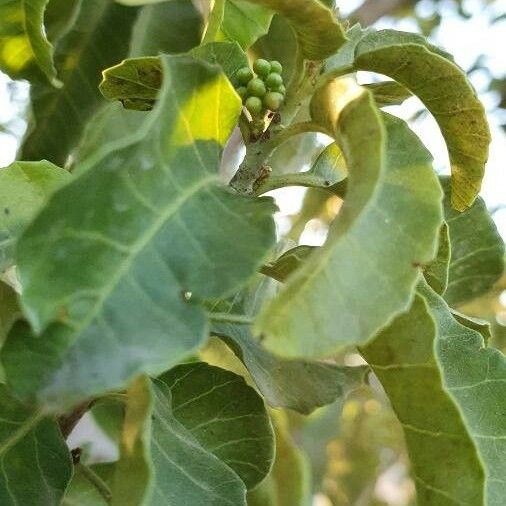
- 🍃 Leathery Foliage: Unlike the fine, weeping leaves of its cousins, its leaves are broad, oval, and stiff (the name latifolius literally means "broad-leaved"). They have a glossy sheen and often feature slightly wavy margins.
- 🌳 Rough Bark: The trunk is sturdy and covered in thick, grayish-brown bark that becomes deeply fissured and craggy as the tree matures.
- 🍇 Dark Berries: In late summer, it produces dense clusters of small, spherical fruits. These turn a dark reddish-purple or even blackish-blue when ripe, standing out against the green canopy.
- 💧 Resinous Scent: If you crush a leaf or twig, it releases a sharp, spicy, and slightly medicinal aroma—a signature of the Schinus genus.
🏡 In Your Garden
- ☀️ Drought Warrior: This plant is an expert at water conservation. It develops a deep root system, meaning it hates being moved once planted. If you are growing one, avoid "over-parenting" with too much water, as soggy roots are its only real weakness.
- 🛡️ Natural Privacy: Because of its dense branching habit and evergreen nature, it makes an excellent living fence or windbreak. It thrives in poor, rocky soils where other more delicate garden plants might struggle.
- 🐝 Pollinator Magnet: While the flowers are small and yellowish-green, they are rich in nectar and will attract a buzz of activity from local bees and beneficial insects.
⚠️ Safety & Toxicity
- 🚫 Skin Irritant: As a member of the Anacardiaceae family (the same family as Poison Ivy and Mango), the sap contains resins that can cause contact dermatitis or skin rashes in sensitive individuals.
- 🐾 Pet & Child Safety: The berries are generally considered non-toxic to birds, but they can cause digestive upset if ingested by humans or pets. It is best treated as an ornamental plant rather than an edible one.
✨ Fun Fact
In traditional Chilean culture, the resin of the Molle tree was historically harvested and burned as incense or used to create a "healing balsam" applied to wounds, earning it a reputation as a pharmacy in tree form!

Detailed Care Instructions
To grow a Schinus latifolius plant, also known as the California pepper tree or Peruvian pepper tree, you can follow these steps:
- Climate and location: Ensure that you live in a suitable climate for the plant, as it tends to do well in warm regions with mild winters. The plant is drought-tolerant and thrives in full sun. Find an appropriate location where the plant can receive at least 6 hours of direct sunlight per day.
- Soil requirements: The plant prefers well-draining soil. Amend the soil with organic matter like compost or peat moss to improve drainage and fertility. Avoid soil that retains excessive water, as it can lead to root rot.
- Planting: Dig a hole in the prepared area, slightly wider and as deep as the root ball of the plant. Place the plant in the hole, ensuring that the top of the root ball aligns with the soil surface. Backfill the hole with soil, gently firming it around the plant to eliminate air pockets.
- Watering: Water the plant regularly initially to help establish the roots. Once established, the tree is relatively drought-tolerant and requires less frequent watering. However, during hot and dry periods, provide deep, infrequent waterings to promote healthy growth.
- Pruning: Prune the plant to maintain its desired size and shape. Pruning can be done in early spring, and it is best to remove any dead, damaged, or crossing branches. Be cautious when pruning, as the plant produces sap that can irritate the skin and cause allergies in some people. Wear gloves and protective clothing.
- Fertilizing: Apply a slow-release, balanced fertilizer in early spring to provide the necessary nutrients. Follow the instructions on the fertilizer packaging for the proper application rate.
- Mulching: Applying a layer of organic mulch around the base of the plant helps retain moisture and suppresses weed growth. Leave a small gap between the trunk and the mulch to prevent rot.
- Pests and diseases: The Schinus latifolius plant is relatively resistant to pests and diseases. However, occasional pests like aphids or scales may infest the plant. Monitor the tree regularly and take appropriate measures if necessary, such as using insecticidal soap or neem oil.
Remember to check local regulations and restrictions before planting the Schinus latifolius plant, as it can be considered invasive in certain areas.

When watering this type of plant, it is important to ensure that the soil is moist but not waterlogged. This can be achieved by checking the soil moisture level regularly and watering as needed. To water the plant, slowly pour water around the base of the plant until the soil is saturated. Avoid getting water on the leaves or foliage as this can lead to fungal growth and other issues. Allow the soil to drain before returning the plant to its normal position. It is important to note that each plant has specific watering requirements, and factors such as climate, soil type, and pot size can impact the frequency and amount of water needed. Therefore, it is recommended to research and understand the specific watering needs of this plant to ensure its health and vitality.
To fertilize Schinus Latifolius plant, apply a balanced fertilizer with equal amounts of nitrogen, phosphorus, and potassium to the soil once every two months during the growing season. Water the plant well before and after fertilizing to prevent burning the roots. Avoid applying fertilizer extremely close to the trunk. Also, make sure to follow the fertilizer manufacturer's instructions for proper application rates.
The recommended soil for Schinus Latifolius plants is loamy with good drainage. The pH level of the soil should be mildly acidic to neutral (6.0-7.0). The soil should be rich in organic matter, well-drained, and able to hold moisture without getting waterlogged. It is important to avoid using heavy or compacted soils for this plant, as it can lead to poor root growth and ultimately stunt its growth or kill the plant. Adding organic material like compost or leaf mold to the soil will improve its texture and nutrient content. Additionally, avoid over-fertilizing Schinus Latifolius as excessive nutrients can make the plant more susceptible to pests and diseases.
To propagate this plant, you will need to take stem cuttings from mature plants during the growing season. Choose healthy young shoots with a few leaves on each and make a clean cut with a sharp knife. Remove the lower leaves and any flowers or buds, leaving only a few leaves at the top. Dip the cut end in rooting hormone powder to encourage new roots to form.
Fill a pot or container with a well-draining, sandy soil mix and make holes for the cuttings. Place the cuttings in the holes and gently press the soil around them to hold them upright. Water thoroughly and place the pot in a warm, bright location, but out of direct sunlight.
Keep the soil moist but not waterlogged and mist the cuttings regularly to prevent them from drying out. After a few weeks, new roots should start to form, and the cuttings will begin to grow new leaves. Once they are well-established, you can transplant them into individual pots or into the garden.








