Plant Overview
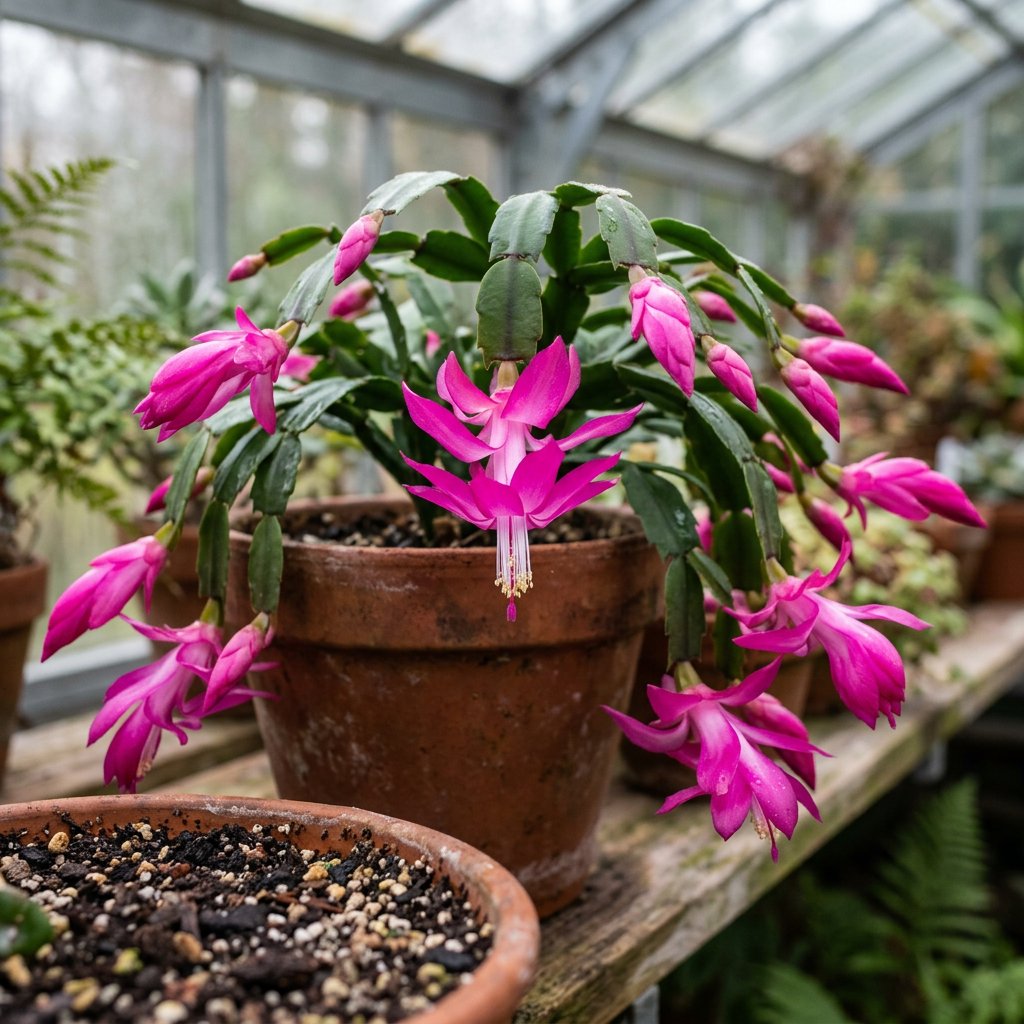
Known as the "True" Christmas Cactus, Schlumbergera x buckleyi is the quintessential holiday heirloom. Unlike its desert-dwelling cousins, this tropical beauty originates from the coastal mountains of Brazil, where it grows tucked into the nooks of trees. It is famous for its incredible longevity, often being passed down through generations as a living piece of family history.
🔍 How to Identify
- 🍃 Segment Shape: The green, leaf-like stems (cladodes) have smooth, rounded "scalloped" edges. They lack the sharp, pointy "teeth" found on the more common Thanksgiving Cactus.
- 🌸 Symmetrical Blooms: The flowers are perfectly radial and hang straight down. They feature layers of silky petals that look like a "flower within a flower."
- Arching Habit:** As the plant matures, its branches become heavy and pendulous, creating a weeping silhouette that is perfect for hanging baskets.
🏡 In Your Garden
- 🌙 The Dark Secret: This plant is "photoperiodic," meaning it only blooms when the nights become long. To trigger those holiday flowers, it needs roughly 14 hours of total darkness and cool temperatures starting in October.
- ☁️ Tropical Roots: Because it is an epiphyte (a plant that grows on trees), it craves high humidity and a very airy, bark-based soil. It hates "wet feet" and will quickly drop its segments if the soil stays soggy for too long.
⚠️ Safety & Toxicity
- ✅ Status: Generally Non-Toxic.
- 🐾 Details: This plant is considered safe for cats, dogs, and children. However, the fibrous stems can cause mild mechanical irritation or an upset stomach if a pet decides to treat it like a snack, so keeping it in a hanging pot is best.
✨ Fun Fact
Most "Christmas Cacti" sold in big-box stores today are actually Schlumbergera truncata (the Thanksgiving Cactus). The true Buckleyi hybrid is much rarer in modern commerce and is most often found as a cutting shared between friends or inherited from an older relative!

Detailed Care Instructions
To grow Schlumbergera X Buckleyi, also known as Christmas cactus or Thanksgiving cactus, follow these steps:
- Purchase a healthy plant: Buy a well-rooted Schlumbergera X Buckleyi plant from a nursery or online supplier, preferably during the active growing season (spring or summer).
- Choose the right pot: Select a pot that is slightly larger than the current size of the plant. Ensure it has drainage holes at the bottom to prevent waterlogging.
- Potting mix: Use a well-draining, sandy potting mix. A mixture of peat moss, perlite, and vermiculite works well. Avoid using regular garden soil as it can be too heavy and retain too much moisture.
- Planting: Gently remove the plant from its current container, being careful not to damage the roots. Place it in the new pot, ensuring that it sits at the same depth as it did before. Backfill the pot with the potting mix, gently firming it around the roots.
- Lighting: Place the plant in bright, indirect light. Avoid direct sunlight as it may scorch the leaves. A north or east-facing window is ideal. If direct sunlight is unavoidable, provide some shade during the peak afternoon hours.
- Temperature and humidity: Schlumbergera X Buckleyi prefers temperatures between 60°F (15°C) and 70°F (21°C). It thrives in high humidity environments, so consider placing a tray filled with water nearby or using a humidifier.
- Watering: Water the Christmas cactus thoroughly when the top inch of soil feels dry. Allow excess water to drain out completely, and avoid letting the plant sit in standing water. Overwatering can lead to root rot, while underwatering can cause leaf drop.
- Fertilization: Feed the plant every month during the active growing season with a balanced, water-soluble fertilizer. Follow the manufacturer's instructions for dosage and dilution. Avoid fertilizing during the resting period (late fall to early spring).
- Rest period: Schlumbergera X Buckleyi requires a rest period in late fall to early spring for blooming. Reduce watering and stop fertilization during this time. Place the plant in a cooler location with reduced light to encourage bud formation.
- Blooming: During the rest period, maintain a temperature range of 50°F (10°C) to 55°F (13°C) for about six weeks. After this period, gradually increase the temperature and return the plant to its usual location. Flower buds should begin to form, and the plant will bloom.
Remember to regularly monitor the plant for any signs of pests or disease. With proper care and attention, your Schlumbergera X Buckleyi plant should grow well and provide vibrant blooms during the holiday season.

Place in a window with dappled sun or a spot in the middle of a room. Or directly in a window facing west or east.

To water this plant, you should first check the moisture level of the soil by sticking your finger about an inch below the surface. If the soil feels dry, it is time to water, but if it still feels moist, hold off for a few more days. When watering, use room-temperature water and allow it to fully drain out of the bottom of the pot. Avoid letting the plant sit in standing water as this can lead to root rot. During the winter months, it is important to water less frequently as the plant enters dormancy.
To fertilize the plant:
- Choose a water-soluble fertilizer that is suitable for cacti and succulents.
- Dilute the fertilizer in water according to the instructions on the package.
- Water the plant with the fertilizer solution once every two weeks during the growing season (spring and summer).
- Do not fertilize the plant during the dormant period (fall and winter).
- Make sure the soil is moist before fertilizing and avoid fertilizing a dry plant to prevent burning its roots.
- Apply the fertilizer to the soil around the plant, avoiding the leaves and stem.
- Do not exceed the recommended dosage of fertilizer as it can harm the plant.
The ideal soil for the plant is a well-draining, loose and organic-rich soil with a slightly acidic pH level between 5.5 and 6.5. It should be loose enough to allow air to permeate the roots and provide adequate drainage to prevent the roots from becoming waterlogged, which can lead to the development of root rot. A soil mix made up of equal parts of perlite, peat moss, and sand is a good option. Alternatively, a specialty cactus or succulent soil mix can be used. It is important to avoid using heavy soils, as they can impede drainage and lead to problems with root development. Additionally, the soil should be kept slightly moist but not wet, as overwatering can also lead to root damage.
To propagate this plant, you will need to take stem cuttings around 4-6 inches long. Before taking the cuttings, sterilize your pruning shears to prevent any infections. Once you have the cuttings, allow them to dry for a few hours to form a callus.
Then, dip the cuttings into a rooting hormone powder and plant them into a pot with a well-draining soil mixture. Water the soil, then cover the pot with a plastic bag or clear container to create a humid environment.
Put the pot in indirect sunlight and check the soil moisture every few days. Within a few weeks, you should see new roots begin to form. Once the cuttings have established a good root system, you can remove the plastic covering and treat them like mature plants.
Common pests of the christmas cactus include Mealybugs, spider mites, thrips. Make a habit of checking your christmas cactus frequently for pests so that any infestations can be caught and managed early.







