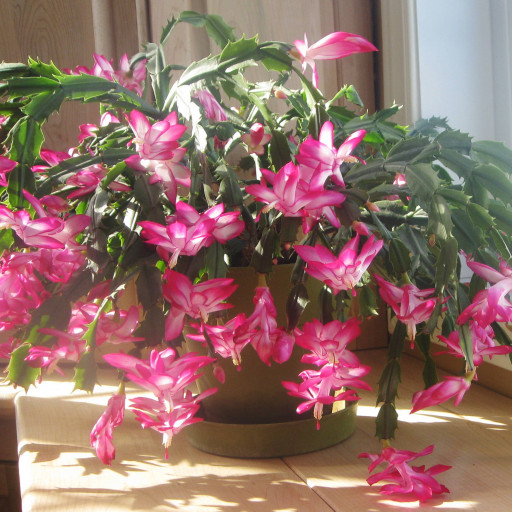
Plant Overview
Often called the "Christmas Cactus" or "Thanksgiving Cactus," these jungle dwellers are a festive staple in homes around the world. Unlike their prickly desert cousins, Schlumbergera hails from the humid coastal mountains of Brazil, where they grow as epiphytes nestled in tree branches. They are beloved for their stunning, neon-colored blooms that emerge just as the days grow shortest, bringing life to the winter months.
🔍 How to Identify
- 🍃 Segmented Stems: Instead of traditional leaves, they have flat, fleshy green segments called phylloclades that chain together. Depending on the variety, these segments may have rounded edges or sharp, claw-like "teeth."
- 🌺 Exotic Flowers: The blooms are tubular and multi-tiered, appearing like a "flower-within-a-flower." They hang from the tips of the stems in vibrant shades of fuchsia, red, white, or orange.
- 🕸️ Growth Habit: These plants have a pendulous, arching habit. As the stems grow longer and heavier, they cascade downward, making them a classic choice for hanging baskets.
🏡 In Your Garden
- 💧 The Epiphyte Secret: Because they grow on trees in the wild, they despise "wet feet." They require a very airy, well-draining potting mix. They enjoy being misted, as they prefer the humid air of their ancestral rainforests over the dry air of a typical modern home.
- 🌑 The Dark Requirement: These are "short-day" plants. To trigger a spectacular bloom, they need a period of "rest" involving long nights (14 hours of total darkness) and cooler temperatures. If your plant isn't blooming, it might be getting too much artificial light at night!
⚠️ Safety & Toxicity
- 🐾 Pet Friendly: Schlumbergera is generally considered non-toxic to dogs and cats, making it a safe choice for households with curious furry friends.
- 🍽️ Mild Irritation: While not poisonous, the fibrous segments can cause mild mechanical irritation to the stomach if swallowed. It’s best to keep them out of reach of toddlers or pets who like to chew on greenery.
✨ Fun Fact
These plants are the ultimate family legacy! With the right care, a Schlumbergera can live for over 100 years. There are many stories of "Heirloom Cacti" being passed down through three or four generations, blooming every Christmas for a century.

Detailed Care Instructions
| Humidity | Normal |
| Lighting | Part Sun |
| Difficulty | Easy |
| Temperature | 18°C - 21°C |
| Hardiness Zones | 10 - 12 |
To grow a Schlumbergera plant, also known as the Christmas cactus or Thanksgiving cactus, follow these steps:
- Purchase a healthy Schlumbergera plant from a nursery or garden center. Look for a plant with bright, firm and unblemished stems.
- Choose an appropriate location for the plant. Schlumbergera prefer bright, indirect light, so place it near a north or east-facing window. Avoid direct sunlight, as it can scorch the leaves.
- Provide the right temperature and humidity. Schlumbergera plants prefer temperatures between 60-70°F (15-21°C). They also need higher humidity, so it's a good idea to place it on a tray of pebbles filled with water to increase humidity around the plant.
- Water the plant properly. Schlumbergera plants prefer to be kept slightly moist, but not overly wet. Allow the top inch of soil to dry out between waterings. Water thoroughly, but make sure the pot has proper drainage to avoid waterlogging.
- Fertilize occasionally. Feed your Schlumbergera plant with a diluted balanced houseplant fertilizer during the growing season (spring to fall) to promote healthy growth. Follow the instructions on the fertilizer package for dosage and frequency.
- Maintain a consistent light schedule. Schlumbergera plants require a period of darkness for about 12-14 hours a day in order to produce flowers. To encourage blooming, provide at least 12 hours of uninterrupted darkness each day for about 6-8 weeks before you want it to bloom.
- Prune if necessary. Remove any dead or damaged stems, and pinch back leggy growth to encourage a bushier plant. Pruning after the blooming period is typically recommended.
- Propagate if desired. Schlumbergera plants can be propagated by stem cuttings. Wait until the plant finishes blooming, then carefully cut a healthy stem segment and allow it to callous over for a few days before planting it in a well-draining potting mix.
Remember to be patient with your Schlumbergera plant, as it can take a few years for it to reach maturity and produce abundant blooms. With proper care and conditions, you can enjoy the beauty of its colorful flowers during the holiday season.

Place in a window with dappled sun or a spot in the middle of a room. Or directly in a window facing west or east.

The plant in question is a type of cactus that is commonly grown as a houseplant. When watering this plant, it is important to avoid getting water on the leaves or flowers, as this can cause them to become discolored or even fall off. Instead, water the plant from the base, using a watering can or hose with a gentle spray attachment. Allow the soil to dry out slightly between waterings, as overwatering can cause root rot. Additionally, it is important to avoid using hard water or water that has been treated with chemicals, as this can damage the plant. Instead, use distilled or filtered water, and avoid over-fertilizing, as this can also cause damage to the plant.
To fertilize this plant, use a water-soluble, balanced fertilizer once a month during the growing season (typically spring and summer). Dilute the fertilizer to half strength and apply it to the soil around the plant. Avoid fertilizing during the dormant period in fall and winter. Additionally, if the plant is in a small pot or container, consider repotting it every two to three years with fresh soil to provide it with fresh nutrients.
The ideal soil for this plant should be a well-draining mix that retains some moisture, but doesn't become waterlogged. It should have a slightly acidic pH level, between 5.5 and 6.5. A soil mix that consists of peat moss, perlite, and sand would be suitable for this plant. It is important to avoid using soil that is too heavy or compact, as this can cause the roots to rot. Additionally, this plant prefers a soil mix that is rich in organic matter, which helps to provide nutrients and promotes healthy growth.
One way to propagate this plant is to take stem cuttings. Select a healthy stem and use a sharp, clean tool to cut a piece that is approximately 10-15 cm long. Remove any leaves from the bottom 5 cm of the cutting.
Dip the cut end of the stem into rooting hormone powder and then insert it into a well-draining potting mix or soil. Water the soil and cover the cutting with a clear plastic bag to create a greenhouse effect.
Place the pot in a bright, warm area where it will receive indirect sunlight. Keep the soil moist but not waterlogged. After a few weeks, roots should begin to develop.
Once the cutting has rooted and new growth appears, you can remove the plastic bag and begin to acclimate it to normal conditions. Gradually increase the amount of sunlight it receives each day until it can tolerate direct sunlight.
Transplant the plant into a larger pot once it has outgrown its current container. With proper care, the new plant should grow and thrive.







