Plant Overview
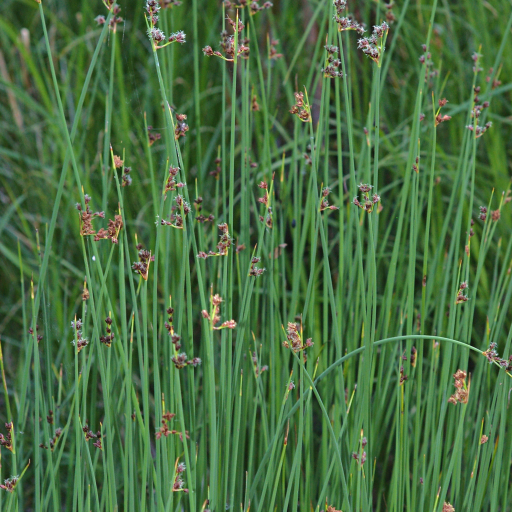
Often called the Softstem Bulrush or Grey Club-rush, this elegant giant is the architect of the marshland. Standing tall like a collection of slender green wands, it is famous for its ability to "breathe" through its stems, allowing it to thrive where other plants would drown. In folklore and history, these rushes were the primary material for weaving everything from sleeping mats to water-tight baskets.
🔍 How to Identify
- 🌿 The Stem: Smooth, cylindrical, and pale blue-green. If you gently squeeze it, you'll notice it feels soft and spongy because it is filled with air-filled tissue.
- 🌾 The Flowers: Near the very top of the stem, look for drooping clusters of small, cocoa-colored spikelets that appear to "burst" out from the side of the stalk.
- 🍃 The Foliage: Surprisingly, this plant appears to have no leaves! The leaves are actually reduced to thin, paper-like sheaths wrapped tightly around the base of the stem.
🏡 In Your Garden
- 💧 Water Enthusiast: This is not a plant for a dry flower bed. It requires "wet feet" and is happiest when submerged in several inches of water or planted in consistently soggy mud at a pond's edge.
- 🏗️ Natural Filter: It is a powerhouse for water quality. Its root system acts as a biological filter, absorbing excess nutrients and pollutants, making it a favorite for eco-friendly "living" pools and greywater systems.
⚠️ Safety & Toxicity
- ✅ Safe for All: Schoenoplectus tabernaemontani is generally considered non-toxic to humans, dogs, cats, and horses.
- 🚶 Hidden Edges: Because it grows in thick, tall colonies, it can easily obscure the true edge of a pond or marsh. Always be careful when walking near a stand of bulrushes to avoid an accidental soak!
✨ Fun Fact
The "soft" interior of the stem isn't just for show—it contains a specialized tissue called aerenchyma. These are essentially internal chimneys that pipe oxygen down from the air to the roots buried in oxygen-poor underwater mud!

Detailed Care Instructions
To grow Schoenoplectus tabernaemontani, also known as soft rush or chairmaker's bulrush, follow these steps:
- Choose location: Soft rush plants prefer full sun to partial shade and thrive in wet or marshy areas such as along the edges of ponds, streams, or in rain gardens.
- Prepare the soil: Soft rush can tolerate a wide range of soil types, including clay and sandy soils. However, it thrives in moist, loamy soil. Amend the soil with organic matter, such as compost, to improve its moisture-holding capacity.
- Planting: Soft rush can be propagated from division or seeds. If using division, separate the root mass into smaller sections and plant them around 12-18 inches apart. If using seeds, scatter them on the soil surface and gently press them in, ensuring they are in contact with the soil.
- Watering: Keep the soil consistently moist, but not waterlogged. In the early stages, ensure the plants receive sufficient water until they establish their root systems.
- Mulching: Apply a layer of organic mulch, like wood chips or straw, around the base of the plants. This helps retain moisture and suppresses weed growth.
- Fertilization: Soft rush generally doesn't require regular fertilization. However, if growth appears slow or weak, you can apply a slow-release, balanced fertilizer according to the package instructions.
- Maintenance: Soft rush is generally a low-maintenance plant. However, you may need to control weeds around the plant until it forms a dense stand. Gently remove any invasive plants that may encroach on the soft rush.
- Winter care: Soft rush is cold-hardy and generally doesn't require special winter care. However, in areas with severe winters, it's advisable to protect the plants with a layer of mulch or straw during the colder months.
- Propagation: Soft rush can spread rapidly through rhizomes, so be vigilant to prevent it from spreading into unwanted areas. If desired, you can divide mature clumps every few years to control their spread and create new plantings.
With proper care and maintenance, Schoenoplectus tabernaemontani will grow into a lush, attractive plant that adds visual interest to wetland or pond areas.

Place in a bright room that is sun drenched almost all day. Or directly in a south-facing window.

To properly water this plant, it is important to keep the soil consistently moist but not waterlogged. This can be achieved by watering deeply once or twice a week depending on the humidity and temperature of the plant's environment. Ensure the water is directed to the soil and not onto the foliage as this can contribute to fungal growth. Additionally, it is recommended to allow the top layer of soil to dry out slightly before the next watering to prevent overwatering.
To fertilize this plant, you will need to use a water-soluble fertilizer. Begin by diluting the fertilizer with water according to the instructions on the label. Make sure the soil is moist before applying the fertilizer. Slowly pour the solution around the base of the plant, avoiding getting it on the leaves. Water the plant thoroughly after fertilizing. Repeat this process once a month throughout the growing season.
The ideal soil for this plant is slightly acidic to neutral with a pH range of 5.5-7.5. The soil should be nutrient-rich and well-draining with good water retention capacity. A mix of sandy loam soil with organic matter such as compost or peat moss would be suitable. The plant prefers moist soil and can also tolerate occasional flooding, so the soil should not be allowed to dry out completely. It is important to avoid using soil with a high clay content as this can lead to poor drainage and potential root rot. Overall, the soil should be well-aerated, fertile, and have good water-holding capacity.
To propagate this particular plant, you can do so by collecting and planting the seeds in a suitable growing medium. The seeds should be collected from mature plants once they have dried out and turned brown. To increase the chances of successful germination, you can scarify the seeds by carefully rubbing them with sandpaper. Afterward, you can plant them in a potting mix that is rich in nutrients, and water them regularly to keep the soil moist but not waterlogged.
Alternatively, you can propagate Schoenoplectus Tabernaemontani by dividing the parent plant. Carefully lift the plant out of its container or garden bed and separate the individual plants, making sure each section has healthy roots and shoots. After this, replant the divided plants in suitable soil and water them thoroughly. Avoid transplanting this plant during its dormant period as it can affect its overall growth and development.








