Plant Overview
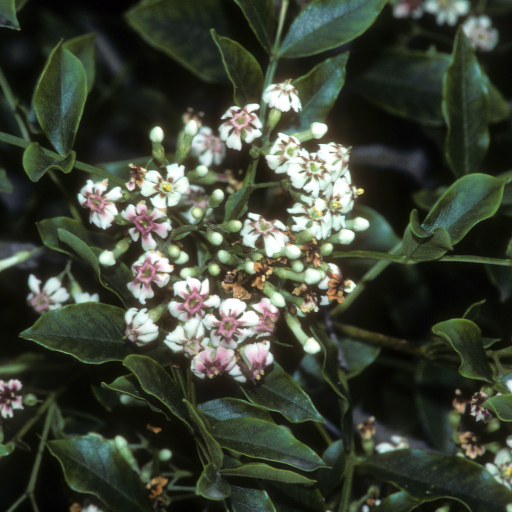
Known as the Wild Jasmine or the Wing-leaved Wooden-pear, Schrebera alata is a hidden gem of the African landscape. This graceful tree is beloved by gardeners in warmer climates for its intoxicating evening fragrance and its unique, "winged" foliage. It carries an air of mystery, as its delicate, orchid-like flowers wait for the sun to set before releasing their sweet perfume to attract nocturnal visitors.
🔍 How to Identify
- 🍃 The Winged Rachis: The most distinct feature is the "winged" leaf stalk. The central stem of each compound leaf has flat, leaf-like extensions on either side, making the stem itself look like a narrow leaf.
- 🌸 Bicolored Blooms: The flowers are trumpet-shaped and wax-like, usually white or pale pink with a striking deep maroon or purplish center. They appear in clusters at the ends of branches.
- 🍐 Wooden "Pears": After flowering, the tree produces hard, woody, pear-shaped capsules. When mature, these split open like a shell to release winged seeds that flutter away in the wind.
🏡 In Your Garden
- 🦋 A Pollinator Magnet: Because the flowers are most fragrant at night, they are a primary food source for hawk moths. Planting this near a patio allows you to enjoy the scent during summer evenings.
- 🌱 Tough Once Established: While it prefers well-drained, fertile soil, the Wild Jasmine is surprisingly drought-tolerant. It has a non-aggressive root system, making it a safe choice for planting near walkways or walls.
- ✂️ Growth Habit: It can be grown as a large, multi-stemmed shrub or trained into a small, elegant tree. It responds well to light pruning to maintain a tidy shape.
⚠️ Safety & Toxicity
- 🌿 General Safety: Schrebera alata is not widely known to be toxic to humans or common household pets like dogs and cats.
- 🚫 Precaution: While it is considered safe, the woody seed capsules are very hard and could pose a choking hazard for small children or curious pets if chewed on. As with any ornamental plant, it is best discouraged from being ingested.
✨ Fun Fact
The genus name Schrebera honors Johann Christian Daniel von Schreber, a 18th-century German naturalist who was a student of Carl Linnaeus, the "father of modern taxonomy." The "pear" in its common name refers strictly to the shape of the fruit—don't try to eat it, as it is as hard as a piece of timber!

Detailed Care Instructions
To grow a Schrebera Alata plant, also known as the false yellowwood, you can follow these steps:
- Choose a suitable location: The Schrebera Alata plant prefers full sun to partial shade. Find a location that receives direct sunlight for at least a few hours a day. If planting in a pot, ensure it has proper drainage holes.
- Prepare the soil: The plant prefers well-draining soil, so amend your garden soil with sand or perlite to increase drainage. If planting in a pot, use a well-draining potting mix.
- Planting: Dig a hole twice as wide and equally deep as the root ball of the plant. Place the plant in the hole, making sure the top of the root ball is level with or slightly above the soil surface. Backfill the hole with soil, gently firming it around the roots.
- Watering: Initially, water the plant thoroughly after planting to settle the soil around the roots. Afterwards, keep the soil evenly moist but not soggy. Allow the top few inches of soil to dry out before watering again. Avoid overwatering as it can lead to root rot.
- Fertilizing: During the growing season (spring to early autumn), you can fertilize the plant every 4-6 weeks with a balanced, slow-release fertilizer. Follow the product instructions for application rates.
- Pruning: Prune the plant to maintain its shape and remove any dead or damaged branches. Pruning can be done during the dormant season (late winter to early spring).
- Mulching: Apply a layer of organic mulch, such as wood chips or shredded bark, around the base of the plant. Mulching helps conserve moisture, suppress weed growth, and keep the roots cool.
- Protecting from cold: If you live in a colder climate where winter temperatures drop below 10°C (50°F), it would be best to grow the Schrebera Alata plant in a pot and move it indoors or to a sheltered area during winter.
- Monitoring pests and diseases: The Schrebera Alata plant is generally resilient to pests and diseases. However, you should regularly inspect the plant for any signs of common issues like aphids, scale insects, or fungal diseases. Treat as necessary with appropriate measures, such as insecticidal soap or fungicides.
Remember to research further or consult local gardening experts for specific care tips based on your location and climate.

Place in a bright room that is sun drenched almost all day. Or directly in a south-facing window.

To water this plant, check the soil moisture level by inserting your finger about 2 inches into the soil. If it feels dry, it's time to water. Use room temperature water and pour it slowly at the base of the plant until water starts to come out of the drainage hole. Avoid getting water on the leaves. Water less frequently during the winter months when the plant is dormant. Adjust watering frequency based on the amount of light and humidity in the environment.
To fertilize this plant, use a balanced liquid fertilizer with equal parts of nitrogen, phosphorus, and potassium. Apply the fertilizer once a month during the growing season, which is typically from spring to fall. Mix the fertilizer with water at a rate recommended on the fertilizer package and water the plant thoroughly with the solution. Avoid over-fertilizing as it can damage the plant.
When planting Schrebera Alata, it is recommended to use a well-draining soil mix that is slightly acidic with a pH range of 5.5 to 6.5. The soil should be a blend of peat moss, perlite, and sand or vermiculite to enhance the drainage capacity and prevent waterlogging. This plant prefers rich humus soil texture with good porosity and high fertility. In general, the soil should be kept moist, but not waterlogged, and should be allowed to dry slightly between watering. It is also recommended to mulch the soil surface around the plant with organic matter such as compost or leaf litter to retain moisture and provide nutrients for growth.
Schrebera alata is a plant that can be propagated through several methods, such as seed propagation, stem cuttings, and air layering.
Seed propagation involves sowing the seeds in a well-draining potting mix and keeping them moist. It is best to sow the seeds soon after they are harvested as they lose viability quickly. It can take 3-4 weeks for the seeds to germinate, and then the seedlings should be transplanted into individual pots.
Stem cuttings can also be used for propagation by taking a 4-6 inch cutting from the tip of the stem, removing the lower leaves, and placing it in a rooting hormone. The cutting should then be planted in a well-draining potting mix and kept moist. It can take 3-4 weeks for the cutting to root, and then it can be transplanted into its final pot.
Air layering is another method of propagation that involves making a small cut in the stem and wrapping it with damp sphagnum moss. The moss is then wrapped in plastic wrap to keep it moist, and roots should appear within a few weeks. Once roots have formed, the stem can be cut below the moss and planted in a well-draining potting mix.
Regardless of which method is used, the propagation should take place in a warm, bright environment away from direct sunlight until new growth appears. The new plants should then be gradually acclimatized to their final growing conditions.








