Plant Overview
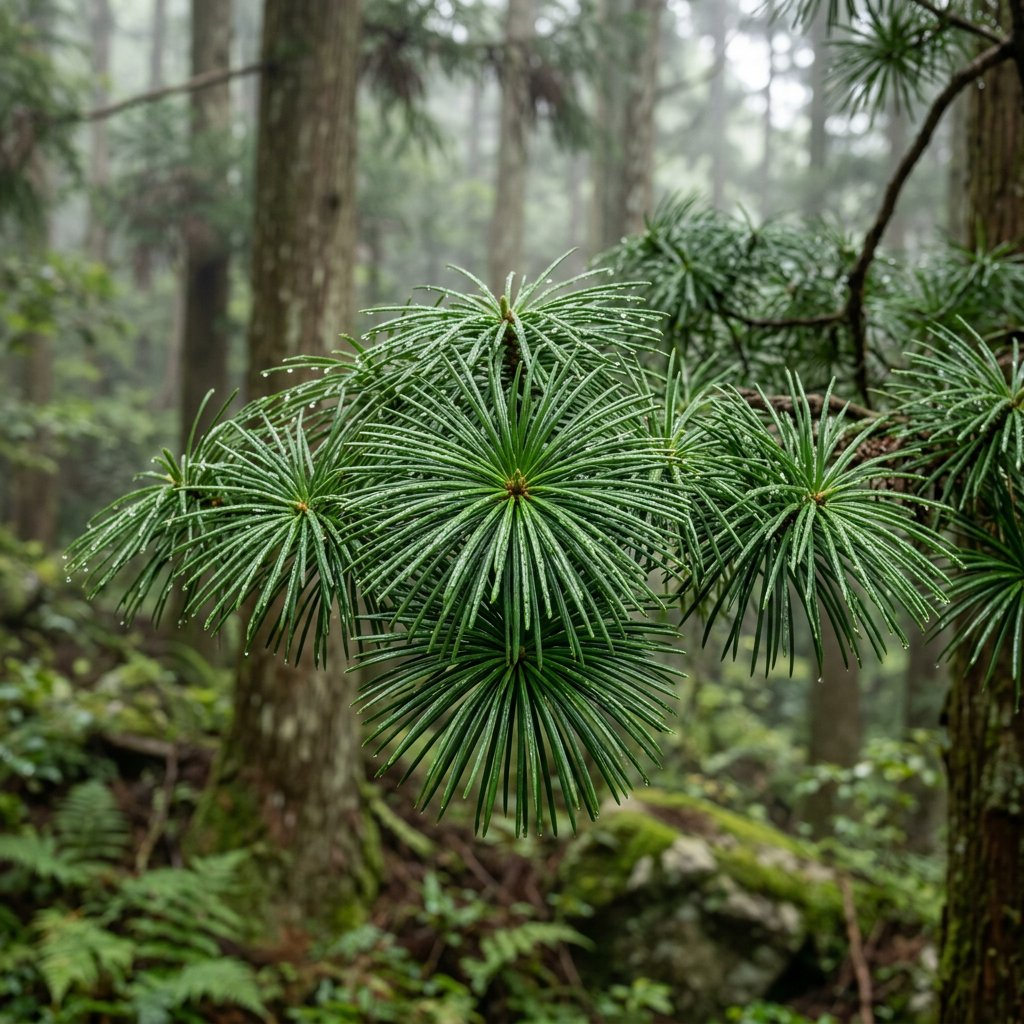
The Japanese Umbrella Pine is a botanical time traveler, a "living fossil" that has remained unchanged for over 230 million years. Known as Koyamaki in its native Japan, it isn't actually a true pine but the sole survivor of its own prehistoric family, Sciadopityaceae. Its name comes from the striking way its thick, glossy needles radiate from the stems like the ribs of an old-fashioned silk umbrella.
🔍 How to Identify
- ☂️ The "Umbrella" Whorls: The most distinct feature is the arrangement of the needles. They grow in circular clusters (whorls) at the ends of branches, mimicking the spokes of an umbrella.
- 🍃 Rubbery Texture: Unlike the thin, papery needles of a standard pine, these needles are thick, fleshy, and have a unique rubbery feel when squeezed.
- 🌲 Pyramidal Shape: While it grows very slowly, it eventually forms a majestic, dense spire. The bark is a beautiful reddish-brown that peels away in long, thin strips as the tree matures.
🏡 In Your Garden
- ⏳ Patience is a Virtue: This is one of the slowest-growing conifers in the world. It may only put on a few inches of height per year, making it an excellent choice for small landscapes or as a long-term focal point.
- 💧 The "Goldilocks" Soil: It is quite picky about its feet. It craves rich, acidic soil that is consistently moist but never soggy. It lacks a strong tolerance for drought or high-alkaline (lime) soils, which can cause the needles to yellow.
- 🛡️ Site Selection: Because it possesses a deep taproot, it hates being moved once established. Choose its "forever home" carefully, ideally in a spot protected from harsh, drying winter winds that can "burn" the foliage.
⚠️ Safety & Toxicity
- ✅ Safe Status: The Japanese Umbrella Pine is generally considered non-toxic to humans, dogs, and cats.
- 🌵 Mechanical Irritation: While not chemically toxic, the needles are quite stiff and can be sharp at the tips. Keep it away from high-traffic paths where skin might brush against the rigid foliage.
✨ Fun Fact
The Koyamaki is one of the most prestigious trees in Japan and was chosen as the personal crest (mon) for Prince Hisahito of Akishino. It is also one of the "Five Sacred Trees of Kiso," historically protected by the Shogunate.

Detailed Care Instructions
| Soil Ph | Slightly Acidic |
| Lighting | Full Sun |
| Soil Type | Loamy, Well-Drained |
| Mature Size | 25 To 40 Feet In Height And 15 To 20 Feet In Width |
| Native Area | Japan |
| Sun Exposure | Full Sun |
| Hardiness Zones | 5-8 |
To grow Sciadopitys Verticillata (Japanese umbrella pine), follow these steps:
- Choose the right location: Select a spot that receives full sun to partial shade. The soil should be well-draining, rich in organic matter, and slightly acidic (pH 5.5-6.5).
- Planting: Dig a hole slightly wider and deeper than the plant's root ball. Place the plant in the hole, ensuring that the top of the root ball is level with or slightly above the soil surface. Backfill the hole with the amended soil, firming it gently around the roots.
- Watering: Provide regular watering, especially during the first year after planting, to keep the soil moist but not overly saturated. Once established, Sciadopitys Verticillata has moderate drought tolerance.
- Mulching: Apply a layer of organic mulch around the base of the plant to help retain moisture, suppress weed growth, and regulate soil temperature. Keep the mulch a few inches away from the trunk to prevent rotting.
- Fertilization: Feed the plant with a slow-release balanced fertilizer in early spring. Follow the package instructions for application rates. Avoid over-fertilizing, as excessive nitrogen can cause weak growth.
- Pruning: Prune the plant sparingly, mainly to remove dead, damaged, or crossing branches. Pruning should be done in early spring before new growth begins.
- Protection: Protect the plant from strong winds and extreme weather conditions, as Sciadopitys Verticillata has a somewhat delicate structure.
- Pest and Disease Control: Monitor the plant regularly for pests like scale insects or spider mites. Insecticidal soaps or oils can be used to control these pests. Ensure good air circulation and avoid overwatering to prevent fungal diseases.
Remember that growing Sciadopitys Verticillata requires patience, as it is a slow-growing tree that may take several years to reach its full height.

Place in a bright room that is sun drenched almost all day. Or directly in a south-facing window.

The best way to water this particular plant is to provide consistent moisture to the soil at its base. It is important to avoid getting water on the needles or foliage as this can cause damage and potential disease. The frequency of watering will depend on the climate and the moisture level of the soil. The best time to water is in the morning or late afternoon to avoid midday heat and evaporation. Always water deeply but make sure not to let the soil become too saturated, which can lead to root rot. Additionally, consider mulching around the base of the plant to help retain moisture in the soil.
The best time to fertilize the plant is during the growing season. Use a balanced fertilizer with equal levels of nitrogen, phosphorus, and potassium. Apply the fertilizer around the base of the plant and water it in thoroughly. Avoid over-fertilizing as this can damage the plant.
Sciadopitys Verticillata is a coniferous species that thrives in well-drained soils. The soil should be slightly acidic, with a pH range between 5.5 and 6.5. It should be evenly moist and not waterlogged. The soil structure should be loose and aerated to allow proper root growth. A mixture of peat moss and pine bark can be added to the soil to improve drainage and increase acidity. The plant prefers soils with high organic matter content, which can be achieved by adding compost or well-rotted manure. It is important to avoid using heavy clay soils, which can lead to waterlogging and root rot. The soil should be kept consistently moist during the growing season, but not waterlogged, as this can lead to root rot. Regular fertilization with balanced organic fertilizers can help promote healthy growth and plant vigor.
One method of propagating this plant species is through the use of seeds. You can start by selecting healthy and mature cones from the parent plant. Ensure that the cones are fully mature by checking that they have turned brown and have started to open up.
Once you have harvested the cones, you can extract the seeds by gently shaking the cones or using tweezers to pluck them out. Clean the seeds properly, removing any debris or parts of the cone that may have been collected.
Prepare a suitable growing medium that allows good drainage for the plant. One possible mix could comprise of equal parts perlite, peat moss, and sand. Fill small seedling trays with the mixture and moisten it thoroughly.
Sow the seeds on the surface of the mix and lightly press them down to ensure they are in contact with the soil. Cover the trays with a clear plastic wrap to retain moisture and warmth.
Place the trays in a warm location with indirect sunlight. It may take several weeks to several months for the seeds to germinate. Once they do, you can remove the plastic wrap and continue to grow them until they reach the appropriate size before transferring them to a permanent location.
Common pests of the japanese umbrella-pine include Scale insect, spider mites, aphids. Make a habit of checking your japanese umbrella-pine frequently for pests so that any infestations can be caught and managed early.








