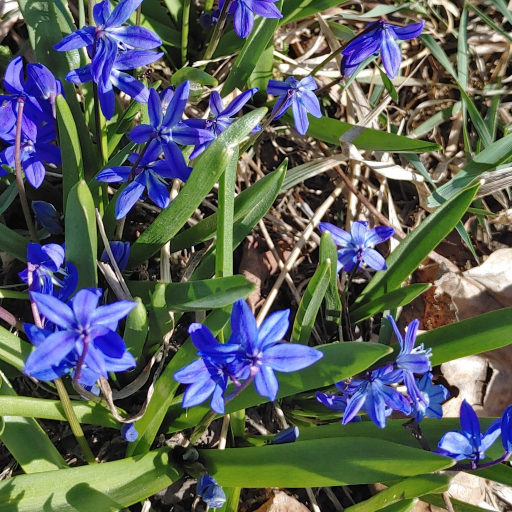
Plant Overview
Known as the "Siberian Squill," this tiny powerhouse is responsible for the stunning rivers of electric blue that flow across lawns and forest floors in early spring. Despite its cold-sounding name, it is a resilient survivor that brings a sense of magic to the thawing landscape, often blooming while snow is still on the ground. It is the perfect choice for gardeners who want a "plant it and forget it" burst of color.
🔍 How to Identify
- 💧 Nodding Bells: The flowers are bell-shaped and hang gracefully downward, usually featuring six petals with a distinct dark blue stripe running down the center of each.
- 🍃 Strap-like Foliage: Narrow, lance-shaped green leaves emerge in small clusters, providing a lush, grass-like backdrop for the vivid blossoms.
- 💙 Blue Anthers: If you peek inside the nodding flower, you will see tiny, dark blue-tipped stamens, which is a relatively rare trait in the botanical world.
🏡 In Your Garden
- 🌳 Under-Tree Specialist: It thrives in the "dappled sunlight" window of early spring. It performs best under deciduous trees, soaking up the sun before the canopy leaves fill in and provide summer shade.
- 🐜 Naturalizing Power: This plant is a master of spreading. It moves through your garden via "offsets" (baby bulbs) and seeds, eventually creating a dense, azure carpet that requires almost zero maintenance once established.
- 🌱 Mowing Discipline: To ensure a sea of blue every year, wait until the foliage has completely turned yellow and withered before mowing it down. This allows the bulb to store the energy it needs for next year’s bloom.
⚠️ Safety & Toxicity
- 🚫 Toxic if Ingested: Every part of the Siberian Squill, particularly the bulb, contains chemicals called cardiac glycosides.
- 🐾 Pet & Child Alert: Ingestion can lead to stomach upset, vomiting, or more serious heart-related issues in cats, dogs, and small children. It is best planted in areas where curious pets won't dig up the bulbs.
- 🧤 Skin Sensitivity: Some gardeners report mild skin irritation after handling the bulbs; wearing gloves during planting is a wise precaution.
✨ Fun Fact
- 🦋 The Blue Pollen Mystery: While most flowers produce yellow, white, or orange pollen to attract insects, Scilla siberica is one of the very few plants in the world that produces naturally blue pollen!

Detailed Care Instructions
| Lighting | Full Sun |
To grow Scilla Siberica plants, you can follow the steps below:
- Soil preparation: Choose a well-draining soil for planting Scilla Siberica bulbs. Amend heavy clay or compacted soil with organic matter like compost to improve drainage.
- Bulb selection: Purchase healthy Scilla Siberica bulbs from a reputable nursery or online source. Choose bulbs that are firm, plump, and free from any signs of damage or decay.
- Planting time: Plant the bulbs in early fall or late summer, around 4-6 weeks before the first frost. This timing allows the bulbs to establish roots before winter and bloom in the following spring.
- Planting depth: Dig holes that are about 3-4 inches deep. Place the bulbs in the holes with the pointed end facing upwards. Space the bulbs 2-3 inches apart, as they will multiply over time.
- Watering: After planting, water the bulbs thoroughly to settle the soil. Keep the soil slightly moist during the growing season, but avoid overwatering, as excessive moisture can cause bulb rot.
- Sunlight requirements: Scilla Siberica plants prefer full sun to part shade locations. Choose a spot where they can receive at least 6 hours of direct sunlight per day.
- Fertilization: Apply a balanced bulb fertilizer or bone meal according to package instructions in early spring when the foliage emerges. This will promote healthy growth and blooming.
- Maintenance: Keep the area around Scilla Siberica plants free from weeds, as they can compete for nutrients and water. Deadhead any faded flowers to redirect energy towards bulb development.
- Winter care: Scilla Siberica bulbs are generally hardy and can withstand frost and cold temperatures. However, you can add a layer of mulch over the planting area to protect them during extreme winter conditions.
- Naturalization: Scilla Siberica plants have a tendency to naturalize and multiply over time. Allow the foliage to die back naturally after blooming, as this helps replenish the bulb's energy reserves for the next season.
By following these steps, you should be able to successfully grow Scilla Siberica plants and enjoy their beautiful blue flowers in spring.

Place in a window with dappled sun or a spot in the middle of a room. Or directly in a window facing west or east.

This plant should be watered thoroughly, but infrequently. When the top layer of soil becomes dry, it is time to water. Avoid over-watering, as this can lead to root rot. Additionally, this plant prefers well-draining soil, so make sure the pot has adequate drainage holes and water does not accumulate at the bottom. It is suggested to water at the base of the plant to avoid wetting the foliage, which can lead to diseases.
To fertilize this plant, use a balanced, all-purpose fertilizer in early spring, just as the plant emerges from dormancy. Apply the fertilizer according to the manufacturer's instructions, being careful not to over-fertilize as this may harm the plant. Water the plant well after fertilization to ensure the nutrients are absorbed properly. Repeat the process in the following spring and avoid fertilizing during the growing season as this can lead to excessive growth and poor flowering.
When planting Scilla Siberica, it is essential to choose a suitable soil type to support its growth and development. This plant thrives in well-draining, loamy soil that is rich in organic matter and has a slightly acidic pH level. The ideal soil should be moist enough to support root growth without being excessively waterlogged, as this can cause damage to the roots.
To prepare the soil for planting Scilla Siberica, it is essential to till the ground and remove any weeds or other plants that may compete for nutrients. Adding organic matter, such as compost or mulch, can help improve soil fertility and structure, providing beneficial microorganisms that help break down organic matter and improve soil health.
If the soil is heavy or poorly drained, it may be necessary to amend it with some sand or other material to improve drainage. It is important to avoid over-fertilizing the soil, as this can lead to excessive leaf growth at the expense of flower development.
Overall, choosing a well-draining, rich soil that is slightly acidic and has adequate moisture retention and drainage is the key to unlocking the full potential of Scilla Siberica.
Scilla Siberica plant can be propagated through division. To do this, carefully dig up the plant and shake off excess soil. Gently separate the individual offsets or bulbs from the parent plant, making sure that each one has roots attached. Plant the bulbs at the same depth as they were previously growing, in a well-drained soil, and water thoroughly. It is best to propagate Scilla Siberica bulbs in the fall after the foliage has died back, or in early spring before new growth begins.
Common pests of the siberian squill include Scale insect, mealybugs, spider mites, fungus gnats, aphids, thrips. Make a habit of checking your siberian squill frequently for pests so that any infestations can be caught and managed early.








