Plant Overview
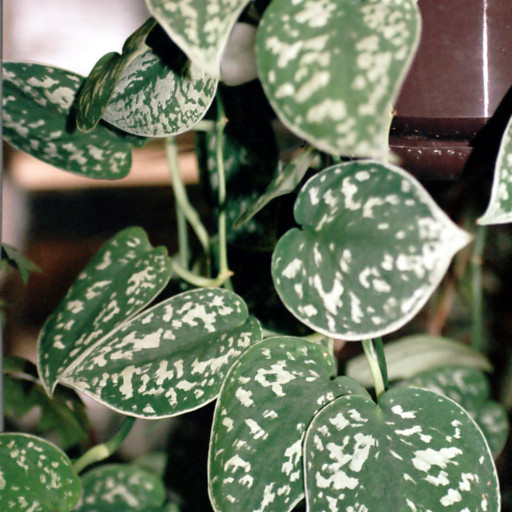
Affectionately known as the Satin Pothos or Silver Vine, Scindapsus pictus is a master of understated elegance. While its name suggests it belongs to the Pothos family, it is actually a distinct genus native to the humid rainforests of Southeast Asia. It is beloved by interior designers for its "shimmery" appearance, which looks as though someone has delicately flicked silver paint across its matte, velvet-textured leaves.
🔍 How to Identify
- 🍃 Leaf Texture: Unlike the waxy, shiny leaves of a standard Pothos, these leaves have a distinct matte finish that feels like soft suede or satin to the touch.
- ✨ Variegation: The foliage is decorated with irregular splashes, spots, or "splotches" of silvery-grey that catch the light and create a metallic sheen.
- 📐 Asymmetrical Shape: The leaves are heart-shaped but often slightly lopsided or curved to one side, a trait known as being "falcate."
- 🌿 Growth Habit: It is a natural climber that uses aerial roots to latch onto trees, though in homes, it is most commonly seen trailing gracefully from hanging baskets or bookshelves.
🏡 In Your Garden
- 💧 Communication Skills: This plant is an excellent "communicator." When it is thirsty, its leaves will curl inward significantly. This is your signal to water; once quenched, the leaves will flatten back out within hours.
- ☀️ Light Sensitivity: Because of its silver variegation, it thrives in bright, indirect light. If the light is too low, the silver spots may fade to a solid green as the plant tries to maximize its chlorophyll for energy.
- 🪴 Well-Draining Needs: It is highly susceptible to root rot if left in heavy, soggy soil. It prefers a "chunky" mix—adding orchid bark or perlite to your potting soil will keep the roots happy and aerated.
⚠️ Safety & Toxicity
- 🐾 Status: Toxic to pets and humans.
- 🚫 Details: Like many members of the Araceae family, it contains insoluble calcium oxalate crystals. If chewed or swallowed, it can cause immediate mouth irritation, swelling of the throat, and digestive upset in cats, dogs, and curious toddlers.
✨ Fun Fact
The species name pictus literally translates from Latin to "painted." This perfectly describes the plant's appearance, as the silver variegation is so precise it looks like a botanical artist spent hours hand-painting each leaf with metallic watercolors.

Detailed Care Instructions
While it’s not required, these houseplants do well when provided with a support to climb like a moss pole or trellis.
How can I make my Scindapsus pictus ‘Exotica’ grow faster?
This Scindapsus is known for being slow-growing compared to other Scindapsus varieties, but ensuring it has the proper indoor growing conditions can encourage faster growth. This means providing it with plenty of bright, indirect light; regular watering; warm temperatures and some humidity; and regular fertilizing during the spring and summer.
Is the Scindapsus pictus ‘Exotica’ rare?
This tropical plant is a common houseplant and is generally not considered to be rare. It is widely available at many greenhouses and plant shops thanks to its ease of care, stunning appearance, and the fact that it propagates readily.
| Soil Ph | 6.1-6.5 |
| Humidity | Normal |
| Lighting | Part Sun |
| Toxicity | Poisonous |
| Soil Type | Potting Soil Mix |
| Bloom Time | Rarely Flowers Indoors, Insignificant |
| Difficulty | Easy |
| Plant Type | Vine |
| Hibernation | Cold Period |
| Mature Size | 3 To 10 Feet High, 2 To 4 Foot Spread |
| Native Area | Bangladesh, Malesia |
| Temperature | 18°C - 24°C |
| Sun Exposure | Part Shade, Low Light |
| Hardiness Zones | 11 To 12 |
To grow a Scindapsus Pictus plant, you can follow these simple steps:
- Choose a suitable pot: Ensure that the pot has good drainage holes and is large enough to accommodate the plant as it grows.
- Soil and potting mix: Use a well-draining potting mix, consisting of a combination of peat moss, perlite, and compost. This will provide the necessary nutrients and drainage for the plant.
- Light requirements: Scindapsus Pictus plants prefer bright, indirect light. Place them near a window where they receive filtered sunlight or in a room with bright, indirect light. Avoid exposing them to direct sunlight, as it can scorch their leaves.
- Watering: Water the plant thoroughly and let the soil dry out between waterings. It is better to underwater than overwater, as these plants are susceptible to root rot. Check the soil moisture by inserting your finger about an inch deep into the soil - if it feels dry, it's time to water.
- Humidity: Scindapsus Pictus plants prefer high humidity. You can increase humidity by placing a humidifier nearby, grouping plants together, or placing a tray of water near the plant. Misting the leaves occasionally also helps increase humidity.
- Temperature requirements: These plants thrive in average room temperatures between 60-85°F (15-29°C). Avoid exposing them to drafts or sudden temperature changes.
- Fertilization: Feed your Scindapsus Pictus plant with a balanced, water-soluble houseplant fertilizer once a month during the growing season (spring and summer). Follow the instructions on the fertilizer label for proper dosage.
- Pruning: Prune your plant as needed to maintain its shape and size. Regular pruning also helps stimulate new growth and keeps the plant healthy.
- Propagation: Scindapsus Pictus plants can be easily propagated by stem cuttings. Simply cut a healthy stem with a few leaves, remove the lower leaves, and place it in a glass of water or directly into a pot with moist potting mix. Keep it in a warm and bright location until roots develop, then transplant into a new pot.
- Pest control: Keep an eye out for common houseplant pests like spider mites, aphids, and mealybugs. If you notice any pests, treat them promptly with insecticidal soap or neem oil.
Following these steps will help you successfully grow a Scindapsus Pictus plant and enjoy its beautiful trailing vines and striking leaves.

Place in a window with dappled sun or a spot in the middle of a room. Or directly in a window facing west or east.

To water this plant, you should first check the soil moisture level by sticking your finger about an inch deep into the soil. If it feels dry, it's time to water the plant. Use room temperature water and water until it starts to drain out of the bottom of the pot. Make sure not to water too frequently as this can lead to root rot. It's better to let the soil dry out slightly between watering. However, you also don't want to let the soil completely dry out as this can cause stress to the plant. It's important to ensure good drainage in the pot as well.
For this particular plant, it is recommended to fertilize it using a balanced, water-soluble fertilizer once a month during the growing season (spring and summer). Mix the fertilizer into the watering can and ensure that the soil is moist before watering. During the dormant season (fall and winter), reduce the frequency of fertilization to every 6-8 weeks. It is also important to follow the manufacturer's instructions on the fertilizer packaging. Avoid over-fertilizing as this can lead to leaf burn or other plant damage.
The best type of soil to use for this plant is a well-draining, nutrient-rich soil mix. This can be a combination of potting soil, perlite, and peat moss. It is important to make sure the soil is not too compact and allows for proper drainage to prevent root rot. The soil should have a slightly acidic pH level of around 6.0 to 6.5. Additionally, it is recommended to add organic matter such as compost or worm castings to the soil to promote healthy growth.
Scindapsus Pictus plant can be propagated through stem cuttings or by division. For stem cuttings, select a healthy stem and cut it with a clean, sharp blade, ensuring that it is at least 4-6 inches long and has a few leaves attached to it. Remove the lower leaves and any flowers or buds, and dip the cut end into rooting hormone powder. Plant the cutting into a well-draining soil mix and keep it in a warm, bright location with high humidity. Water it regularly and mist the leaves to encourage new growth.
For division, carefully remove the plant from its pot and separate the roots and stems into two or more sections, making sure each section has a good root system and some healthy leaves. Plant each section in a new pot with fresh potting soil and water it well. Place it in a warm, bright location with high humidity and keep the soil moist but not too wet. New growth should appear within a few weeks as the plant becomes established in its new pot.
Common pests of the satin pothos include Mealybugs, spider mites. Make a habit of checking your satin pothos frequently for pests so that any infestations can be caught and managed early.








