Plant Overview
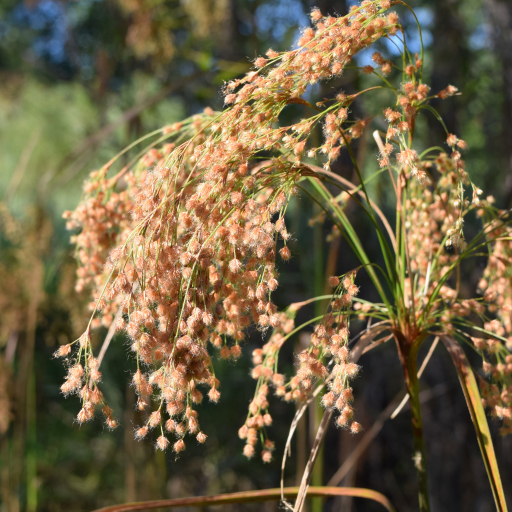
Often referred to as Woolgrass, Scirpus cyperinus is a striking native sedge that transforms from a lush green fountain into a sea of cinnamon-colored fluff as the seasons change. Despite its name, it isn't a true grass but a "wetland warrior" found swaying in marshes and along pond edges across North America. It is a favorite for nature lovers looking to add architectural height and soft, tactile texture to water-heavy landscapes.
🔍 How to Identify
- 🌾 The "Wooly" Tops: The most distinct feature is its terminal flower clusters. In late summer, these mature into dense, fuzzy, brownish-red spikelets that look like tufts of sheep’s wool.
- 📐 Sedges Have Edges: If you feel the tall, sturdy stems, you will notice they are slightly triangular rather than round—a classic characteristic that distinguishes sedges from grasses.
- 🗡️ Fountain Foliage: The leaves are long, strap-like, and arch gracefully outward from the base of the plant, reaching heights of 3 to 5 feet.
🏡 In Your Garden
- 💧 The Rain Garden Hero: Woolgrass is an absolute "water-hog." It thrives in soggy soil where most plants would suffer from root rot, making it the perfect choice for low-lying spots or the muddy margins of a backyard pond.
- 🐢 Wildlife Sanctuary: Because it grows in dense clumps, it provides vital nesting habitat for wetland birds and hiding spots for frogs and turtles. Its seeds are also a high-energy snack for local songbirds in the autumn.
⚠️ Safety & Toxicity
- ✅ Non-Toxic: Woolgrass is generally considered safe and non-toxic for humans, dogs, and cats.
- 🧤 Handle with Care: While not poisonous, the edges of the long leaves can be quite sharp. It is recommended to wear gardening gloves when pruning or dividing the plant to avoid irritating "paper cuts" on your hands.
✨ Fun Fact
Native American tribes once harvested the fluffy, wooly seed heads of this plant to use as soft, insulating stuffing for pillows, mattresses, and even baby cradles!

Detailed Care Instructions
To grow Scirpus cyperinus, follow these steps:
- Climate: This plant prefers wet or marshy conditions, so make sure you are in a region with a high water table or have access to a water source for irrigation.
- Planting location: Choose a location with full or partial sun exposure and where the soil is consistently moist. Scirpus cyperinus can tolerate some shade but thrives in sunnier areas.
- Soil preparation: Prepare the planting area by loosening the soil to a depth of about 6-8 inches. Remove any weeds or grass from the site.
- Planting: Transplant young Scirpus cyperinus plants into the prepared soil. Space them at least 12-18 inches apart to allow for their growth. Plant them at a similar depth to their original container and water thoroughly.
- Watering: Keep the soil consistently moist, but not waterlogged, throughout the growing season. Depending on your climate and rainfall, this may require regular watering.
- Mulching: Apply a layer of organic mulch, such as compost or straw, around the base of the plants to help retain moisture and suppress weeds.
- Fertilization: Scirpus cyperinus generally does not require heavy fertilization. However, if the plants show signs of nutrient deficiency, you can apply a slow-release, balanced fertilizer according to the manufacturer's instructions.
- Maintenance: Remove any weeds that may compete with the plants for nutrients and water. Cut back any dead or damaged plant material at the end of the growing season.
- Division: Scirpus cyperinus can be divided every few years to rejuvenate the plant and control its size. Carefully dig up the clump and separate it into smaller sections, each with a healthy root system, and replant them in suitable areas.
- Tolerating winter: In colder climates, Scirpus cyperinus may die back in winter and regrow in spring. It is hardy to USDA zones 4-10.
Remember that individual plant care may vary depending on your specific location, soil conditions, and climate. It's always helpful to consult with local gardening experts or extension services for region-specific advice.

Place in a bright room that is sun drenched almost all day. Or directly in a south-facing window.

Scirpus Cyperinus is a plant that requires adequate water to grow and thrive. To water this plant, pour a moderate amount of water on the soil surrounding the roots. Ensure that the water reaches the base of the plant and soaks into the soil. The amount of water required may vary depending on the size of the plant and the environmental conditions. It is important to avoid overwatering, which can lead to root rot. As such, it is recommended to wait until the top layer of soil has dried out before watering again. Regularly checking the moisture level of the soil can help determine when to water the plant. Additionally, ensure that the plant is not in standing water, as this can also lead to root rot.
To fertilize this plant, you should use a balanced fertilizer with equal or slightly higher levels of nitrogen, phosphorus, and potassium. Apply the fertilizer in the early spring or late fall when new growth is beginning or before the plant goes into dormancy. Mix the fertilizer into the topsoil around the base of the plant and water well after application. Avoid over-fertilizing, which can result in excessive growth and weaken the plant.
It is recommended to use a well-draining soil that is rich in organic matter and nutrients for this plant. The soil pH should be slightly acidic to neutral (between 5.5 and 7.5). It is also important to keep the soil consistently moist, but not waterlogged, as this plant thrives in wetland habitats. Using a soil that is specifically formulated for bog plants can also be beneficial for Scirpus Cyperinus.
One method of propagating this plant is by collecting mature seed heads in the fall after they have turned brown. The seed heads should be carefully removed from the plant and placed in a paper bag to dry for a few days. Once the seeds have dried, they can be sown in a seed tray filled with a well-draining soil mix and covered with a thin layer of soil. The tray should be kept moist and placed in a warm and brightly lit area.
Another method of propagation is by dividing the plant in the spring or fall. The plant should be gently lifted from the ground and the roots carefully separated into smaller sections. Each section should have healthy roots and shoots and can be replanted in a new location with well-draining soil.
A third method of propagation is by taking stem cuttings in the summer. Healthy stems with several leaves should be chosen and cut into 4-6 inch sections. The lower leaves should be removed and the stem inserted into a rooting hormone and then into a well-draining soil mix. The cutting should be kept moist and placed in a warm and brightly lit area until roots have formed.








