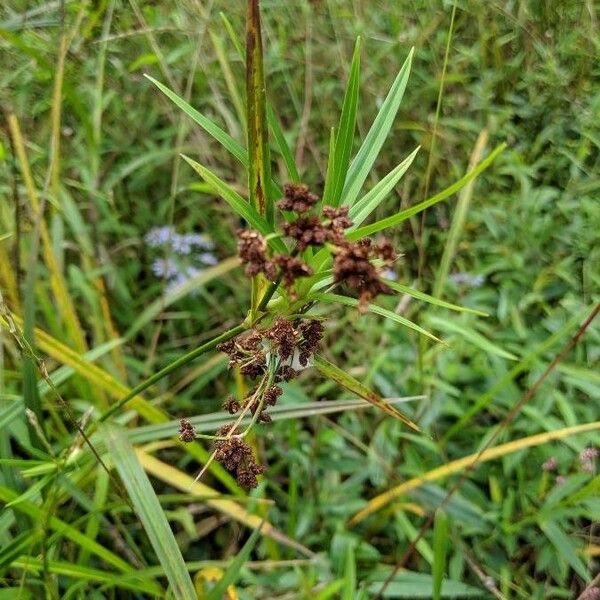
Plant Overview
Often called the Many-leaved Bulrush, this elegant native of Eastern North America is the architect of the wetlands. Unlike its more solitary cousins, it creates lush, leafy textures that provide a structural backbone to any water-logged landscape. It is a favorite among conservationists for its ability to stabilize muddy banks and filter runoff naturally.
🔍 How to Identify
- 📐 Triangular Stems: True to the saying "sedges have edges," the stems are distinctly three-sided and solid, providing a sturdy frame for the plant.
- 🌿 Dense Foliage: As the name polyphyllus suggests, this plant is exceptionally leafy. The flat, grass-like leaves sheath the stem from the base almost to the top, creating a bushy, fountain-like appearance.
- 🌾 Branching Seed Heads: In late summer, the plant produces clusters of tiny, reddish-brown spikelets. These seed heads are arranged in delicate, drooping patterns that sway beautifully in the wind.
🏡 In Your Garden
- 💧 The "Wet Feet" Specialist: This isn't a plant for a dry rock garden; it thrives in constant moisture. It is the perfect candidate for the edges of ponds, rain gardens, or those persistent "problem spots" in your yard that stay soggy after a storm.
- 🦋 Wildlife Magnet: By planting this bulrush, you are building a miniature ecosystem. Its dense growth provides essential nesting cover for waterfowl and serves as a nursery for various wetland insects and amphibians.
⚠️ Safety & Toxicity
- ✅ Non-Toxic Status: The Many-leaved Bulrush is generally considered safe and non-toxic for humans, dogs, and cats. It is a "worry-free" choice for family-friendly landscapes.
- ✂️ Mechanical Irritation: While not poisonous, the leaf blades can be somewhat coarse or sharp along the edges. It is a good idea to wear gardening gloves when pruning or clearing away old growth to avoid minor skin abrasions.
✨ Fun Fact
🔬 Nature’s Bio-Filter: Bulrushes like Scirpus polyphyllus are masters of "phytoremediation." Their root systems host specialized bacteria that can actually break down pollutants and absorb heavy metals, helping to clean the water in their environment.

Detailed Care Instructions
Scirpus polyphyllus, also known as many-leaved bulrush or leafy bulrush, is a wetland plant that thrives in moist, waterlogged conditions. Here are some guidelines on how to grow Scirpus polyphyllus:
Selecting a Site
- Wetlands: Choose a location that is naturally wet, such as the edge of a pond, stream, or marsh.
- Moist Soil: The soil should be consistently moist. Scirpus polyphyllus thrives in waterlogged or shallow standing water conditions.
- Sunlight: This plant prefers full sun to partial shade.
Soil Preparation
- Soil Type: Clay or loamy soils that retain moisture are ideal.
- pH Range: Scirpus polyphyllus prefers slightly acidic to neutral soil (pH 6.0–7.5).
Planting
- Seeds: You can sow seeds directly into moist soil or start them in containers with waterlogged soil. Seeds should be sown in the spring.
- Rhizomes and Transplants: Plant rhizomes or transplants directly into wet soil. This method is usually more reliable than starting from seed.
Maintenance and Care
- Watering: Ensure the soil remains moist. If growing in a garden setting, you may need to water frequently to simulate wetland conditions.
- Fertilization: Typically, no additional fertilization is needed if the plant is growing in its natural wetland habitat. If necessary, you can use a balanced, water-soluble fertilizer during the growing season.
- Mulching: You can use organic mulch around the base to help retain soil moisture.
- Weed Control: Keep the area around the plant free from weeds that might compete for nutrients and water.
- Pest and Disease Control: Generally, Scirpus polyphyllus is not prone to many pests or diseases, especially when grown in suitable wet conditions.
Propagation
- Division: In spring or early summer, you can dig up and divide the rhizomes to propagate new plants.
- Cuttings: Although less common, you can also propagate the plant via stem cuttings taken in early summer.
Winter Care
- In colder climates, the above-ground parts may die back in winter, but the plant will usually regrow from the rhizomes in the spring.
- Ensure the soil stays moist but not frozen.
By following these steps, you can successfully grow Scirpus polyphyllus in suitable wetland or garden conditions.

Place in a bright room that is sun drenched almost all day. Or directly in a south-facing window.

Scirpus polyphyllus, known for its affinity for moist environments, requires specific watering practices to thrive. Here’s a detailed guide on how to water this plant effectively:
1. Watering Frequency:
- Consistency is Key: Ensure the soil remains consistently moist, as this plant does not tolerate drought well.
- Frequency: Typically, watering should be done every 2-3 days, but this can vary depending on the climate and soil drainage.
2. Watering Method:
- Deep Watering: Use a watering can or hose to deeply saturate the soil. This helps promote deeper root growth.
- Avoid Overhead Watering: While occasional misting is fine, avoid consistent overhead watering as it can promote fungal growth.
3. Soil and Drainage:
- Well-Drained Soil: Although it loves moist conditions, ensure the soil is well-drained to prevent waterlogging.
- Organic Mulch: Applying a thin layer of organic mulch can help retain soil moisture and reduce the frequency of watering.
4. Seasonal Adjustments:
- Spring and Summer: Increase watering during warmer months when evaporation rates are higher.
- Autumn and Winter: Reduce the frequency slightly, as cooler temperatures and slower growth reduce water needs.
5. Water Quality:
- Use Rainwater or Distilled Water: If possible, use rainwater or distilled water to avoid the accumulation of minerals that can occur with tap water.
- Room Temperature Water: Ensure the water is at room temperature to avoid shocking the plant’s root system with extremes of hot or cold water.
6. Signs of Proper Watering:
- Healthy Growth: Vigorous, green growth is a good sign.
- Soil Moisture Check: Insert a finger 1-2 inches into the soil; it should feel damp but not waterlogged.
7. Pots and Containers:
- Drainage Holes: If growing in pots or containers, ensure they have good drainage holes to prevent standing water.
- Trays and Saucers: Empty any excess water from trays or saucers under pots to avoid waterlogging the roots.
By following these guidelines, you can ensure that Scirpus polyphyllus receives the appropriate amount of water necessary for healthy growth. Monitoring the plant regularly and adjusting watering habits based on environmental conditions will help maintain its well-being.
To fertilize Scirpus Polyphyllus, follow these guidelines:
- Timing: Fertilize during the growing season, which is typically from late spring to early fall. Avoid fertilizing in late fall or winter when the plant is dormant.
- Type of Fertilizer: Use a balanced, slow-release fertilizer with an equal ratio of nitrogen (N), phosphorus (P), and potassium (K), such as a 10-10-10 or 14-14-14 blend. Alternatively, you can use a fertilizer formulated for aquatic plants if your Scirpus Polyphyllus is in a pond or water garden.
- Application Method:
- If you are using granular fertilizer, sprinkle it around the base of the plant and lightly work it into the soil.
- If you prefer liquid fertilizer, dilute it according to the manufacturer's instructions and apply it directly to the soil around the plant.
- If you are using granular fertilizer, sprinkle it around the base of the plant and lightly work it into the soil.
- Frequency: Apply fertilizer every 4-6 weeks during the growing season. For slow-release fertilizers, a single application at the beginning of the growing season may be sufficient.
- Watering After Fertilization: After applying fertilizer, water the plant thoroughly to ensure that the nutrients are absorbed into the soil and reach the root system.
- Monitor Plant Health: Keep an eye on the plant for signs of over-fertilization, such as yellowing leaves or stunted growth. Adjust the fertilization regimen as necessary if you observe these symptoms.
By following these steps, you can help ensure that your Scirpus Polyphyllus receives the necessary nutrients to thrive.
Scirpus polyphyllus, a perennial wetland plant, thrives in organically rich, saturated soils. For optimal growth, the following soil characteristics are recommended:
- Soil Composition: A combination of loam and organic matter is ideal. The soil should contain a significant amount of decomposed organic material like leaf mold, compost, or peat to simulate its natural wetland habitat.
- Moisture: The soil must be consistently moist or even fully submerged in water. This plant thrives in wetlands, marshes, and the edges of ponds, so maintaining high moisture levels is crucial.
- pH Level: Slightly acidic to neutral soil pH (around 6.0 to 7.0) is most suitable. Soil testing kits can help determine the pH, and adjustments can be made by adding lime (to increase pH) or sulfur (to decrease pH) if necessary.
- Drainage: While the plant prefers wet soils, it's important to ensure that the soil still has good drainage to prevent stagnation and root rot. This is naturally achieved if the soil is high in organic material and has a loamy texture.
- Nutrient Levels: The plant will benefit from nutrient-rich soil. Implementing slow-release fertilizers or organic compost periodically can provide essential nutrients, particularly nitrogen, which supports its lush green foliage.
By adhering to these soil conditions, Scirpus polyphyllus can be cultivated successfully, mirroring the conditions found in its natural habitat.
Scirpus Polyphyllus can be propagated primarily through two methods: division and seeding. Here’s a detailed guide on each method:
Propagation by Division:
- Best Time to Divide:
- Late winter to early spring or in autumn after the growing season ends.
- Late winter to early spring or in autumn after the growing season ends.
- Selecting and Preparing Plants:
- Choose a healthy parent plant.
- Water the plant well before dividing to reduce stress on the roots.
- Choose a healthy parent plant.
- Digging and Dividing:
- Carefully dig up the plant, keeping as much of the root system intact as possible.
- Gently shake off excess soil to expose the roots.
- Using a sharp, clean knife or spade, divide the root mass into smaller sections, ensuring each division has several shoots and a portion of the root system.
- Carefully dig up the plant, keeping as much of the root system intact as possible.
- Replanting:
- Prepare new planting sites or containers with well-moistened, appropriate soil.
- Plant the divisions at the same depth they were growing previously.
- Space the divisions according to the mature size of the plant.
- Water thoroughly after planting.
- Prepare new planting sites or containers with well-moistened, appropriate soil.
- Aftercare:
- Maintain consistent moisture levels.
- Mulch around the base to retain soil moisture and regulate temperature.
- Protect from strong winds and harsh sun until the plants are well-established.
Propagation by Seeding:
- Maintain consistent moisture levels.
- Seed Collection:
- Allow seed heads to mature on the plant.
- Collect seeds once they turn brown and begin to dry.
- Allow seed heads to mature on the plant.
- Seed Preparation:
- Clean the seeds by removing any chaff or extraneous plant material.
- Seeds can be sown immediately or stored in a cool, dry place until ready to plant.
- Clean the seeds by removing any chaff or extraneous plant material.
- Sowing Seeds:
- Fill seed trays or pots with a well-draining, loamy soil mix.
- Sow the seeds on the surface and gently press them into the soil.
- Lightly cover seeds with a thin layer of fine soil or sand, as they need light to germinate.
- Fill seed trays or pots with a well-draining, loamy soil mix.
- Germination Conditions:
- Maintain a consistently moist environment.
- Provide indirect light or a lightly shaded area for optimal germination.
- Ideal germination temperature is about 68-75°F (20-24°C).
- Maintain a consistently moist environment.
- Transplanting Seedlings:
- Once seedlings are large enough to handle and have developed several true leaves, they can be transplanted to individual pots or their final growing location.
- Harden off seedlings by gradually exposing them to outdoor conditions over a week or two.
- Plant them at the same depth they were growing in their original containers.
- Once seedlings are large enough to handle and have developed several true leaves, they can be transplanted to individual pots or their final growing location.
- Aftercare:
- Maintain regular watering, ensuring the soil stays consistently moist.
- Mulch around young plants to retain moisture and suppress weeds.
- Protect young plants from extreme weather conditions until they are well-established.
Both methods require consistent moisture and careful attention to planting depth and spacing. Whether you choose to propagate by division or seeding, patience and proper care will ensure healthy new plants.
- Maintain regular watering, ensuring the soil stays consistently moist.








