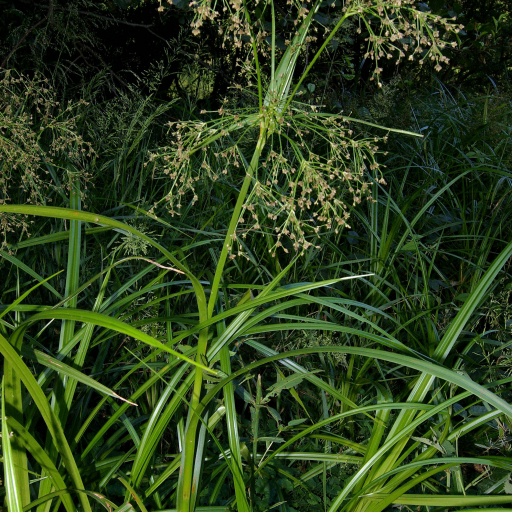
Plant Overview
Known as the Wood Club-rush, this elegant perennial is the "ballerina" of the marshland. While it may look like a common grass at first glance, it belongs to the ancient sedge family and brings a lush, architectural texture to damp landscapes. Historically, its soft, leafy stems were often harvested to provide "strewing herbs" for the floors of cottages, adding a fresh, earthy scent to the home.
🔍 How to Identify
- 📐 Triangular Stems: If you roll the stem between your fingers, you’ll feel three distinct edges. As the botanical rhyme goes: "Sedges have edges!"
- 🍃 Broad Leaves: Unlike many wiry marsh plants, this species has surprisingly broad, bright green leaves that feature a deep "V" or "M" shape when viewed from the end.
- 🎆 The "Exploding" Flower: In mid-summer, the plant produces a large, branched cluster of tiny, dark-brown spikelets that look like a slow-motion firework display at the top of the stem.
🏡 In Your Garden
- 💧 Thirsty Roots: This plant is an obligate wetland lover. It is the perfect solution for "problem areas" like boggy soil, rain gardens, or the shallow edges of a garden pond where other plants might drown.
- 🌳 Shade Tolerance: While many sedges crave full sun, Scirpus sylvaticus is a forest-dweller by nature. it will happily brighten up a damp, shaded corner where most ornamental grasses would fail to thrive.
⚠️ Safety & Toxicity
- ✅ Non-Toxic Status: There are no known toxic properties associated with Wood Club-rush, making it safe for gardens frequented by curious pets or children.
- ✂️ Sharp Edges: Though not poisonous, the leaf margins can be quite coarse. If you are handling or pruning large clumps, wear gardening gloves to avoid minor skin abrasions or "grass cuts."
✨ Fun Fact
The specific epithet sylvaticus translates from Latin to "of the woods." It is one of the few members of its family that prefers the dappled light of a wet forest over the wide-open exposure of a coastal salt marsh.

Detailed Care Instructions
To successfully grow Scirpus Sylvaticus, also known as wood club rush or woodland bulrush, you can follow these steps:
- Plant Selection: Choose healthy plants from a reputable nursery or source. Look for Scirpus Sylvaticus plants that have strong root systems and are free from any disease or damage.
- Sunlight: Ensure your planting location receives partial shade to full sun. Scirpus Sylvaticus prefers areas with some shade, but it can tolerate direct sunlight as well.
- Soil: This plant prefers moist soils, including marshy areas or slightly acidic soil. Mix organic matter like compost or well-rotted manure into the soil before planting to improve its moisture-retaining capacity.
- Planting: Dig a hole that is as deep and wide as the plant's root ball. Place the plant in the hole, ensuring the top of the root ball is level with or slightly above the ground. Backfill the hole with soil, firming it gently around the roots.
- Watering: Keep the newly planted Scirpus Sylvaticus well-watered during the initial few weeks until it establishes roots. Afterward, water it regularly, ensuring the soil remains consistently moist but not waterlogged. Extended periods of drought or overly dry conditions can be detrimental to its growth.
- Mulching: Apply a layer of organic mulch, such as wood chips or straw, around the base of the plant. Mulch helps retain moisture, suppresses weed growth, and maintains a cool root environment.
- Fertilizer: Scirpus Sylvaticus generally doesn't require additional fertilization. However, if your soil lacks nutrients, you can apply a balanced slow-release fertilizer in spring. Follow the manufacturer's instructions for proper application.
- Maintenance: Remove any dead or damaged leaves regularly to maintain the plant's overall health and appearance. In late winter or early spring, cut back any old or dead stems close to the ground to stimulate new growth.
By following these steps, you should be able to grow and maintain a healthy Scirpus Sylvaticus plant.

Place in a bright room that is sun drenched almost all day. Or directly in a south-facing window.

To provide proper hydration for the plant species, you should follow some basic guidelines for watering. Firstly, ensure that the soil is moist, but not excessively damp, before watering. You can use a moisture meter or stick your finger into the soil to check the humidity level. If the soil feels dry an inch below the surface, it's time to water.
You should also avoid watering the plant too often; instead, try to establish a consistent watering schedule. If the plant is in a pot, make sure to use a well-draining soil mix and avoid letting the pot sit in standing water. In general, it's better to water deeply and less frequently than to water superficially multiple times during the week.
For outdoor plants, it's a good idea to water them in the morning or later in the evening when the temperature is cooler to prevent water loss through evaporation. Watering daily is not recommended as it can cause root rot, which can be deadly to the plant species.
In summary, watering Scirpus Sylvaticus plants takes a bit of care and attention. Avoid overwatering or underwatering, and prioritize a regular watering schedule. By following these basic tips, your plant should grow healthy and strong.
To properly fertilize the Scirpus sylvaticus plant, you should first choose a fertilizer that contains high levels of nitrogen, phosphorus, and potassium. Apply the fertilizer to the soil during the plant's growth season, making sure to follow the manufacturer's instructions for application rates and frequency. It is important to water thoroughly after fertilizing to ensure the nutrients are absorbed by the roots. Avoid fertilizing during the plant's dormant season, which is typically in the winter months.
The ideal soil type for Scirpus Sylvaticus plant is a well-draining soil that is rich in nutrients and organic matter. The soil pH should be slightly acidic to neutral, with a range of 5.5 to 7.0. It prefers moist soils and can tolerate periods of flooding or standing water. The soil should be fertile, with a balance of nitrogen, phosphorus, and potassium. Sandy loam or loamy soils are ideal, as these allow for adequate drainage while retaining moisture. However, it can also grow in clay soils as long as the soil is not compacted. When planting, care should be taken to ensure that the soil around the roots is well-aerated, as Scirpus Sylvaticus plant does not do well in waterlogged soils or compacted soil. It prefers full sun to partial shade and is typically grown as an ornamental plant in wetland areas.
Scirpus Sylvaticus is propagated through vegetative means. This can be done by dividing the plant's rhizomes into smaller sections, each containing a portion of roots and stems. These sections can be replanted in a new location or potting mix, where they will continue to grow.
Before dividing the rhizomes, it is important to ensure that they are healthy and disease-free. This can be done by inspecting the plant for any signs of damage or rot. If any issues are found, it is best to discard the plant and start with a new one.
To divide the rhizomes, carefully dig up the plant and shake off any excess soil. Use a sharp knife or spade to cut the rhizomes into smaller sections. Each section should be at least 3-4 inches long and contain several stems and roots.
Replant the sections in a new location or potting mix, making sure that the roots are covered with soil and the stems are exposed. Water the plant thoroughly and keep it well-hydrated throughout the propagation process. Within a few weeks, the plant should begin to establish itself and grow new shoots.
Propagation can also be done by collecting and planting seeds. However, this method is less reliable and may result in plants that are different from the parent plant.








