Plant Overview
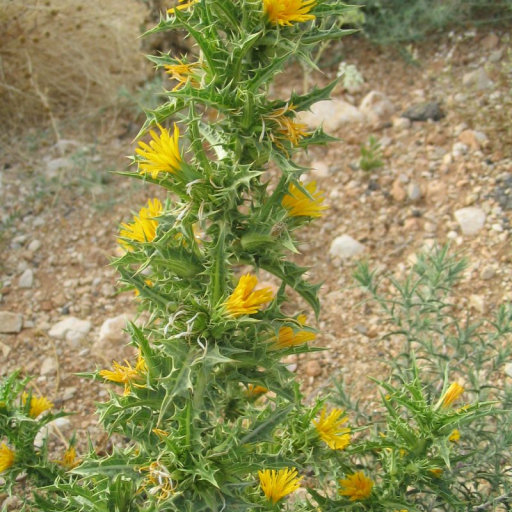
Known fondly as the Spanish Oyster Plant or Golden Thistle, Scolymus hispanicus is a rugged beauty that straddles the line between a wild weed and a gourmet delicacy. While it looks like a fierce, prickly thistle you might avoid in a field, it is actually a prized ingredient in Spanish cuisine, particularly in stews and salads. In its native Mediterranean home, it’s often called "Tagarnina" and is celebrated for its resilient nature and sun-bright blooms.
🔍 How to Identify
- 🌼 Vibrant Flowers: It produces bright, golden-yellow flower heads that look like jagged stars, typically blooming in mid-to-late summer.
- 🗡️ Spiny Foliage: The leaves are deeply lobed and heavily armed with sharp, stiff spines. They often feature prominent white veins that give the plant a marbled appearance.
- 📏 Winged Stems: One of its most unique traits is its "winged" stems—the leaf tissue actually runs down the length of the stalk, creating a prickly, ruffled vertical structure.
🏡 In Your Garden
- 🌱 The Deep Taproot: This plant is incredibly drought-tolerant thanks to a long, sturdy taproot. Because of this, it hates being moved; choose its "forever home" carefully, as transplanting often fails once the root has dived deep.
- ☀️ Sun Seeker: It thrives in poor, rocky, or sandy soils where other plants might wither. It needs full sun to produce its signature golden glow and won't tolerate soggy feet or heavy shade.
- ✂️ Maintenance Tip: If you are growing it for food, the midribs of the leaves are the prized part, but you’ll need thick gloves to harvest them! In a decorative garden, deadheading can help prevent it from spreading too aggressively via seed.
⚠️ Safety & Toxicity
- 🟢 Status: Non-toxic and edible, but physically hazardous.
- 🧤 Physical Irritant: The primary danger is the sharp spines. They can easily puncture gardening gloves and cause skin irritation or small wounds. It is best kept away from high-traffic paths where children or pets might accidentally brush against it.
- 🐾 Pet Safety: While not chemically poisonous to dogs or cats, the prickly leaves can cause mechanical injury to the mouth or paws if a curious pet tries to investigate too closely.
✨ Fun Fact
The name "Oyster Plant" comes from the flavor of the cooked stalks and roots, which many foragers and chefs claim tastes remarkably like cooked oysters or artichokes! In Spain, "Tagarninas esparragadas" is a famous traditional dish made with this wild thistle.

Detailed Care Instructions
To grow Scolymus Hispanicus, also known as Spanish Salsify or Salsify-like Goat's Beard, you can follow these steps:
- Climate and soil conditions: Scolymus Hispanicus prefers a sunny location. It can grow in a range of climates, including Mediterranean, temperate, and subtropical regions. The plant can tolerate poor soil, but it prefers well-draining, sandy or loamy soil.
- Seed selection: Look for viable Scolymus Hispanicus seeds from a reputable seed supplier or garden center. Ensure that the seeds are fresh and not damaged.
- Planting time: Plant the seeds in spring after the last frost date, or in fall for overwintering in regions with mild winters.
- Preparation: Prepare the planting area by removing weeds and grass to reduce competition. Loosen the soil and mix in compost or well-rotted organic matter to improve fertility.
- Sowing seeds: Sow the seeds directly into the prepared soil, about 1 inch (2.5 cm) deep. Space the seeds 6 to 8 inches (15 to 20 cm) apart in rows or in a grid pattern, allowing enough room for the plants to grow.
- Watering: Water the seeds immediately after sowing and ensure the soil remains evenly moist during germination. Once the plants are established, they are somewhat drought-tolerant.
- Thinning: When the seedlings have grown to about 2 inches (5 cm) tall, thin them to provide sufficient space between plants. Space them 12 to 18 inches (30 to 45 cm) apart to allow room for growth.
- Care and maintenance: Keep the planting area free from weeds by regular cultivation or mulching. Water the plants during dry periods, but avoid overwatering to prevent root rot. Apply a balanced organic fertilizer once or twice during the growing season.
- Harvesting: Scolymus Hispanicus can be harvested when the roots are young, tender, and approximately 8 to 10 inches (20 to 25 cm) long. Dig up the roots carefully to avoid breaking them. Harvest the plant leaves when they are young and tender for culinary use.
- Storage and use: Rinse off the harvested roots and store them in a cool, dark, and dry place. They can be used in cooking, similar to other root vegetables like parsnips or carrots.
Remember to check the specific growing recommendations for your region, as conditions may vary.

Place in a window with dappled sun or a spot in the middle of a room. Or directly in a window facing west or east.

First, it is important to note that the Scolymus Hispanicus plant prefers well-draining soil and should not be overwatered. Watering should be done deeply but infrequently, about every 7-10 days, depending on soil moisture levels. When watering, it is important to avoid getting the leaves wet to prevent any potential leaf damage or disease. It may be helpful to water the plant at the base using a watering can or a drip system. It is also recommended to check the soil moisture level using a moisture meter or by sticking your finger about an inch deep into the soil to ensure that the plant is not being over or under watered.
To fertilize this plant, apply a balanced fertilizer with equal amounts of nitrogen, phosphorus, and potassium. Apply the fertilizer once every two months during the growing season for best results. Be sure to follow the instructions on the fertilizer package and water the plant well after fertilizing. Avoid over-fertilizing, as this can lead to burning or damaging the plant.
Scolymus Hispanicus plant can thrive in various soil types including well-drained soils with a pH range of 6 to 8. The ideal soil for this plant is a sandy loam soil that is rich in nutrients and organic matter. The soil should be well-aerated with good water retention capacity and should not be too compacted. Adding compost or aged manure to the soil can improve its texture and fertility. Additionally, this plant prefers soils that are not too acidic or alkaline, as extreme pH levels can limit nutrient availability and negatively impact the plant's growth and development. It is important to ensure that the soil is free from weeds, rocks, and other debris that can interfere with the plant's root growth and water uptake. Overall, a well-prepared soil that is fertile, well-draining, and pH-balanced can provide the optimal conditions for the growth and health of Scolymus Hispanicus plant.
To propagate this plant, you will need to obtain a mature plant that has healthy leaves and roots. Then, you should prepare a well-draining potting mix that is rich in nutrients. Once you have these materials, carefully remove the plant from its pot and gently separate the roots.
Take the separated root sections and plant them in the prepared potting mix. Be sure to keep the soil moist but not waterlogged. Place the pot in a location with bright, indirect sunlight.
Over time, the roots should begin to grow into the soil and produce new leaves. Once the new plant reaches maturity, it can be easily propagated by dividing the roots again.








