Plant Overview
Scopolia japonica, often whispered about in Japanese folklore as Hashiri-dokoro, is a mysterious forest dweller that bridges the gap between medicine and poison. Known as the "Japanese Belladonna," this perennial herb emerges in early spring, signaling the end of winter in the mountainous regions of Japan and Korea. While its nodding, somber-colored bells have a melancholic beauty, its reputation as a "madness-inducing" plant is well-earned.
🔍 How to Identify
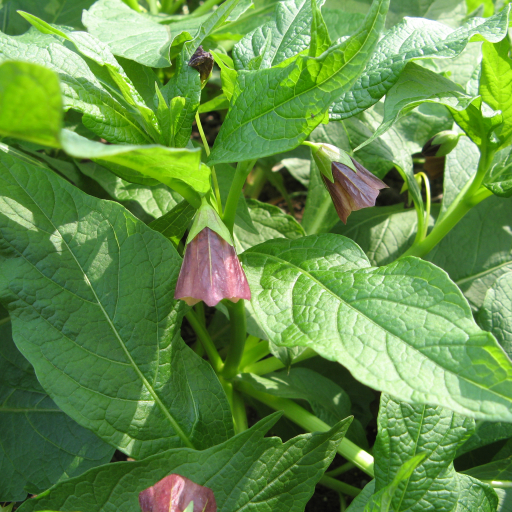
- 🔔 The Flowers: Deep, brownish-purple or dull red bell-shaped flowers that hang downward like heavy lanterns during April and May.
- 🍃 The Foliage: Large, ovate, and vibrant green leaves that appear succulent and lush, growing in an alternate pattern along the fleshy stem.
- 🌱 Growth Habit: A clump-forming perennial that typically reaches about 30–60 cm in height, often found in dense, shaded patches on the forest floor before other plants have woken up.
🏡 In Your Garden
- ⛰️ Native Habitat: In the wild, it thrives in the cool, moist soil of deciduous forests and along mountain streams, preferring the deep shade of old-growth trees.
- 🌦️ Spring Ephemeral: It is a true spring messenger; however, it quickly goes dormant and disappears completely underground once the summer heat arrives, leaving a gap in the garden bed.
- 🧪 Soil Nuance: It demands rich, humic soil (leaf mold is best) that stays consistently moist. Because it has a thick, creeping rhizome, it hates being transplanted—it prefers to "settle in" and remain undisturbed for years.
⚠️ Safety & Toxicity
- 🚫 Status: EXTREMELY TOXIC. This plant contains potent tropane alkaloids, including scopolamine and hyoscyamine, making it one of the most dangerous plants in its native range.
- 🐕 Pets & Kids: All parts of the plant are poisonous. Ingestion causes dilated pupils, blurred vision, rapid heartbeat, and intense, terrifying hallucinations. It should never be planted in gardens accessible to children or pets.
- 🧤 Handling: It is highly recommended to wear gloves when pruning or dividing the plant, as alkaloids can sometimes be absorbed through broken skin or accidentally transferred to the eyes.
✨ Fun Fact
The Japanese name Hashiri-dokoro literally translates to "Running Place." This comes from ancient observations that anyone who accidentally ate the plant would suffer from such extreme agitation and hallucinations that they would "run around frantically" without control until they collapsed from exhaustion!

Detailed Care Instructions








