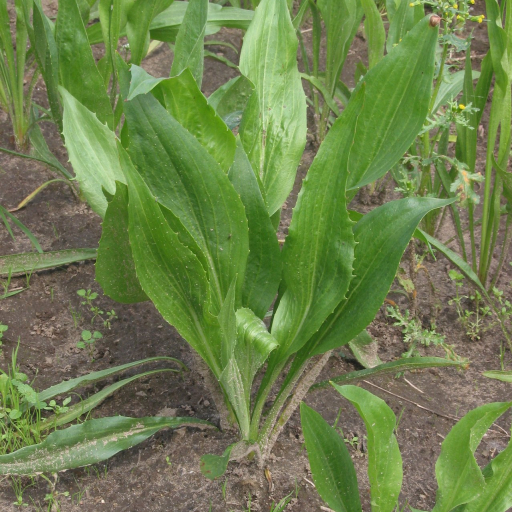
Plant Overview
Often called "Black Salsify" or "Viper’s Grass," this unassuming root vegetable hides a gourmet secret beneath its dark, corky skin. Legend has it that in the 16th century, the plant was used as a cure for snakebites in Spain, which is how it earned its name Scorzonera (from the Old French escorzon, meaning viper). Today, it is a favorite in European "slow food" circles, prized for a creamy texture and a flavor that many compare to oysters or artichoke hearts.
🔍 How to Identify
- 🖤 The Root: The most distinctive feature is the long, tapered taproot covered in a rough, charcoal-black skin that looks almost like a thin layer of bark.
- 🍃 Foliage: Unlike common garden weeds, its leaves are long, lance-shaped, and a sophisticated blue-green color with slightly wavy margins.
- 🌼 Flowers: In its second year, it produces tall stalks topped with bright yellow, daisy-like blossoms that have a surprising, faint scent of chocolate.
🏡 In Your Garden
- 🕳️ Deep Soil Strategy: Because the plant invests all its energy into a long taproot, it is very sensitive to "forking." To grow straight, beautiful roots, you must provide deep, stone-free, sandy soil; any obstruction will cause the root to twist.
- ❄️ Winter Hardiness: This is a patient gardener's dream. The roots are incredibly hardy and can be left in the ground all winter. In fact, many believe the flavor improves and becomes sweeter after a hard frost.
⚠️ Safety & Toxicity
- 🥗 Status: Safe and Edible. The root is a nutritional powerhouse, rich in fiber and inulin (a prebiotic).
- 🖐️ Sticky Sap: When the root is peeled or the leaves are broken, the plant releases a white, milky latex. While not toxic, this sap is incredibly sticky and can stain skin or clothing orange-brown, so many gardeners prefer to wear gloves during harvest.
✨ Fun Fact
Scorzonera is often called the "Poor Man’s Asparagus" because the peeled roots can be steamed and served with hollandaise sauce, mimicking the texture and luxury of expensive white asparagus at a fraction of the cost.

Detailed Care Instructions
To grow Scorzonera Hispanica plant, also known as black salsify or Spanish salsify, follow these steps:
- Climate and soil requirements: Scorzonera Hispanica prefers cool climates with full sun exposure. It grows best in loose, well-drained, and fertile soil that is moderately rich in organic matter. pH should ideally range from 6.5 to 7.5.
- Planting time: Sow seeds directly into the ground in early spring, usually around March or April. Scorzonera Hispanica is a cool-season crop, and it takes around 120 days until harvest.
- Preparation and sowing: Prepare the soil by removing any debris, weeds, or stones. Dig the soil to a depth of about 8 to 10 inches and improve its fertility by adding compost or well-rotted manure. Level the soil and create shallow rows about 16 to 20 inches apart. Plant the seeds around 1 inch deep, spacing them roughly 4 inches apart.
- Watering: Keep the soil consistently moist, especially during germination and seedling growth. Water deeply but avoid over-saturating the soil to prevent rot. Once the plants are established, reduce watering frequency but water deeply when needed.
- Fertilization: Scorzonera Hispanica plants benefit from regular fertilization. Apply a balanced organic fertilizer during planting and side-dress with compost or manure during the growing season.
- Thin and weed: When seedlings reach about 2 inches tall, thin them to maintain a spacing of around 8 to 12 inches between plants. Regularly remove weeds that may compete with the Scorzonera Hispanica plant for water, nutrients, and sunlight.
- Mulching: Apply a layer of organic mulch around the plants to suppress weeds, retain moisture, and maintain a more even soil temperature. Straw, wood chips, or compost can be used as mulch.
- Harvest: Scorzonera Hispanica can be harvested when the roots reach a desired size, usually around 100 to 120 days after sowing. Gently dig the roots out of the ground using a spade or fork, being careful not to damage them.
Overall, Scorzonera Hispanica is a relatively easy-to-grow plant as long as you provide it with the proper climatic conditions, soil preparation, and regular care.

Place in a bright room that is sun drenched almost all day. Or directly in a south-facing window.

The plant must be watered regularly, ensuring that the soil remains moist but not waterlogged. The frequency of watering depends on the climate and soil conditions. In dry climates, the plant may require daily watering, while in cooler, more humid climates, watering once a week may suffice. Water should be directed towards the base of the plant, avoiding the leaves and flowers. Overhead watering may increase the risk of disease and promote the growth of weeds. Mulching around the base of the plant can help to retain moisture in the soil and reduce the need for frequent watering. When watering, it is important to use clean, fresh water to avoid introducing contaminants that may harm the plant.
To fertilize this plant, use a balanced fertilizer with equal amounts of nitrogen, phosphorus, and potassium. Apply the fertilizer evenly to the soil around the base of the plant, being careful not to let it touch the leaves or stem. Water the plant thoroughly after fertilizing to ensure that the nutrients are absorbed by the roots. Repeat this process every 4-6 weeks during the growing season. Additionally, you can improve the soil quality by incorporating organic matter such as compost or well-rotted manure into the soil before planting.
It is recommended to use a soil that is well-draining and rich in nutrients for the growth of this particular plant. The pH level of the soil should be slightly acidic to neutral, ideally within the range of 6.0 to 7.5. Compacted or heavy soils should be avoided as they can impede root growth and development. Additionally, organic matter such as compost or aged manure can be added to the soil to improve its fertility and structure. The soil should also be kept consistently moist, but not waterlogged, as Scorzonera Hispanica plants require regular watering to thrive.
Scorzonera Hispanica plant can be propagated through its seeds. The seeds should be sown in the spring or fall in a well-draining soil mix. The soil should be kept moist until the seeds germinate. Once the seedlings have reached a reasonable size, they can be transplanted into their permanent location. The plant should be spaced about 12 inches apart and grown in full sun to partial shade. Scorzonera Hispanica plant can also be propagated through root cuttings. In the fall, use a sharp knife to cut off a few inches of the plant's root system. Plant the cuttings in a planting mix and keep the soil moist until the cuttings have established roots. Once the cuttings have established roots, they can be transplanted into their permanent location. Over time, the plant will develop a large clump that can be divided every three to five years to propagate the plant.








