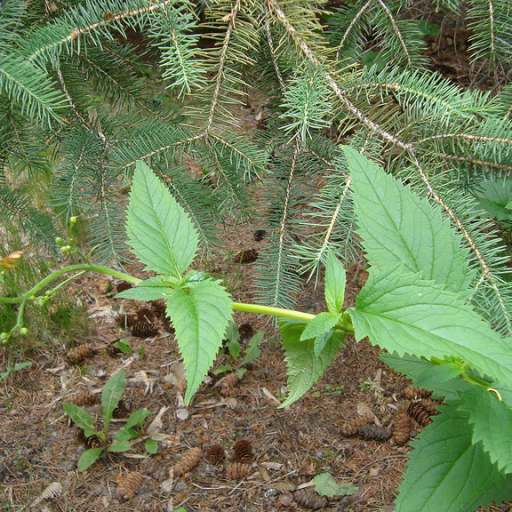
Plant Overview
Known affectionately as the Lanceleaf Figwort or "Woods Figwort," this North American native is a quiet hero of the wild garden. While its tiny, chocolate-maroon flowers might not win a beauty pageant against a rose, they are essentially "sugar fountains" for local wildlife. Often found in open woodlands and clearings, it plays a vital role in supporting the unsung pollinators of the ecosystem.
🔍 How to Identify
- 🌿 The Stem: Look for a distinctly square, sturdy green stem that can reach heights of up to five feet, giving the plant a tall, architectural silhouette.
- 🍃 The Leaves: As the name suggests, the leaves are "lanceolate"—long, narrow, and tapering to a point with sharply toothed (serrated) edges. They grow opposite each other along the stem.
- 🔔 The Flowers: The blooms are tiny, greenish-maroon urns or "helmets" that hang in loose clusters. They appear from late spring to early summer and have a unique, almost translucent quality.
🏡 In Your Garden
- 🐝 The Pollinator Magnet: If you want to see nature in action, this is the plant for you. It is famous for producing massive amounts of nectar, attracting specialized bees, hummingbirds, and—most notably—predatory wasps that help control garden pests.
- 🌱 Low Maintenance Native: Because it is a wild native, it is incredibly hardy. It thrives in well-drained soil and can handle anything from full sun to partial shade. It’s a "set it and forget it" plant for those looking to create a backyard habitat.
- ✂️ Growth Habit: It can be a bit lanky. If you prefer a bushier look, you can pinch back the stems in early spring to encourage more lateral growth and more flower clusters.
⚠️ Safety & Toxicity
- 🐾 Mildly Toxic: Like many members of the Scrophularia family, the Lanceleaf Figwort contains compounds (such as saponins and cardiac glycosides) that can be toxic if ingested in large quantities.
- 👶 Keep Away from Nibblers: It is best to keep this plant away from curious pets or toddlers. While it is not usually lethal in small amounts, it can cause significant stomach upset and nausea if eaten.
✨ Fun Fact
The genus name Scrophularia comes from "Scrofula," a form of tuberculosis. In medieval times, because the plant's bulbous roots resembled swollen lymph nodes, "Doctrine of Signatures" practitioners believed it could cure the disease. While it didn't work for TB, it cemented the plant's place in botanical history!

Detailed Care Instructions
To grow Scrophularia lanceolata, also known as lanceleaf figwort, follow these steps:
- Planting: Start by selecting a suitable location for the plant. Scrophularia lanceolata prefers partial shade to full sun, and it grows well in well-draining soil. You can either plant seeds directly in the ground or start them indoors for later transplantation. If starting indoors, use seed-starting trays filled with potting mix and sow the seeds 1/8 inch deep. Keep the soil moist until germination occurs.
- Watering: Once the plant starts growing, ensure it receives adequate water. Keep the soil moist, but not waterlogged, as excessive moisture can cause root rot. Avoid allowing the soil to dry out completely, as Scrophularia lanceolata enjoys consistently moist conditions.
- Mulching: Applying a layer of organic mulch around the base of the plant helps conserve moisture, suppress weed growth, and insulate the plant's roots. Use materials like bark chips, straw, or composted leaves for mulching.
- Fertilizing: Although Scrophularia lanceolata can grow in various soil conditions, adding organic matter like compost or well-rotted manure to the soil before planting can significantly improve its growth. You can also apply a balanced, slow-release fertilizer in spring to give the plant an extra boost.
- Pruning: Pruning isn't necessary for Scrophularia lanceolata. However, if you want to shape the plant or control its size, you can trim it back after flowering. This will also encourage bushier growth.
- Pests and diseases: Scrophularia lanceolata is relatively resistant to pests and diseases. However, it can occasionally be affected by slugs or snails. These can be controlled by hand-picking them or using organic slug repellents.
- Propagation: Scrophularia lanceolata can be propagated through division or by collecting and sowing seeds. Division is best done in early spring or fall, using a sharp, clean knife to separate the plant into smaller sections. Sow seeds in early spring or late fall for germination.
By following these steps, you can successfully grow Scrophularia lanceolata and enjoy its lovely foliage and flowers. Remember to adjust the care according to your specific climate and conditions.

Place in a window with dappled sun or a spot in the middle of a room. Or directly in a window facing west or east.

The best way to water this plant is to give it a thorough soaking once a week. It prefers moist but well-drained soil, so make sure the water penetrates deeply into the soil. Avoid overhead watering as it can lead to fungal diseases. To prevent the soil from becoming too wet, ensure that the pot or bed has adequate drainage holes to allow water to drain away freely. Check the soil moisture level regularly by pressing your finger into the soil up to your first knuckle. If the soil feels dry, it's time to water. Conversely, if the soil feels wet, hold off watering until it dries out a bit. Watering in the morning or late afternoon is ideal to avoid the hottest part of the day.
To fertilize this plant, use a balanced, all-purpose fertilizer with a ratio of 10-10-10. Apply the fertilizer once every four to six weeks during the growing season, from early spring to late summer. Be sure to follow the package instructions for application rates. Water the plant well before and after fertilizing to avoid burning the roots. Avoid fertilizing in the fall and winter months as the plant will be dormant.
The ideal soil for the Scrophularia Lanceolata plant should be well-draining and rich in organic matter. It thrives in soil that is slightly acidic and with a pH of 6.0 to 7.0. The plant prefers a loamy soil type, which can hold moisture well but also allows for proper drainage.
It is recommended to mix compost or well-rotted manure into the soil to improve its nutrient content, as Scrophularia Lanceolata plants require a lot of nutrients to grow healthy and strong. Additionally, adding perlite or vermiculite to the soil can help improve drainage and prevent waterlogging, which can cause root rot.
It is important to make sure the soil is not too compacted, as this can impede root growth and make it difficult for the plant to absorb nutrients and water. Regularly loosening the soil around the plant can help improve its overall health and encourage the development of a strong root system.
Overall, the key to successful growth of Scrophularia Lanceolata plants is to provide them with well-draining, nutritious soil that is rich in organic matter and free from any potential contaminants or toxins.
- Identify the plant: The first step is to identify the Scrophularia Lanceolata plant. This can be done by using a plant identification guide or consulting a plant expert.
- Choose a healthy plant: Select a healthy plant that has no diseases or insect damage. This plant should have strong stems and leaves, and be actively growing.
- Take stem cuttings: Using a clean, sharp knife or scissors, take stem cuttings that are about 4-6 inches long. Make sure each cutting has at least two nodes.
- Remove the leaves: Remove the lower leaves from the stem cutting, leaving only the top one or two leaves.
- Dip in rooting hormone: Dip the cut end of the stem in powdered rooting hormone. This will encourage the growth of roots.
- Plant the cuttings: Plant the cuttings in a suitable potting soil mixture, and water them thoroughly. Cover the pot with a clear plastic bag, and place it in a warm, well-lit area.
- Monitor the cuttings: Check the cuttings regularly, ensuring that the soil remains moist, and that the plastic bag remains in place. After a few weeks, the cuttings should start to grow roots.
- Transplant the new plants: Once the cuttings have developed a strong root system, they can be transplanted into larger pots or directly into the ground. Provide them with the appropriate care and maintenance to encourage healthy growth.








