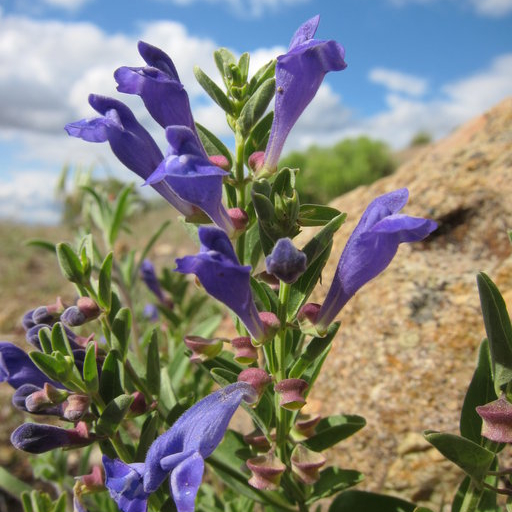
Plant Overview
Known as the Snapdragon Skullcap, this petite perennial is a hidden gem of the American West. Found clinging to rocky slopes and dry meadows, it earned its name because its tiny, hooded purple flowers bear a striking resemblance to the classic Snapdragon. It is a member of the Mint family (Lamiaceae), though it lacks the aggressive spreading habit of its more famous cousins.
🔍 How to Identify
- 🌸 Hooded Blooms: The flowers are deep violet to blue with white markings on the "lip," shaped like tiny helmets or hoods that curve upward.
- 🌿 Square Stems: If you roll the stem between your fingers, you’ll feel four distinct flat sides, a signature trait of the skullcap family.
- 🍃 Opposite Leaves: The small, oval-shaped leaves grow in pairs directly across from one another, often featuring a slightly fuzzy or glandular texture.
🏡 In Your Garden
- ☀️ Drought Specialist: This plant is an expert at water conservation. It thrives in "neglect" and is perfect for xeriscaping or rock gardens where other plants might wither from the heat.
- 🪨 Drainage is Vital: The Snapdragon Skullcap hates "wet feet." In a garden setting, it requires gritty, porous soil; it will struggle in heavy clay that holds too much winter moisture.
⚠️ Safety & Toxicity
- 🟢 Generally Safe: Snapdragon Skullcap is not considered toxic to humans or common household pets.
- ✋ Gentle Handling: While it isn't an irritant, the plant’s small size and delicate root system mean it shouldn't be stepped on or handled roughly, as it is slow to recover from physical damage.
✨ Fun Fact
The genus name Scutellaria is derived from the Latin word scutella, which means "little dish." This refers to the unique shape of the persistent calyx (the base of the flower) which stays on the plant after the petals fall, looking like a tiny, lidded saucer that holds the seeds!

Detailed Care Instructions

Place in a bright room that is sun drenched almost all day. Or directly in a south-facing window.

Some plants require more regular watering than others, which should be done every few days. It's critical to maintain the soil moist all of the time. The water requirements of the same plant placed in pots with varying sizes will differ. Because the water in the smaller pot evaporates faster than the water in the larger pot, it will require more watering. Regardless of pot size, the surface should constantly be maintained moist.








