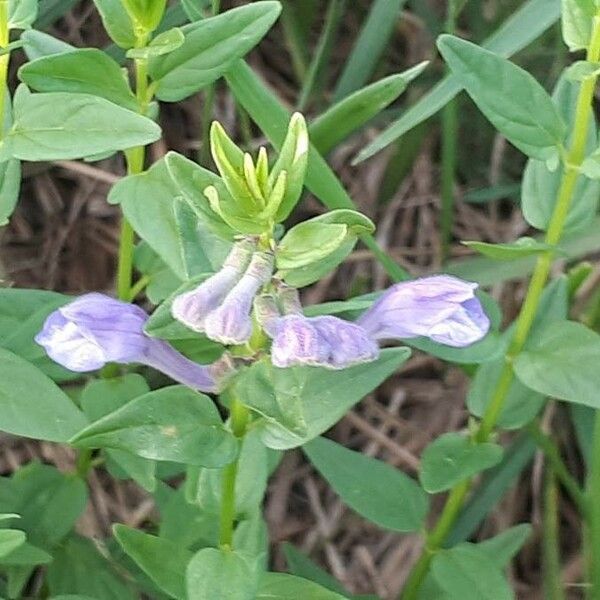
Plant Overview
Often known as the Spear-leaved Skullcap, this charming wildflower is a hidden gem of damp meadows and riverbanks. Its name comes from the unique shape of its leaves and the unusual "helmet-like" protrusion on its flower, which resembles a medieval skullcap. While it may look delicate, it is a resilient survivor of floodplains across Europe and parts of Asia.
🔍 How to Identify
- 🗡️ The Leaves: The most defining feature; they are shaped like spearheads (hastate) with two distinct "wings" or lobes at the base that point outward.
- 🌸 The Bloom: Small, tubular flowers in a striking shade of violet-blue. They almost always grow in pairs, facing the same direction along the upper stem.
- 🟦 The Stem: Like most members of the Mint family (Lamiaceae), it has a distinctively square stem that feels ridged when rolled between your fingers.
🏡 In Your Garden
- 💧 Wet Feet Welcome: Unlike many garden plants that fear root rot, the Spear-leaved Skullcap thrives in soggy soil. It is a perfect candidate for the edge of a backyard pond or a rain garden.
- 🦋 Pollinator Magnet: Its deep-throated flowers are specifically designed for long-tongued bees. Adding this to your garden provides a crucial nectar source for specialized local pollinators.
- 🌱 Rhizome Runner: It spreads through underground runners. While it isn't as "thug-like" as common mint, it will happily colonize a damp corner if left to its own devices.
⚠️ Safety & Toxicity
- 🟢 General Status: Non-toxic to touch. There is no evidence that Scutellaria hastifolia is poisonous to humans or pets.
- 🚫 Caution: While some "Skullcap" species are used in traditional herbalism, you should never ingest wild plants. This specific variety has not been widely tested for safety in teas or tinctures.
✨ Fun Fact
The genus name Scutellaria is derived from the Latin word "scutella," meaning a small dish or platter. This refers to the shape of the persistent calyx that remains on the plant after the flower has fallen, which acts like a tiny cup to hold the seeds!

Detailed Care Instructions

Place in a bright room that is sun drenched almost all day. Or directly in a south-facing window.

When watering this plant, it is important to use a watering can or hose with a gentle stream. Avoid using a heavy stream of water as this could damage the delicate leaves and roots. Water deeply and ensure that the soil is evenly moist but not waterlogged. It is recommended to water this plant once every week or two, depending on the humidity levels and temperature in your location. Always check the soil moisture level before watering to avoid over-watering. If the top inch of soil feels dry to the touch, then it is time to water the plant again.
Scutellaria hastifolia is a plant that requires nutrient-rich, well-drained soil to thrive. The ideal soil for this plant should have a pH range of 6.0 to 7.0 and should have a sandy loam texture. It is important to ensure that the soil is not too heavy or compacted, as this can prevent proper drainage and lead to root rot. The addition of organic matter, such as compost or aged manure, can help to improve soil structure and fertility. When planting Scutellaria hastifolia, it is recommended to amend the soil with a slow-release fertilizer to provide the necessary nutrients for growth. Additionally, it is important to ensure that the soil is kept consistently moist, but not waterlogged, as this can also lead to root rot.








