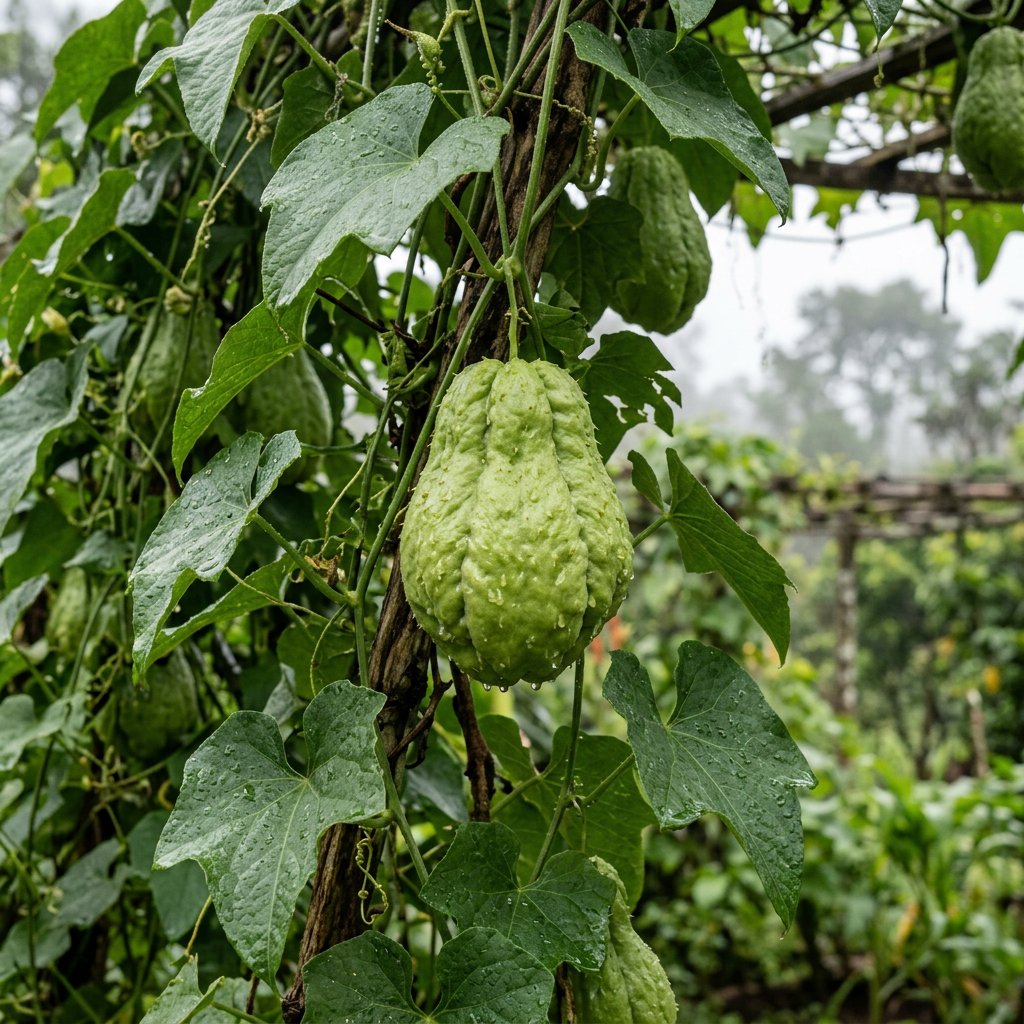
Plant Overview
Known as the "Vegetable Pear," "Chayote," or "Mirliton," this vigorous climber is a powerhouse of the gourd family. Native to the lush regions of Mexico and Central America, it is far more than just a garden vegetable; it is a sprawling, ancient vine that once graced Aztec gardens. If you give it a sturdy fence to climb, it will reward you with a massive canopy of green and a bounty of unique, wrinkled fruit.
🔍 How to Identify
- 🍃 The Foliage: Large, broad, heart-shaped leaves with three to five pointed lobes. The texture is slightly rough or "sandpapery," similar to a cucumber leaf but much larger and more aggressive.
- 🍐 The Fruit: Distinctly pear-shaped with deep ridges or "folds" at the blossom end, making it look a bit like a clenched fist. The skin is usually a pale, lime green and can be smooth or covered in soft, non-lethal spines.
- 🧗 The Tendrils: It features long, wiry, bifurcated (forked) tendrils that act like searching hands, grabbing onto anything nearby to pull the heavy vine upward.
🏡 In Your Garden
- 🌱 The "Whole-Fruit" Sprout: Chayote is unique because it is viviparous, meaning the seed often germinates while still inside the fruit. To grow one, you don't buy a seed packet; you bury an entire mature fruit halfway in the soil!
- 🏗️ Vertical Ambitions: Because it has a massive taproot and can grow up to 30 feet in a single season, it hates being moved once established. It requires a very strong support system—a flimsy plastic trellis won't do; think heavy-duty chain-link fences or wooden arbors.
- 🍂 Seasonal Patience: It is a "short-day" plant, which means it often waits to flower until the days begin to shorten in late summer. Don't worry if you don't see fruit in July; the real magic happens as autumn approaches.
⚠️ Safety & Toxicity
- ✅ Generally Safe: Chayote is non-toxic to humans, cats, and dogs. It is widely considered a safe "utility" plant for households with curious pets.
- 🧤 The "Chayote Numbness": When peeling the raw fruit, it releases a clear, sticky sap (latex). For some people, this sap can cause a temporary "tightening" or numbing sensation on the skin of the hands. It isn't dangerous, but wearing gloves during kitchen prep is a smart move if you have sensitive skin.
✨ Fun Fact
The Chayote is the ultimate "zero-waste" plant. While we usually only see the fruit in grocery stores, every single part of the plant is edible: the tuberous roots can be eaten like potatoes, the young shoots are treated like asparagus, and the leaves are used as a nutritious spinach substitute!

Detailed Care Instructions
| Humidity | Normal |
| Lighting | Full Sun |
| Difficulty | Medium |
| Hibernation | Cold Period |
| Hardiness Zones | 9 - 11 |
To grow Sechium edule, also known as chayote or vegetable pear, follow these steps:
- Purchase chayote fruit from a grocery store or seed supplier. Choose firm, healthy fruit without any blemishes or signs of rot.
- Prepare the fruit for planting by washing it thoroughly to remove any dirt or debris. Remove the fruit pulp and save only the seed inside.
- Fill a small pot or seed tray with well-draining potting soil. Plant the chayote seed about 1 inch deep into the soil.
- Water the soil lightly after planting. Keep the soil moist but not waterlogged.
- Place the pot or seed tray in a warm location with indirect sunlight. Chayote plants prefer temperatures between 75-85°F (24-30°C).
- In about 10-15 days, the seed should sprout and develop into a small plant.
- Once the plant has about 2-4 leaves, carefully transplant it into a larger pot or directly into the ground. Ensure the soil is well-draining and rich in organic matter.
- If transplanting outdoors, choose a sunny location with well-draining soil. Create a planting hole large enough to accommodate the plant's roots and gently place the plant in it.
- Water the newly transplanted plant thoroughly and continue to keep the soil moist but not waterlogged.
- Provide support for the plant as it grows, as chayote is a vine that can climb using tendrils. You can provide trellises, stakes, or other support structures to help the plant grow vertically.
- Regularly water the plant as needed, ensuring the soil is kept consistently moist but not soggy.
- Fertilize the plants every 4-6 weeks with a balanced, slow-release fertilizer, following the manufacturer's instructions.
- Monitor the plant for pests and diseases, and take appropriate measures if any issues arise.
- As the plant grows, it will produce flowers, which will eventually develop into chayote fruits. Harvest the fruits when they are mature but still firm.
With proper care and maintenance, your Sechium edule plant should grow successfully and provide you with delicious chayote fruits.

Place in a bright room that is sun drenched almost all day. Or directly in a south-facing window.

When watering this particular plant, it is important to ensure that the soil is moist but not waterlogged. This can be achieved by watering deeply once or twice a week, depending on the climate and humidity levels of the plant's environment. It is also recommended to water the plant early in the morning or later in the evening to prevent evaporation and ensure the plant has adequate time to absorb the water before the hotter parts of the day. Additionally, it is crucial to avoid getting water on the foliage as this can lead to fungal diseases, so it is best to water at the base of the plant or use a watering can with a long, narrow spout.
To fertilize this plant, use a balanced fertilizer with equal amounts of nitrogen, phosphorus, and potassium. Apply the fertilizer once a month during the growing season, which is typically in spring and summer. Be sure to follow the package instructions for application rates and methods. Avoid over-fertilizing, as this can lead to leaf burn and other plant health issues. Water the plant thoroughly after fertilizing to ensure the nutrients are evenly distributed throughout the soil.
The preferred soil for growing Sechium Edule plants is a well-draining soil with good moisture-retention capabilities. It should be rich in organic matter, such as compost or aged manure. The pH of the soil should be between 5.5 and 7.0. The plant prefers a slightly acidic soil but can tolerate slightly alkaline conditions. It is important to avoid soils that are heavy and clayey, as this can cause drainage problems, which can lead to root rot. Adding sand or perlite to the soil can help improve drainage if necessary. Additionally, the plant prefers full sun to partial shade and requires regular watering, particularly during dry spells. It can also be beneficial to fertilize the plant with a balanced fertilizer or one that is higher in potassium, which can encourage fruit development.
To propagate this plant, first select a healthy mature vine and cut a section of it that is approximately 6 inches long. Remove the leaves from the lower half of the stem and dip the cut end into rooting hormone powder. Then, plant the stem into a well-draining soil mixture and water thoroughly. Cover the plant with a plastic bag or clear plastic dome to create a humid environment and place it in a warm location with indirect light. Water the plant as needed to maintain moist soil. In a few weeks, the plant should begin to grow new roots and once established, it can be transplanted to its permanent location.
Common pests of the chayote include Scale insect, mealybugs, spider mites, aphids, thrips. Make a habit of checking your chayote frequently for pests so that any infestations can be caught and managed early.








