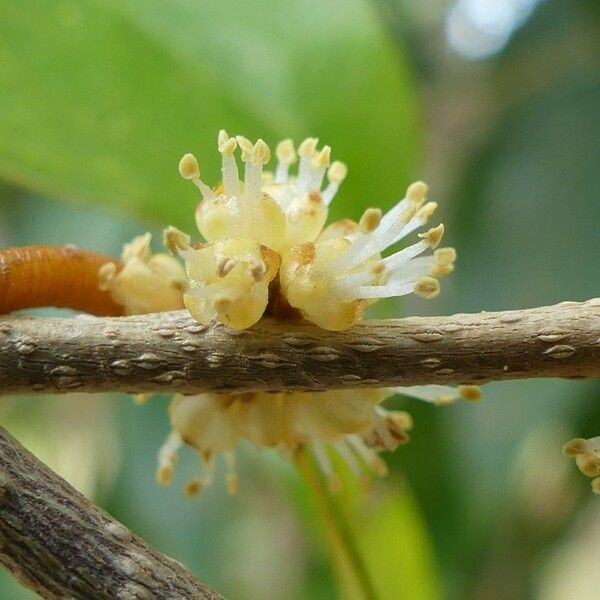
Plant Overview
Known as the "Iron-Wood" or Bois de Dur in its native Mauritius and Réunion, Securinega durissima is a plant built to last. This resilient island native earned its name from its incredibly dense, rock-hard timber that was historically prized by shipbuilders and craftsmen. While it may look like a modest green shrub at first glance, it carries the strength of an ancient forest in its slender, sturdy branches.
🔍 How to Identify
- 🍃 The Leaves: Small, oval-shaped, and glossy green. They are usually alternate and have a smooth, waxy texture that helps the plant retain moisture during dry spells.
- 🪵 The Stems: The most defining feature is the wood itself. The branches are remarkably stiff and heavy; unlike many shrubs, they do not bend easily and feel almost like "living stone" to the touch.
- ⚪ The Berries: During the fruiting season, mature plants produce tiny, fleshy white or pale-green berries that cluster along the stems, providing a delicate contrast to the dark wood.
🏡 In Your Garden
- 🏝️ Island Resilience: Because it evolved on volcanic islands, this plant is incredibly hardy regarding soil quality. It thrives in well-draining, rocky, or sandy soils and is much more tolerant of salty coastal breezes than typical ornamental shrubs.
- ⏳ The Slow Game: Do not expect a growth spurt! This plant invests its energy into density rather than height. It is a "permanent" resident of the garden, making it a great choice for a low-maintenance structural hedge or a long-term focal point that won't outgrow its space.
⚠️ Safety & Toxicity
- ✅ General Safety: Securinega durissima is generally safe to handle. It does not have thorns or stinging hairs, making it safe to prune without heavy armor.
- 🚫 Non-Edible: While not classified as highly toxic, the berries and leaves are not for consumption. Keep an eye on curious pets and toddlers, as ingesting the foliage or fruit may lead to mild digestive upset.
✨ Fun Fact
The wood of this plant is so incredibly dense and heavy that it was historically used to manufacture the axles of heavy-duty ox carts. It was one of the few natural materials strong enough to withstand constant friction and weight without splintering!

Detailed Care Instructions

Place in a bright room that is sun drenched almost all day. Or directly in a south-facing window.

Securinega Durissima is a type of plant that requires regular watering to ensure its growth and development. When watering this plant, it is important to avoid over-watering as this can lead to root rot and other water-related problems. A good watering regimen for this plant involves watering it deeply once or twice a week, depending on the level of moisture in the soil.
To water Securinega Durissima, start by checking the soil for dryness. If the soil is dry to the touch, it is time to water. Use a watering can or a hose to slowly water the base of the plant until the soil is evenly moistened. Take care not to get the leaves or other parts of the plant wet, as this can encourage the growth of fungal diseases.
After watering Securinega Durissima, allow the soil to dry out slightly before watering again. This will ensure that the plant receives the right amount of moisture without becoming waterlogged. Additionally, make sure that the pot or container has proper drainage to allow excess water to flow out and prevent the soil from becoming saturated.
Finally, remember to adjust the watering schedule depending on the season and weather conditions. During hot, dry periods, Securinega Durissima may require more frequent watering, while during cool and rainy periods, it may need less. With proper watering, this plant can thrive and add beauty to any garden or indoor space.
For optimal growth and development of the plant, it is recommended to use well-draining soil that is rich in nutrients. The ideal pH range for this plant is between 6.0 and 7.0. It is important to avoid using heavy soils that tend to retain water and cause waterlogged conditions. A mixture of organic compost and sand can be added to the soil to improve drainage and fertility. The plant requires a moderate amount of water, so the soil should be kept moist, but not overly saturated. Adding a layer of mulch to the soil surrounding the plant can help retain moisture and inhibit weed growth.








