Plant Overview
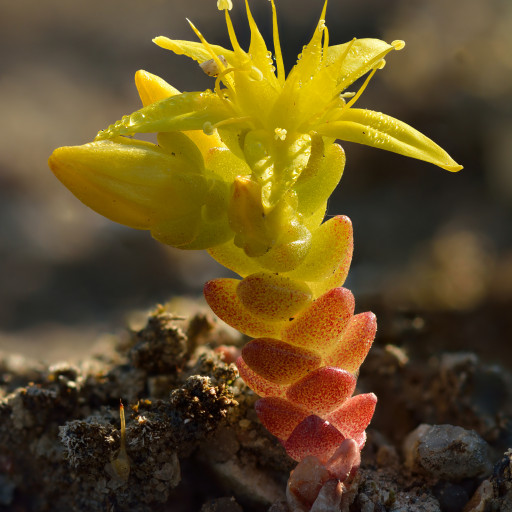
Often called "Goldmoss," "Biting Stonecrop," or "Wall-pepper," this resilient little succulent creates a vibrant, low-lying carpet of gold. It is a true survivor, often found clinging to ancient stone walls, rocky cliffs, and thin-soiled cracks where most other plants would wither. In European folklore, it was frequently planted on thatched roofs because people believed it could protect the home from lightning strikes and fire.
🔍 How to Identify
- 🍃 Succulent Foliage: The plant features tiny, overlapping, tear-shaped leaves that are bright green and fleshy. They are specifically designed to store water for long periods of drought.
- ⭐ Star-Shaped Flowers: During early summer, the foliage is almost entirely hidden by a sea of brilliant, five-pointed yellow flowers that look like tiny glowing stars.
- 🧶 Mat-Forming Habit: It grows as a dense, moss-like groundcover that rarely exceeds 3 inches in height but spreads horizontally to fill any available space.
🏡 In Your Garden
- 🪨 The Crevice Specialist: Because it naturally thrives in shallow substrate, it is the perfect candidate for rock gardens, stone pathways, or "living walls" where soil is minimal.
- ☀️ Sun and Drainage: This plant thrives on neglect and loves the sun. Its only real "enemy" is soggy soil; it requires excellent drainage to prevent its shallow root system from rotting.
- 🏃 Spreading Nature: It can be quite enthusiastic in its growth. If a small piece of the stem breaks off and lands on soil, it will likely take root and start a new colony, making it easy to propagate but something to watch in tidy borders.
⚠️ Safety & Toxicity
- 🚫 Mildly Toxic: Sedum acre contains alkaloids that can cause stomach upset, vomiting, or diarrhea if ingested by pets or curious children.
- 🧼 Skin Irritation: The nickname "Biting Stonecrop" comes from its acrid sap. Contact with the sap can cause skin redness or even blisters on sensitive individuals, so it is wise to wear gloves when weeding or thinning it out.
✨ Fun Fact
🌶️ The Pepper Substitute: Centuries ago, the leaves were sometimes used as a pungent spice or a substitute for pepper due to their sharp, burning taste. However, because of the plant's irritating properties and mild toxicity, it transitioned from a kitchen herb to a strictly ornamental garden favorite!

Detailed Care Instructions
| Color | Yellow |
| Soil Ph | Acidic, Neutral |
| Invasive | Weed |
| Lighting | Full Sun |
| Soil Type | Sandy, Loamy, Well-Drained |
| Bloom Time | Summer, Fall |
| Plant Type | Perennial Herb |
| Mature Size | Up To 3 In. Tall And 12-24 In. Wide |
| Sun Exposure | Full Sun To Partial Shade |
| Hardiness Zones | 3-9 |
To grow Sedum acre, also known as Stonecrop or Goldmoss, you can follow these steps:
- Select a suitable location: Sedum acre thrives in full sun to partial shade. Choose a spot that receives at least 6 hours of direct sunlight each day. Ensure the soil is well-draining as this plant does not tolerate wet soil.
- Prepare the soil: Sedum acre prefers sandy or loamy soil that is slightly acidic to alkaline (pH 6.5-7.5). Amend the soil with organic matter, such as compost or well-rotted manure, to improve drainage and fertility.
- Planting: If you are starting with small Sedum acre plants, dig a small hole twice as wide and deep as the root ball. Gently place the plant in the hole and backfill with soil, firming it gently around the roots. Space the plants about 6-12 inches apart to allow for their spreading habit.
- Watering: Water your Sedum acre regularly, especially during the establishment phase. Ensure the soil is moist but not waterlogged. Once established, Sedum acre is quite drought-tolerant and requires less frequent watering.
- Mulching: Apply a layer of organic mulch, such as wood chips or straw, around the plants to help conserve moisture, suppress weed growth, and regulate soil temperature.
- Fertilizing: Sedum acre does not typically require heavy fertilization. However, you can apply a balanced, slow-release fertilizer in spring if desired. Follow the instructions on the fertilizer packaging for application rates.
- Pruning: Sedum acre benefits from occasional pruning to maintain its compact and tidy appearance. Remove any dead or damaged stems and trim back any leggy growth. This will promote new, bushier growth and help prevent the plant from becoming overly straggly.
- Propagation: Sedum acre can be propagated by stem cuttings or by dividing the plant. Stem cuttings can be taken in spring or early summer and rooted in well-draining soil. Division can be done in spring or fall by carefully separating the rooted stems and replanting them.
By following these steps, you should be able to grow Sedum acre successfully and enjoy its bright green leaves and yellow flowers.

Place in a bright room that is sun drenched almost all day. Or directly in a south-facing window.

To properly water this plant, it is essential to consider the type of soil and the amount of sunlight it receives. The soil should be allowed to dry out completely between watering to avoid rotting of the roots. One way to determine if the soil is dry is to stick a finger about an inch into the soil. If it feels dry, it is time to water.
When watering, make sure to water deeply, so the roots can absorb the water. The plant is best watered from the bottom to avoid wetting the leaves and causing fungal diseases.
Additionally, it is important to avoid getting water on the leaves as this can lead to the formation of brown spots. Watering should be done early in the morning or in the evening when temperatures are cooler to avoid burning the plant's leaves.
Overall, care should be taken to avoid overwatering or underwatering the Sedum Acre plant, ensuring it remains healthy and vibrant.
Sedum Acre plant requires regular fertilization to thrive. When fertilizing this plant, it is important to use a balanced fertilizer with equal proportions of nitrogen, phosphorus, and potassium. This can be applied in early spring and mid-summer for best results. Avoid over-fertilizing as this can damage the plant, and always follow the instructions on the fertilizer package carefully. Additionally, make sure to water the plant thoroughly after fertilizing to help distribute the nutrients evenly.
Sedum Acre is a type of plant that requires well-draining, nutrient-rich soil to thrive. The best soil for Sedum Acre is a mixture of loam and sand, which allows for good airflow and water retention. The soil should also be slightly acidic, with a pH between 6.0 and 7.0. In terms of texture, the soil should be light and porous, as Sedum Acre drought-resistant but does not tolerate standing water for prolonged periods. Additionally, Sedum Acre prefers soil that is not too heavy or compacted, as this can impede the growth of its roots. To ensure optimal soil conditions for your Sedum Acre, it is recommended to amend the soil with compost or other organic fertilizers.
To propagate this plant, you will need to take stem cuttings from the parent plant. Select a healthy stem with several leaves and remove any lower leaves from the stem. Dip the cut end of the stem in rooting hormone and place it in a moist potting mix. Keep the soil damp and place the cutting in a bright, but not direct, sunlight location. After a few weeks, roots will form and the cutting can be transplanted into its own pot. Alternatively, the plant can be propagated through division by gently separating the parent plant into smaller, rooted sections and replanting them.
Common pests of the goldmoss stonecrop include Aphids. Make a habit of checking your goldmoss stonecrop frequently for pests so that any infestations can be caught and managed early.








