Plant Overview
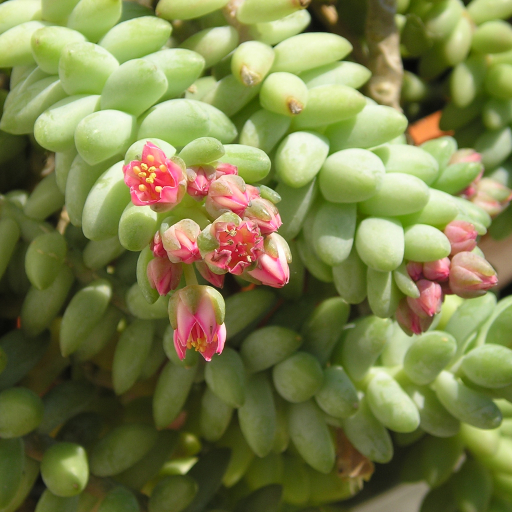
Often called the "Baby Burro's Tail," this charming succulent is the more compact, rounded cousin of the classic donkey's tail. Its plump, jelly-bean-like leaves grow in dense, spiraling clusters that spill over the sides of hanging pots like a cascading waterfall of soft green. While it looks hardy, this Mexican native is a "sensitive soul" that rewards a gentle touch with spectacular trailing growth.
🔍 How to Identify
- 🍃 Leaf Shape: Features small, blunt, and rounded leaves (unlike the pointed leaves of its larger relatives) that look like tiny, fleshy beans.
- 🎨 Color Palette: A soft, glaucous blue-green, often covered in a delicate, silvery powdery coating called "epicuticular wax" that acts as a natural sunscreen.
- 📏 Growth Habit: Long, pendulous stems that can trail down several feet, creating a heavy, curtain-like appearance as the plant matures.
🏡 In Your Garden
- 🤲 The "No-Touch" Rule: The most important thing to know is that the leaves are notoriously fragile and will drop at the slightest bump. It is best to hang this plant in a low-traffic corner where it won't be brushed by passersby.
- ☀️ Light Logic: It thrives in bright, indirect light. While it loves the sun, intense afternoon rays can "sunburn" the leaves. If the stems look stretched out with wide gaps between leaves, it’s "reaching" for more light.
- 💧 Drought Strategy: Those thick leaves are essentially water storage tanks. If you see the leaves starting to look slightly shriveled or wrinkled, the plant is using its reserves and is ready for a deep drink.
⚠️ Safety & Toxicity
- 🐾 Pet Friendly: Great news for animal lovers—the Sedum Burrito is considered non-toxic to cats, dogs, and horses.
- 👶 Child Safe: It is generally safe for humans, though the small, falling leaves could be a minor choking hazard for very small children or curious toddlers.
✨ Fun Fact
Every single leaf that accidentally falls off has the potential to become a new plant! If a leaf drops onto the soil, leave it there; within a few weeks, it will often sprout tiny pink roots and a miniature "pup" at its base.

Detailed Care Instructions
To grow Sedum Burrito plant, also known as Donkey's Tail, you can follow these steps:
- Choose a suitable container: Select a pot with good drainage holes to prevent water from accumulating and causing root rot. The pot should be slightly larger than the current root ball.
- Soil preparation: Use a well-draining soil mix, preferably a succulent or cactus mix, or create your own by combining equal parts of potting soil, coarse sand, and perlite.
- Planting: Gently remove the plant from its current container, taking care not to damage the roots. Place it in the new pot, ensuring that the top of the root ball is level with the rim of the pot. Add more soil mix around the roots, but avoid covering the leaves with soil.
- Light requirements: Sedum Burrito thrives in bright, indirect sunlight. Place the plant near a window where it can receive several hours of sunlight each day. However, avoid exposing it to intense, direct sunlight, as this can cause leaf burn.
- Watering: Allow the soil to dry out completely between waterings. Overwatering can lead to root rot, so it's better to underwater than overwater. During the growing season (spring and summer), water the plant deeply and then allow the soil to dry out before watering again. In the winter, reduce watering frequency as the plant experiences a period of dormancy and requires less water.
- Humidity: Sedum Burrito prefers dry air, so there is no need to increase humidity levels. Avoid misting the leaves, as excess moisture can promote fungal growth.
- Temperature: Ideally, maintain a temperature range between 60-75°F (15-24°C). The plant can tolerate temperature fluctuations but should be protected from frost and extreme cold.
- Fertilizer: During the growing season, you can feed the Sedum Burrito with a balanced, diluted succulent or cactus fertilizer once a month. Follow the instructions on the fertilizer packaging for proper dilution ratios.
- Pruning: Trim the plant to maintain its shape and promote bushiness. Use clean, sharp scissors or pruners to avoid damaging the leaves. You can propagate the cuttings by allowing them to callus for a few days and then planting them in well-draining soil.
- Pests and diseases: Sedum Burrito is relatively resistant to pests and diseases. However, keep an eye out for common succulent pests like mealybugs and scale insects. If detected, remove them manually or use an appropriate insecticidal soap.
Remember to regularly inspect the plant for signs of stress or issues so that you can address them promptly. With proper care, your Sedum Burrito will thrive and grow into a beautiful trailing succulent.

Place in a window with dappled sun or a spot in the middle of a room. Or directly in a window facing west or east.

To water this particular plant, it is important to consider the type of soil it is planted in. It requires well-draining soil and should not be overwatered, as this can cause root rot. It is recommended to wait until the soil has completely dried out before watering again. When watering, it is best to give it a thorough soak and allow any excess water to drain out of the bottom of the pot to prevent waterlogging. It is also important to avoid getting water on the leaves as this can cause damage or lead to disease.
First, choose a balanced fertilizer with equal proportions of nitrogen, phosphorus, and potassium. Dilute the fertilizer to half strength according to the package instructions.
Apply the fertilizer once every two weeks during the growing season, which is typically spring and summer. Water the soil thoroughly before and after fertilizing.
Avoid fertilizing during the dormant season, which is typically fall and winter.
Be careful not to over-fertilize as this can cause damage to the plant. Always follow the package instructions and adjust the amount if needed based on the specific needs of your Sedum Burrito.
The best soil to use with the Sedum Burrito plant is a well-draining soil mix that contains sand, perlite, or vermiculite to ensure that excess moisture drains away from the plant's roots. The soil should also be slightly acidic with a pH range of 5.5 to 7.0. A soil mix that is rich in organic matter, such as compost or peat moss, can help provide the plant with essential nutrients and retain moisture. It's important to avoid using heavy, clay-like soils or soils that retain too much moisture, which can cause root rot and other issues. Additionally, the soil should be loose and airy to encourage healthy root growth and prevent compaction.
To propagate this particular plant, here are the steps that can be followed:
- Choose a healthy stem from the parent plant that is at least 3-4 inches long.
- Using a sterilized sharp knife or scissors, cut the stem just below the leaf node.
- Remove the leaves from the bottom 2 inches of the stem, making sure to leave a couple of leaves at the top intact.
- Dip the cut end of the stem into rooting hormone powder, tapping off any excess.
- Prepare a well-draining potting mix, and use a pencil to make a small hole in the soil.
- Insert the cut end of the stem into the hole and gently press the soil around it to secure it in place.
- Water the soil until it is evenly moist, and cover the pot with a plastic bag or wrap to create a humid environment.
- Place the pot in a bright area away from direct sunlight, and keep the soil consistently moist.
- After a few weeks, check to see if the stem has developed roots by gently tugging on it. If it resists, it means roots have formed.
- Once the new plant has established root, gradually acclimate it to outdoor sunlight.
- After a couple of weeks, the plastic can be removed, and the plant can be grown normally.
Common pests of the burro's tail include Mealybugs, aphids. Make a habit of checking your burro's tail frequently for pests so that any infestations can be caught and managed early.








