Plant Overview
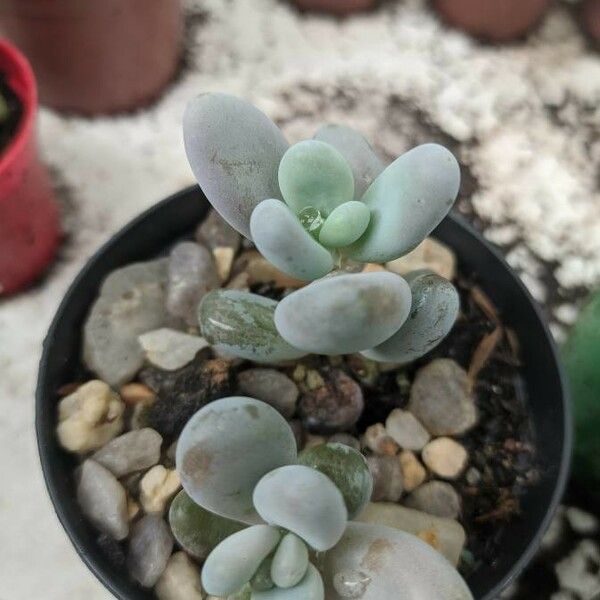
Often called the "Lavender Sedum," this Mexican treasure looks less like a plant and more like a collection of smooth, amethyst-colored river stones. Its ghostly, ethereal appearance makes it a favorite for "moon gardens," where its pale, dusty foliage seems to glow under the light of the full moon. While it grows slowly, its unique color palette—ranging from icy blue to deep mauve—adds a sophisticated touch to any succulent collection.
🔍 How to Identify
- ☁️ The Foliage: Thick, egg-shaped leaves that are exceptionally "chubby." They are covered in a heavy layer of farina (a powdery wax) that gives them a soft, matte, lavender-gray finish.
- 🌸 The Blooms: In late winter or spring, it sends out small clusters of star-shaped white flowers, often featuring tiny reddish-pink speckles on the petals.
- 🌿 Growth Habit: It begins as a compact rosette but eventually develops trailing stems, making it look spectacular spilling over the edge of a hanging stone planter.
🏡 In Your Garden
- ☀️ The Color Secret: To achieve those deep purple and pink hues, this plant needs "stress" from bright sunlight. In low light, it will turn a duller green and stretch out, losing its compact, pebble-like charm.
- 🚫 Hands Off: The powdery coating on the leaves is the plant’s natural sunscreen. Try to avoid touching the leaves, as the oils from your fingers will smudge the wax, leaving permanent fingerprints that don't grow back.
- 💧 Drainage is King: Like many Mexican stonecrops, it has a shallow root system that is very prone to rot. Use a gritty, sandy soil mix and pots with large drainage holes to keep its "feet" dry.
⚠️ Safety & Toxicity
- ✅ Pet Friendly: Sedum craigii is generally considered non-toxic to cats, dogs, and horses, making it a safe choice for households with curious nibblers.
- 👶 Child Safe: It is non-poisonous to humans. However, the leaves are quite fragile and pop off easily if handled roughly, which can be a choking hazard for very small children.
✨ Fun Fact
The white powder on the leaves isn't just for looks—it acts as a biological raincoat and sunblock. It reflects intense UV rays and helps the plant shed water quickly during the rare, heavy tropical storms of its native Chihuahua, Mexico.

Detailed Care Instructions
To grow Sedum Craigii plants, you can follow these steps:
- Choose a suitable location: Sedum Craigii plants prefer full sun to partial shade. Select a spot that receives at least 6 hours of direct sunlight daily.
- Prepare the soil: Sedum Craigii plants thrive in well-draining soil. Amend the soil with organic matter, such as compost or peat moss, to improve drainage.
- Planting: Dig a hole slightly larger than the plant's root ball. Gently place the plant in the hole, ensuring that the top of the root ball is level with the surrounding soil. Cover the roots with soil and firm it gently to remove any air pockets.
- Watering: After planting, water the Sedum Craigii thoroughly. Keep the soil moist but not waterlogged during the plant's establishment period. Once established, Sedum Craigii is drought-tolerant and does not require frequent watering.
- Mulching: Apply a layer of organic mulch around the base of the plant to conserve moisture and suppress weed growth. Ensure that the mulch does not touch the plant's stem, as it may cause rotting.
- Fertilizing: Sedum Craigii plants do not typically require fertilizer, as they can thrive in nutrient-poor soil. However, you can apply a balanced, slow-release fertilizer in early spring if desired.
- Pruning: Sedum Craigii plants are low maintenance and do not require regular pruning. However, you can trim back any dead or damaged stems to maintain the plant's shape and appearance.
- Propagation: Sedum Craigii plants can be propagated through stem cuttings. Simply take a cutting from a healthy stem, allow it to dry for a few days, and then plant it in well-draining soil. Keep the soil moist until new roots develop.
By following these guidelines, you can successfully grow Sedum Craigii plants in your garden.

Place in a bright room that is sun drenched almost all day. Or directly in a south-facing window.

Sedum Craigii is a species of plant that requires regular watering to help it thrive. When watering this plant, it is important to ensure that the soil is moist but not waterlogged. Overwatering can cause root rot and other problems, so it is essential to water it only when necessary.
To water Sedum Craigii, begin by checking the soil to see if it is dry. Insert a finger into the soil about an inch deep. If the soil is dry, then it's time to water the plant. If the soil is still moist, then wait a few more days before checking again.
When watering Sedum Craigii, use a watering can or hose to apply water gently to the soil around the plant. Avoid getting water on the leaves as this can cause damage to the plant. Water the plant until you see water come out of the drainage holes in the bottom of the pot or container.
During the summer months, when temperatures are high, you may need to water Sedum Craigii more frequently. In winter, you may need to reduce watering as the plant is not actively growing. Always monitor the soil moisture level and adjust watering accordingly.
In summary, when watering Sedum Craigii, check the soil moisture level regularly, water only when necessary, avoid overwatering, and water gently to avoid damage to the plant.
Here are the fertilizing instructions for the Sedum Craigii plant:
- It is recommended to fertilize the plant during the growing season, which is typically from spring to fall.
- Use a balanced, water-soluble fertilizer with an N-P-K ratio of 10-10-10 or 20-20-20.
- Dilute the fertilizer according to the manufacturer's instructions, as over-fertilizing can damage the plant.
- Apply the fertilizer to the soil around the plant, avoiding direct contact with the foliage.
- Water the plant immediately after fertilizing to help the nutrients penetrate the soil.
- Repeat the fertilization process every 4-6 weeks during the growing season.
- Do not fertilize the plant during the winter months when the plant is dormant.
For the Sedum Craigii plant, it is recommended to use a well-draining soil mix. A good soil mix for this plant would consist of equal parts sand, perlite, and succulent soil. It is important to avoid using soil that retains moisture for extended periods of time, as this can lead to root rot and the death of the plant. Additionally, adding a layer of rocks or gravel at the bottom of the pot can improve drainage and prevent the roots from sitting in water.
To propagate this particular plant, start by taking a cutting from the stem. It’s best to take a cutting that is at least 4-5 inches long, with several sets of leaves. Remove the bottom leaves from the cutting, leaving a few sets at the top intact. This will help the plant to focus on growing new roots instead of supporting excess foliage.
Once you have your cutting, stick it into a pot of well-draining soil. Keep the soil moist but not sopping wet. Place the pot in bright, indirect light and avoid direct sunlight until the plant has established roots. After a few weeks, the cutting should start to grow new roots and leaves.
For best results, propagate this plant in the spring or summer when the plant is actively growing. Additionally, if you’re propagating more than one cutting, leave a few inches of space between them in the pot. This will help each cutting get the resources it needs to grow successfully.
Common pests of the sedum craigii include Mealybugs, aphids. Make a habit of checking your sedum craigii frequently for pests so that any infestations can be caught and managed early.








