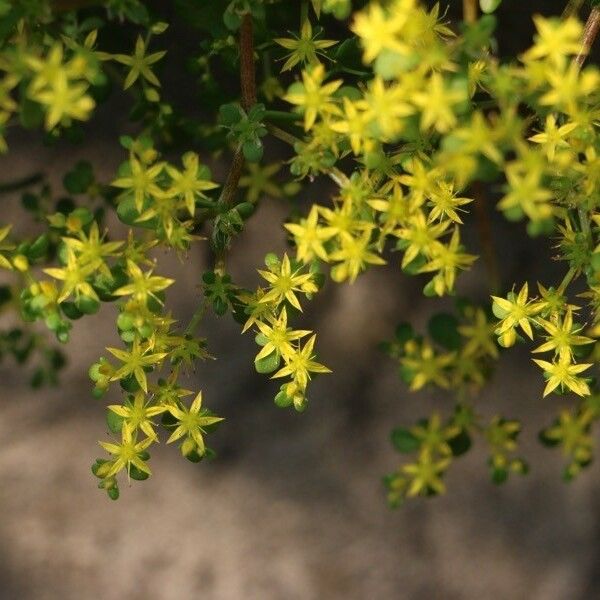
Plant Overview
Known as the Formosan Stonecrop, this vibrant succulent is nature’s version of a neon carpet. Originally hailing from the rocky, salt-sprayed shores of Taiwan and Japan, it is a master of survival that transforms harsh environments into lush, golden displays. It is a favorite for "living walls" and rock gardens due to its ability to thrive where other plants would wither.
🔍 How to Identify
- 🍃 Lush Foliage: The small, fleshy leaves are spatula-shaped and arranged in dense whorls. They sport a brilliant lime or chartreuse green color that looks almost "electric" in the sunlight.
- ⭐ Starry Blooms: In late spring and summer, the plant is nearly eclipsed by a blanket of tiny, five-petaled, bright yellow flowers that resemble miniature stars.
- 🌿 Growth Habit: It is a low-growing, spreading perennial that forms soft, mounded cushions. It rarely exceeds 6 inches in height but can spread wide to cover bare patches of earth.
🏡 In Your Garden
- 🌊 Coastal Resilience: Because it evolved on seaside cliffs, this plant is exceptionally resistant to salt spray and high winds, making it a "must-have" for coastal landscapes.
- 🏜️ The Drainage Rule: It possesses a "desert soul" inside a lush body. It hates "wet feet" more than anything; if the soil doesn't drain quickly, the roots will succumb to rot. It’s best to plant it in a gritty, sandy mix or tucked between crevices in a stone wall.
- ☀️ Light Response: While it loves full sun, it is surprisingly adaptable to partial shade. In intense heat, the bright green leaves may take on a slight golden or bronze tint as a natural sunblock.
⚠️ Safety & Toxicity
- ✅ Status: Generally non-toxic and safe for home gardens.
- 🐱 Pet Safety: It is not listed as a poisonous plant for cats or dogs. However, like many succulents, the sap contains mild irritants that might cause a stomach upset if a pet consumes a large amount.
- 👶 Kid-Friendly: Its soft, rubbery texture makes it safe for children to touch, though the stems are brittle and snap easily, so it's best kept out of high-traffic play areas.
✨ Fun Fact
The common name "Stonecrop" comes from an old English tradition. It was believed that only stones were more durable than these plants, as they seemed to "crop" up and grow directly out of solid rock with almost no soil to sustain them!

Detailed Care Instructions
To grow Sedum Formosanum plant, you can follow these simple steps:
- Choose the right location: Sedum Formosanum plants thrive in full sun or partial shade, so select a spot in your garden that receives at least 4-6 hours of direct sunlight each day. Ensure that the soil is well-draining.
- Prepare the soil: Sedums prefer sandy or loamy soil. If your soil is heavy and clayey, amend it by adding organic matter like compost or well-rotted manure to improve drainage.
- Planting: Dig a hole slightly larger than the root ball of the plant. Place the Sedum Formosanum in the hole and backfill with soil. Gently firm the soil around the plant to eliminate any air pockets.
- Watering: After planting, water the Sedum Formosanum thoroughly, allowing the soil to become evenly moist but not soaking wet. Once established, these plants are drought-tolerant and do not require frequent watering.
- Mulching: Apply a layer of organic mulch around the plant, leaving a gap around the stem to prevent rot. Mulching helps retain moisture, suppress weed growth, and protect the roots from extreme temperatures.
- Pruning: Sedum Formosanum generally does not require extensive pruning. However, you can trim back any dead or damaged stems in early spring or after flowering to maintain the plant's shape and appearance.
- Fertilizing: Sedums do not typically require a lot of fertilization. However, you can apply a slow-release balanced fertilizer in spring to promote healthy growth. Follow the instructions on the fertilizer package for application rates.
- Propagation: Sedum Formosanum can be easily propagated by division or stem cuttings. To divide the plant, gently separate the plant into smaller clumps with roots attached and replant them in new locations. For stem cuttings, select healthy stems, remove a section, and plant it in well-draining soil or a propagation mix.
- Pests and diseases: Sedums are generally resistant to pests and diseases. However, keeping an eye out for common issues such as aphids, mealybugs, or powdery mildew is advisable. Treat any infestations or diseases promptly.
Remember to research and follow specific care instructions for your particular variety of Sedum Formosanum plant, as some cultivars may have specific requirements.

Place in a bright room that is sun drenched almost all day. Or directly in a south-facing window.

To water this particular species of plant, it is important to ensure that the soil remains moist but not overly saturated. Watering should be done when the top layer of soil feels dry to the touch, and it is best to water deeply rather than frequently. It is important to avoid getting water on the leaves and stem of the plant, as this can promote fungal growth and other types of damage. Additionally, it is wise to water in the morning or early afternoon to allow the plant sufficient time to dry off before nighttime, as excess moisture can attract pests and lead to disease. Overall, taking care to provide proper watering for this plant will help it thrive and maintain its health and beauty.
This plant benefits greatly from a balanced fertilizer that has a nitrogen, phosphorus, and potassium ratio of 1:1:1. Fertilize once a month during the active growing season, which is typically from spring to fall. Dilute the fertilizer to half strength to avoid overfeeding the plant. Water the plant thoroughly before and after fertilizing to prevent fertilizer burn.
For Sedum Formosanum plant, it is recommended to use a well-draining soil that is rich in organic matter. The soil should be slightly acidic with a pH between 6 and 7.5. A mix of peat moss, sand, and perlite can be used to create a soil mix suitable for this plant. It is important to avoid heavy or compacted soils that do not drain well, as this can cause root rot and other problems for the plant. Additionally, the plant should be kept in a sunny location and watered sparingly to prevent overwatering.
To propagate this plant, take stem cuttings from healthy and mature specimens. Select a few pieces that are at least 3 inches in length and have several sets of leaves. Remove the lower set of leaves so that there is at least an inch of bare stem. Dip the end of the cutting into rooting hormone to encourage root development. Plant the cuttings in well-draining soil and keep them in a warm, brightly-lit location out of direct sunlight. Keep the soil moist but do not oversaturate. Within a few weeks, new roots should start to develop and the plant will become established.








