Plant Overview
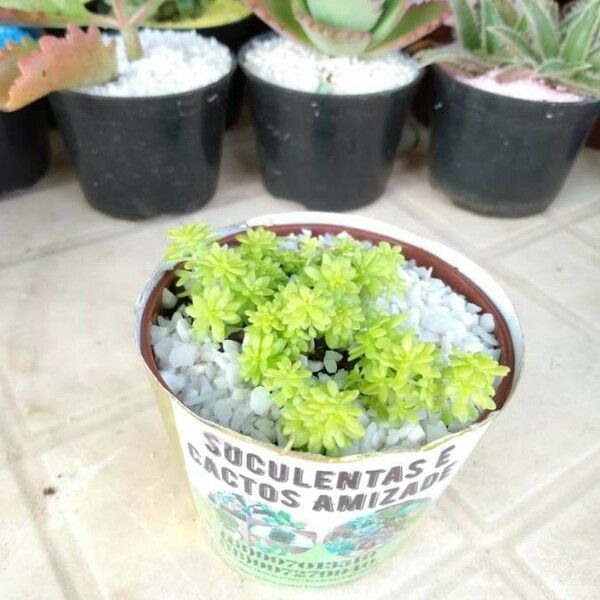
Often called "Tokyo Sun," Sedum japonicum acts like a living carpet of bottled sunshine. This vibrant succulent is a favorite for rock gardens and miniature "fairy" arrangements, looking more like a cluster of tiny neon stars than a traditional plant. Originating from the rocky crevices of East Asia, it has mastered the art of living small but looking bold.
🔍 How to Identify
- 🌿 Foliage: Features tiny, cylindrical, fleshy leaves that resemble miniature neon-yellow jellybeans tightly packed together.
- ☀️ Coloration: Its signature "electric yellow" hue is most intense when grown in full sun; in shaded areas, it softens to a lime or chartreuse green.
- 🌼 Blooms: During the summer, it produces clusters of star-shaped, bright yellow flowers that blend seamlessly with the golden foliage.
🏡 In Your Garden
- 🪴 The Drainage Rule: Because it hails from rocky environments, its roots are highly sensitive to "wet feet." It requires a gritty succulent mix and thrives in containers or rockeries where water can drain away rapidly.
- 🌱 Spreading Habit: It grows in low, dense mats. If a piece happens to break off, don't worry—it is a "pro-propagator" and will likely root itself right where it lands, making it an excellent filler for gaps in stone walls or between pavers.
⚠️ Safety & Toxicity
- 🐾 Pet Safety: Sedum japonicum is generally considered non-toxic to cats and dogs. It is a safe choice for households with curious furry friends.
- 👶 Details: While not poisonous, the sap of many stonecrops can cause very mild skin irritation in highly sensitive individuals or a slight stomach ache if ingested in large quantities. It is best treated as an ornamental rather than an edible plant.
✨ Fun Fact
The name Sedum is derived from the Latin word sedere, which means "to sit." This perfectly describes the plant's humble growth habit of "sitting" closely on rocks, walls, and almost any nook or cranny it can find!

Detailed Care Instructions
To successfully grow Sedum Japonicum plant, you can follow these steps:
- Location: Choose a spot that receives full sun to partial shade. Sedum Japonicum prefers at least six hours of direct sunlight each day.
- Soil: Ensure the soil is well-draining, as sedums are prone to rot in overly moist conditions. You can improve drainage by adding organic matter like compost or sand to the soil.
- Watering: Sedum Japonicum is a drought-tolerant plant, and too much water can cause root rot. Water sparingly, allowing the soil to dry out slightly between waterings. During periods of intense heat or drought, give the plant a deep watering once a week.
- Fertilizer: Sedums are quite low-maintenance and don't require much fertilizer. You can feed them with a balanced, slow-release fertilizer in the spring when growth begins.
- Propagation: Sedum Japonicum can be propagated through stem cuttings or by division. Take stem cuttings in spring or early summer and allow them to dry for a few days before planting. For division, separate the plant into smaller clumps and replant them.
- Pruning: In early spring, remove any dead or damaged stems to encourage new growth. You can also trim the plant to control its size and shape.
- Pests and Diseases: Sedums are generally resistant to pests and diseases. However, overwatering can lead to rot or fungal issues. Keep an eye out for signs of rot or insect infestation and address them promptly.
- Winter Care: Sedum Japonicum is hardy and can tolerate frost and freezing temperatures. However, if you live in a region with harsh winters, you can provide some protection by mulching around the base of the plant to insulate the roots.
By following these guidelines, you can successfully grow and maintain a healthy Sedum Japonicum plant.

Place in a bright room that is sun drenched almost all day. Or directly in a south-facing window.

1. Check the soil moisture: Before watering, check the moisture level of the soil by inserting a finger into the soil up to the knuckle. If the soil is dry to the touch, it is time to water the plant.
2. Watering method: Sedum Japonicum plant prefers to be watered thoroughly but infrequently. The best way to water the plant is by using a watering can or a hose. Place the spout close to the base of the plant to avoid splashing the leaves and water slowly until the water runs out of the drainage holes.
3. Watering frequency: How often you water the plant depends on various factors such as the climate, temperature, soil condition, and the size of the plant. Generally, it is best to water the plant once a week in the growing season, and every two weeks in the winter.
4. Avoid overwatering: Sedum Japonicum plant is susceptible to root rot if the soil is kept constantly wet. To avoid overwatering, ensure the soil has good drainage and avoid watering if the soil is still moist.
5. Watering time: It is best to water the plant in the early morning or late evening when the temperature is cool and the sun is not shining directly on the plant. Watering during these times helps to prevent evaporation and allows the plants to absorb the water efficiently.
6. Use Rainwater: Using rainwater to water the Sedum Japonicum plant is ideal because it is free from chemicals and minerals that can harm the plant. You can collect rainwater in a container and use it to water the plant.
For best results, apply a balanced fertilizer (10-10-10) to the soil in early spring before new growth appears. Repeat the application once a month during the growing season. Water the plant deeply after fertilizing to help distribute the nutrients evenly. Avoid over-fertilizing, as this can lead to weak growth and susceptibility to pests and diseases.
The optimal soil type for Sedum Japonicum plant is one that is well-draining, which means that it does not hold onto water for too long. A good soil mix for this plant should consist of a blend of organic matter, sand, and perlite. Organic matter will provide the necessary nutrients for the plant's growth, while sand and perlite will improve drainage and prevent waterlogging. It is recommended to use a mixture of one part organic matter, one part sand, and one part perlite. This type of soil mix will ensure that the roots of the Sedum Japonicum plant have access to adequate water and nutrients while also allowing for proper drainage.
To propagate this plant, take stem cuttings about 3-4 inches long from healthy, mature plants during the growing season, making sure to use clean, sharp scissors or pruning shears. Remove any leaves from the bottom 2 inches of the stem, being careful not to damage the stem. Dip the cut end of the stem in rooting hormone, if desired, then plant it in a well-draining potting mix.
Water the cutting thoroughly and keep the soil moist but not waterlogged. Enclose the cutting and pot in a clear plastic bag or under a plastic dome to help maintain humidity levels. Place the cutting in a brightly lit, warm location, but out of direct sunlight.
After about 3-4 weeks, roots should begin to form and new growth should emerge on the stem. Once the cutting has rooted and established itself, it can be transplanted into a larger pot or directly into the garden.
Common pests of the tokyo sun include Mealybugs, aphids. Make a habit of checking your tokyo sun frequently for pests so that any infestations can be caught and managed early.








