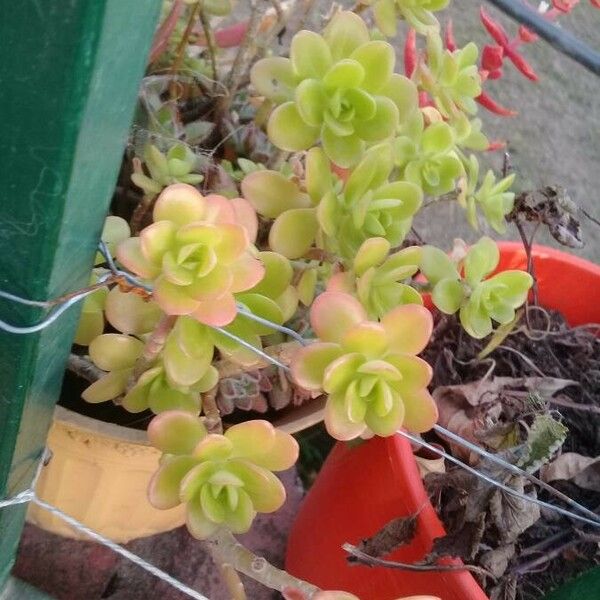
Plant Overview
Often called the Mexican Stonecrop, Sedum kimnachii is like a splash of lime juice for your rock garden. Native to the mountain crevices of Mexico, it creates a lush, evergreen carpet that looks surprisingly delicate but hides a tough-as-nails personality. It is the perfect "set it and forget it" plant for gardeners who want vibrant, year-round color with minimal effort.
🔍 How to Identify
- 🍃 Rosette Formation: It features sprawling, semi-open rosettes that resemble tiny, fleshy green roses growing along creeping stems.
- 🎨 Leaf Color: The leaves are a bright, apple-green that can take on a warm orange or reddish tint at the tips when "stressed" by bright sunlight or cool temperatures.
- 🌼 Golden Blooms: In late winter to early spring, it produces flat-topped clusters of brilliant, star-shaped yellow flowers that completely blanket the foliage.
🏡 In Your Garden
- 🧗 The Spiller: Because of its decumbent (creeping) stems, it is a champion "spiller" for container gardens, gracefully cascading over the edges of pots or stone walls.
- 🏜️ Hardiness Nuance: While it looks tropical, this Sedum is surprisingly resilient. It handles heat with ease but requires very gritty, fast-draining soil; it will quickly rot if left in standing water or heavy clay during the rainy season.
⚠️ Safety & Toxicity
- 🐾 Status: Generally non-toxic and "pet-safe."
- 👶 Details: It is considered safe for households with curious cats or dogs. However, like most succulents, ingesting large amounts may cause mild stomach upset, and the sap can occasionally cause very minor skin irritation for those with sensitive skin.
✨ Fun Fact
This plant was named in honor of Myron Kimnach, a legendary botanist and longtime director of the Huntington Botanical Gardens, who was famous for his lifelong dedication to documenting rare succulents!

Detailed Care Instructions
To grow a Sedum Kimnachii plant, follow these steps:
- Choose the right location: Sedum Kimnachii prefers full sun but can tolerate partial shade. Select a spot with well-draining soil.
- Prepare the soil: Amend the soil by adding organic matter such as compost. This will improve drainage and provide necessary nutrients.
- Planting: Dig a hole slightly larger than the root ball of the plant. Place the Sedum Kimnachii in the hole and backfill the soil around it. Firmly press the soil to eliminate any air pockets.
- Watering: Water the plant thoroughly after planting to help it establish. Sedum Kimnachii plants are drought-tolerant, so allow the soil to dry out between waterings. Overwatering can lead to root rot.
- Light and Temperature: Sedum Kimnachii requires at least six hours of direct sunlight per day. It can tolerate a wide range of temperatures but prefers average to warm temperatures between 60-80°F (15-27°C).
- Fertilizing: Sedum Kimnachii is a low-maintenance plant and generally does not require regular fertilizing. However, a light application of a balanced fertilizer in spring can promote healthy growth.
- Pruning: Sedum Kimnachii doesn't require extensive pruning. Removing any dead or damaged stems can help maintain the plant's appearance.
- Propagation: Sedum Kimnachii can be propagated through stem cuttings or seed. Take cuttings or sow seeds in a well-draining potting mix and keep it consistently moist until roots or new growth appear.
- Pests and Diseases: Sedum Kimnachii is generally resistant to pests and diseases. However, watch out for common succulent pests like mealybugs or scale insects. Treat any infestations promptly with organic insecticidal soap or a horticultural oil.
By following these steps, your Sedum Kimnachii plant should thrive and grow beautifully.

Place in a bright room that is sun drenched almost all day. Or directly in a south-facing window.

To effectively water the Sedum Kimnachii plant, you will need to follow these guidelines:
1. Determine the watering schedule: The Sedum Kimnachii plant prefers a watering schedule that allows the soil to dry out between watering sessions. This usually means watering the plant once every 7-10 days during the active growing season.
2. Choose the right watering method: Using a watering can or a hose with a gentle spray attachment is recommended to prevent waterlogging the plant or causing damage to the delicate foliage.
3. Water the plant at the base: It is important to avoid wetting the leaves and stems of the Sedum Kimnachii plant. Direct the water specifically at the soil around the base of the plant to ensure the roots receive moisture.
4. Provide sufficient water: While it is crucial to avoid overwatering, make sure to thoroughly water the plant each time, ensuring the water penetrates the soil to the roots. This helps establish a healthy root system.
5. Observe the water absorption: Monitor the soil's ability to absorb water. If the water seems to be pooling on the surface without being absorbed, pause watering and allow the soil to dry out further before the next watering session.
6. Consider seasonal variations: Adjust the watering schedule as per the seasonal changes. During the dormant period, reduce watering as the plant needs less moisture. In extreme heat or prolonged dry periods, increase the frequency of watering while maintaining the appropriate moisture levels.
7. Monitor moisture levels: Regularly check the soil's moisture level before watering. Insert your finger about an inch deep into the soil to gauge if it feels dry. If it does, it's time to water the plant. If the soil feels damp, delay watering until the soil dries out more.
By following these watering guidelines, you can help ensure the Sedum Kimnachii plant stays hydrated and thrives in its environment.
To fertilize Sedum Kimnachii plant, follow these instructions:
- Choose a balanced water-soluble fertilizer specifically formulated for succulent plants. It should have an NPK ratio of around 10-10-10 or similar.
- Dilute the fertilizer according to the instructions provided by the manufacturer. Typically, a dilution ratio of 1:2 (one part fertilizer to two parts water) is recommended.
- Water the Sedum Kimnachii plant thoroughly before applying fertilizer. This helps prevent burning the roots and ensures proper absorption.
- Pour the diluted fertilizer gently around the base of the plant, avoiding direct contact with leaves or stems. Take care not to over-fertilize, as succulents are sensitive to excessive nutrients.
- Wait at least 2-3 weeks between each fertilization session to allow the plant to fully absorb and utilize the nutrients.
- During the dormant period (usually in winter), suspend fertilization to align with the plant's natural growth cycle.
Remember, it's best to always follow the specific instructions provided by the fertilizer manufacturer for optimal results.
For optimal growth and health of Sedum Kimnachii, it is important to choose the right type of soil. The ideal soil for this plant should promote good drainage while retaining sufficient moisture to prevent the roots from drying out. The soil should also provide essential nutrients for proper growth and performance.
A recommended soil composition for Sedum Kimnachii consists of a well-draining, porous mixture that allows excess water to pass through easily. It is advisable to use a succulent or cactus-specific potting mix that can be purchased from a nursery or garden center. These mixes generally contain a blend of materials such as perlite, coarse sand, and organic matter like peat moss.
The addition of these components helps to increase drainage and aeration, preventing the roots from rotting due to excess moisture. The coarse texture of the soil mix promotes healthy root growth and prevents the soil from compacting, enabling better airflow around the roots.
Additionally, organic matter incorporated into the soil mix helps retain some moisture while supplying the plant with essential nutrients. However, it is essential to strike a balance to prevent the soil from becoming overly wet, which can lead to root rot.
It is generally recommended to avoid heavy, clay-based soils or soils that hold too much moisture, as Sedum Kimnachii plants are more susceptible to root rot in such conditions. Regular potting soil, which tends to retain moisture for longer periods, should also be avoided or used in moderation.
In summary, the ideal soil for Sedum Kimnachii is a well-draining succulent or cactus-specific potting mix that contains materials like perlite, coarse sand, and organic matter. This soil composition ensures good drainage, aeration, and adequate moisture retention to support the growth and health of the Sedum Kimnachii plant.
To propagate Sedum Kimnachii, you can follow these steps:
- Start by selecting a healthy and mature Sedum Kimnachii plant from which you would like to take cuttings.
- Prepare a clean and sharp pair of pruning shears or scissors. Sterilizing the tools with rubbing alcohol or a diluted bleach solution is recommended to minimize the risk of introducing any plant diseases.
- Identify suitable stems on the Sedum Kimnachii plant to take cuttings from. Look for stems that are strong, healthy, and have several sets of leaves.
- Using the pruning shears or scissors, make a clean cut just below a leaf node. A leaf node is the point on the stem where a leaf emerges.
- Remove any leaves from the lower half or two-thirds of the stem, leaving only a few at the top intact.
- If desired, you may dip the cut end of the stem in a rooting hormone powder or gel. While it is not necessary, it can help stimulate root growth and increase the chances of successful propagation.
- Prepare a well-draining propagation medium using a combination of perlite, sand, or vermiculite. Moisten the mixture lightly with water.
- Make small holes or indentations in the propagation medium using a pencil or your fingertip, ensuring they are spaced a few inches apart.
- Place the prepared cuttings into the holes, gently pressing the soil mixture around them to secure them in place. Ensure that at least one or two nodes are buried in the medium.
- Mist the cuttings and the surrounding soil lightly with water to provide some moisture to the newly planted cuttings without saturating the soil.
- Place the container of cuttings in a warm and brightly lit location, but away from direct sunlight, as too much intensity can be harmful to the young plants.
- Maintain a consistently warm and slightly humid environment by covering the container with a clear plastic bag or using a mini greenhouse. This helps retain moisture and encourages faster root development.
- Check the cuttings regularly to ensure they remain moist but not waterlogged. Mist them with water as needed to maintain humidity.
- After a few weeks, gently tug on the cuttings to check for resistance, indicating the development of roots. Once rooted, you can slowly expose the newly propagated Sedum Kimnachii to more light and outdoor conditions.
- Once the newly propagated plants have established a strong root system and are growing well, you can transplant them into individual pots or directly into a garden bed, if desired.
By following these steps, you should be able to propagate Sedum Kimnachii successfully and expand your collection or share the plant with others.
Common pests of the lesser mexican stone crop include Mealybugs, aphids. Make a habit of checking your lesser mexican stone crop frequently for pests so that any infestations can be caught and managed early.








