Plant Overview
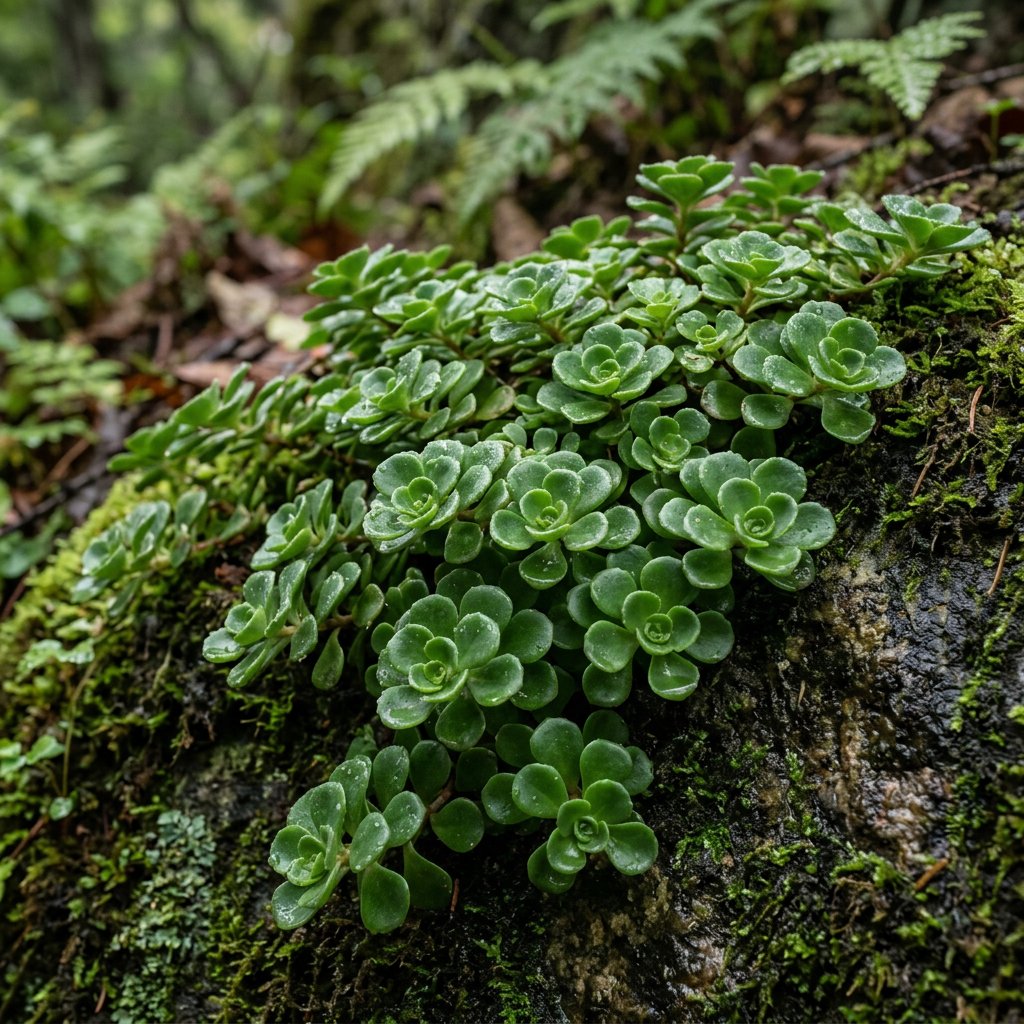
Often called the Japanese Stonecrop, Sedum makinoi is like a living carpet of emerald coins. Originating from the rocky slopes of East Asia, this succulent is a favorite for those who want a "set it and forget it" groundcover that looks lush and delicate but acts tough as nails. It is particularly prized for its ability to soften the edges of stone paths and container gardens with its trailing, moss-like appearance.
🔍 How to Identify
- 🍃 The Foliage: Small, flat, rounded leaves that are spatulate (spoon-shaped). They grow in tight rosettes along creeping stems.
- 🎨 Color Palette: While the wild species is a deep forest green, you will often see the "Ogon" variety, which glows with a brilliant neon chartreuse or golden-yellow hue.
- 🌼 Starry Blooms: During the summer, it produces clusters of tiny, star-shaped yellow flowers that sit slightly above the foliage, attracting small pollinators.
🏡 In Your Garden
- 🧗 The Creeping Habit: This plant spreads by rooting at its nodes. This means as the stems touch the soil, they grow new roots, allowing it to "walk" across your garden beds and fill in gaps between stepping stones.
- 💧 Drainage is Vital: Unlike many succulents that crave bone-dry air, Sedum makinoi appreciates a bit more humidity, but it absolutely hates "wet feet." It needs gritty, well-draining soil to prevent the roots from suffocating.
- ☀️ Light Logic: In hot climates, it prefers a bit of afternoon shade. If it gets too much direct, scorching sun, the delicate leaves can "bleach" or shrivel.
⚠️ Safety & Toxicity
- 🐾 Safe Status: Sedum makinoi is generally considered non-toxic to cats, dogs, and horses, making it a worry-free choice for household pet owners.
- 🧤 Skin Sensitivity: While not poisonous, the sap of some stonecrops can cause mild skin irritation or "phytophototoxicity" in very sensitive individuals. It’s always a good idea to wash your hands after heavy pruning.
✨ Fun Fact
The common name "Stonecrop" is a nod to the plant's incredible resilience; ancient gardeners joked that only stones require less maintenance than these plants, as they seem to "crop" (grow) directly out of bare rock!

Detailed Care Instructions
| Soil Ph | Acidic, Neutral |
| Humidity | Dry |
| Lighting | Full Sun |
| Soil Type | Sandy, Loamy, Well-Drained |
| Bloom Time | Summer, Fall |
| Difficulty | Easy |
| Plant Type | Perennial, Annual |
| Hibernation | Cold Period |
| Mature Size | 6–24 In. Tall, 12–24 In. Wide |
| Native Area | North America |
| Temperature | 15°C - 30°C |
| Sun Exposure | Full, Partial |
| Hardiness Zones | 3-10 |
To grow Sedum makinoi (also known as Makino's stonecrop), follow these steps:
- Choose a suitable planting location: Sedum makinoi thrives in direct sunlight to partial shade. Ensure the soil is well-draining and not overly fertile.
- Propagation through stem cuttings: Take stem cuttings in late spring or early summer from a healthy Sedum makinoi plant. Cut a 3-4 inch section of the stem, ensuring that it has a few leaves. Remove the lower leaves, leaving a couple at the top. Let the cut end dry for a day or two to prevent rotting.
- Prepare the planting medium: Use a well-draining potting mix or create a mix by combining equal parts of potting soil, sand, and perlite.
- Plant the cuttings: Prepare small pots with the potting mix and create holes for the cuttings. Insert the cuttings into the holes, burying them about half their length. Gently press the soil around the base to secure the cutting.
- Watering and care: Water the cuttings thoroughly after planting, ensuring the soil is moist but not waterlogged. After a few weeks, the roots should begin to develop. At this stage, reduce watering to allow the soil to dry out between waterings. Sedum makinoi is drought-tolerant and prefers dry conditions.
- Transplanting: Once the roots have formed and the plant has grown a bit, it can be transplanted into a larger container or directly into the garden. Choose a location with good drainage and ample sunlight. Space the plants about 6-8 inches apart.
- Maintenance: Sedum makinoi requires minimal maintenance. Water sparingly and only during dry periods. Avoid overwatering as it can lead to root rot. Fertilization is not necessary as Sedum makinoi tends to grow well in poor soil conditions.
- Propagation through division: Over time, Sedum makinoi will spread and form a clump. When the clump becomes overcrowded, it can be divided. Dig up the clump, gently separate the individual plants, and replant them in suitable locations.
- Pruning: Sedum makinoi benefits from periodic pruning to maintain its compact shape and prevent legginess. Trim back any excessively long or untidy growth during the growing season.
With proper care and suitable growing conditions, your Sedum makinoi should thrive and provide you with beautiful foliage and tiny, star-shaped yellow flowers.

Place in a bright room that is sun drenched almost all day. Or directly in a south-facing window.

To properly water this plant, it is important to maintain a consistent watering schedule. The soil should be allowed to dry out slightly before re-watering. When watering, it is best to water the soil directly at the base of the plant, rather than watering over the foliage. Overwatering can lead to root rot, so it is important to avoid leaving the plant in standing water. Additionally, it is important to avoid getting water on the leaves or stem of the plant, as this can lead to fungal growth. It is recommended to water this plant in the morning or early afternoon to allow the soil to dry out before nightfall.
To fertilize this plant, use a balanced fertilizer with an NPK ratio of 10-10-10 or a similar ratio. Dilute the fertilizer to half strength and apply it once a month during the growing season, from spring to fall. Be sure to water the plant thoroughly before and after fertilizing. Avoid fertilizing during the winter dormancy period.
The ideal soil for Sedum Makinoi plant should be well-draining, loose, and fast-draining. It should be slightly alkaline with a pH range of 7.0 to 7.5. The soil should be sandy or loamy with a good mix of organic material. The plant prefers a nutrient-rich soil that retains moisture but doesn't become waterlogged. It is best to avoid heavy clay soils that hold onto moisture, as this can cause root rot. Additionally, it is important to ensure the soil is free from any harmful contaminants, such as lead or heavy metals, that could negatively impact the plant's growth and health.
To propagate this plant, select a healthy stem tip and gently remove any leaves from the bottom 2-3 inches. Dip the cut end in rooting hormone and place it in a mixture of well-draining soil and sand. Water the soil thoroughly and keep it moist but not waterlogged. Place the cutting in a brightly lit area without direct sunlight. Cover it with a plastic bag or clear plastic wrap to maintain humidity. After a few weeks, check for roots by gently tugging on the cutting. Once it develops roots, remove the plastic cover and gradually expose it to more light. Transplant the new plant into a larger container or outdoor garden once it has matured.
Common pests of the stonecrop include Mealybugs, aphids. Make a habit of checking your stonecrop frequently for pests so that any infestations can be caught and managed early.








