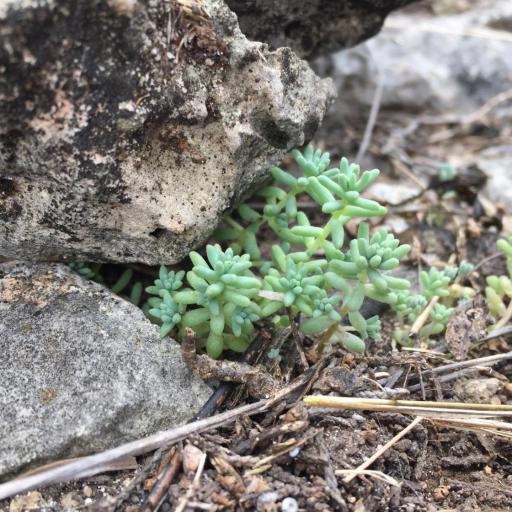
Plant Overview
Commonly known as Nuttall's Stonecrop or Yellow Stonecrop, this tiny succulent is a resilient master of the rocky wilderness. Native to the South-Central United States, it is often found clinging to granite or sandstone outcrops where other plants wouldn't dare to grow. It is a seasonal delight, painting harsh, rocky glades with a vibrant wash of gold during the spring.
🔍 How to Identify
- 🌟 Starry Blooms: Features tiny, bright yellow flowers with five pointed petals that look like miniature stars scattered across the ground.
- 🍃 Bead-like Leaves: The foliage consists of small, fleshy, and succulent leaves that are light green but can take on reddish tints when stressed by the sun or drought.
- 📏 Low-Profile Growth: It grows in low, moss-like carpets, rarely reaching more than 3 inches in height, making it look like a living velvet over stones.
🏡 In Your Garden
- 🪨 The Minimalist Gardener: This plant is perfect for rock gardens or "crevice gardening." It actually prefers thin, poor-quality soil over rich potting mixes; too much organic matter can cause it to rot.
- 🌱 An Annual Cycle: Unlike many other Sedums, this species is an annual. It lives fast and dies young, but it is an excellent self-seeder. If you leave the spent plants alone, they will "re-plant" themselves for the following spring.
- ☀️ Sun Worshiper: To keep its compact shape and ensure a heavy bloom, it needs full sun. In the shade, it becomes leggy and loses its vibrant coloration.
⚠️ Safety & Toxicity
- 🟢 Generally Safe: Nuttall's Stonecrop is considered non-toxic to humans and most pets.
- 👅 Mild Irritation: While not poisonous, the sap of many Sedums contains crystals that can cause mild stomach upset if large quantities are ingested by curious dogs or cats, and the juice may cause slight skin irritation for those with very sensitive skin.
✨ Fun Fact
This plant was named after Thomas Nuttall, a famous 19th-century English botanist who braved the American frontier. He was so obsessed with collecting plants like this one that he was reportedly once "lost" by an expedition because he stopped too long to examine the flora!

Detailed Care Instructions
Sedum nuttallii, commonly known as Nuttall's Stonecrop, is a resilient succulent native to North America, particularly found in rocky slopes and sandy soils. It’s an excellent choice for rock gardens, succulent arrangements, or drought-tolerant landscapes. Here’s how you can grow this beautiful plant:
1. Choosing the Right Location:
- Sunlight: Sedum nuttallii thrives in full sun. Aim for at least 6 hours of direct sunlight each day.
- Soil: The plant prefers well-draining soil. Sandy or gritty soil is ideal, as it mimics its natural habitat. If you're planting in a pot, ensure good drainage by using a cactus or succulent potting mix.
2. Planting:
- Seeds: If starting from seeds, sow them in a tray filled with succulent or cactus mix. Gently press the seeds into the soil surface without covering them, as light aids germination. Mist the soil lightly to keep it moist until germination.
- Cuttings: For propagation through cuttings, cut a healthy stem section from an existing plant. Let the cut end dry and callous over for a few days. Plant the cutting in well-draining soil and be sparing with water until it establishes roots.
- Transplanting: If you have a young plant or seedlings, transplant them gently into their desired location, ensuring their roots are covered but not too deep.
3. Watering:
- Established Plants: Once established, Sedum nuttallii is drought-tolerant. Water sparingly. Allow the soil to dry out completely between waterings.
- New Plants: Newly planted seeds or cuttings require slightly more frequent watering, but ensure the soil is never waterlogged.
4. Fertilizing:
- Sedum nuttallii typically doesn't require much fertilization. However, if you want to give it a boost, use a balanced, diluted (half-strength) fertilizer once in early spring.
5. Maintenance:
- Pruning: Trim any dead or damaged parts to keep the plant healthy and attractive. This also encourages new growth.
- Pests and Diseases: This plant is relatively pest-resistant. However, overwatering can lead to root rot or fungal issues. Ensure good air circulation and proper watering practices.
6. Overwintering:
- Depending on your climate, Sedum nuttallii can go dormant in the winter. It’s hardy to USDA zones 4-9, so in colder climates, some protection like mulching can safeguard the plant.
- In frost-prone areas, consider growing Sedum nuttallii in a container that can be moved indoors during severe cold spells.
7. Companion Planting:
- Sedums pair well with other drought-tolerant plants such as Echeveria, Agave, Aloe, and other low-water ground covers.
By following these steps, you can cultivate a healthy and vibrant Sedum nuttallii plant that will add beauty and resilience to your garden space. Remember, the key to success with this succulent is ensuring good drainage and avoiding overwatering.

Place in a bright room that is sun drenched almost all day. Or directly in a south-facing window.

The best way to water this plant is to wait until the top inch of soil is dry before thoroughly watering it. Be careful not to overwater, as this can lead to root rot. It is best to water from the base of the plant and avoid getting the leaves wet, as this can contribute to disease. If planted in a container, ensure there is proper drainage to prevent water from sitting in the bottom of the pot. During hot and dry periods, the plant may require more frequent watering.
Here's how you can properly fertilize Sedum nuttallii:
- Type of Fertilizer: Use a balanced, water-soluble fertilizer with equal parts nitrogen, phosphorus, and potassium. A typical 10-10-10 or 20-20-20 formula will work well.
- Dilution: Dilute the fertilizer to half the strength recommended on the package. Sedums generally do not need heavy feeding and can suffer from over-fertilization.
- Frequency: Fertilize sparingly. Apply the diluted solution once a month during the growing season, which typically spans from late spring to early autumn.
- Application Method: Water the plant thoroughly before applying the fertilizer. This helps prevent root burn and ensures that nutrients are evenly distributed in the soil.
- Winter Dormancy: Do not fertilize during the winter months when the plant is dormant. Resume feeding in the spring just as new growth starts to appear.
- Observation: Keep an eye on the plant’s growth and adjust the fertilization schedule as needed. If you notice any signs of over-fertilization, such as yellowing leaves or stunted growth, reduce the frequency or concentration of your feedings.
- Soil Health: Ensure that the plant is growing in well-draining soil. Sedum nuttallii thrives in poorer soils, and excessively rich or wet soils can be detrimental.
By following these instructions, you should be able to maintain a healthy and happy plant!
The optimal soil type for this specific plant is a well-draining, sandy-loam soil mixture. It should be slightly acidic with a pH range of 5.5 to 6.5. It is important to ensure that the soil is not too heavy or compacted, as this may impede the plant's growth and drainage. Additionally, incorporating organic matter, such as compost or aged manure, into the soil can help improve drainage and nutrient availability. It is also recommended to plant the Sedum Nuttallii plant in an area that receives full sun to partial shade.
Propagating Sedum nuttallii can be a straightforward process and can be achieved through several methods, including division, leaf cuttings, and stem cuttings. Here are the detailed steps for each method:
Division:
- Timing:
- The best time to divide Sedum nuttallii is during the spring or fall when the plant is not actively growing.
- The best time to divide Sedum nuttallii is during the spring or fall when the plant is not actively growing.
- Preparation:
- Water the plant a day before to make the soil easier to work with.
- Prepare new pots or garden locations with well-draining soil.
- Water the plant a day before to make the soil easier to work with.
- Dividing the Plant:
- Carefully dig around the base of the plant to lift the root ball out.
- Gently shake off the excess soil to expose the roots.
- Use a sharp, clean knife or garden trowel to divide the root ball into smaller sections, making sure each section has roots and shoots.
- Carefully dig around the base of the plant to lift the root ball out.
- Replanting:
- Plant each division in its new location or pot at the same depth it was growing before.
- Water thoroughly but ensure the soil drains well to prevent root rot.
Leaf Cuttings:
- Plant each division in its new location or pot at the same depth it was growing before.
- Choosing Leaves:
- Select healthy, plump leaves from the plant.
- Select healthy, plump leaves from the plant.
- Cutting:
- Use a clean, sharp knife or scissors to cut the leaves away from the stem.
- Use a clean, sharp knife or scissors to cut the leaves away from the stem.
- Callusing:
- Allow the cut ends of the leaves to dry and callous over for a day or two in a dry, shaded area to prevent rotting.
- Allow the cut ends of the leaves to dry and callous over for a day or two in a dry, shaded area to prevent rotting.
- Planting:
- Place the calloused ends of the leaves into a tray filled with a well-draining soil mix.
- Keep the soil lightly moist but not waterlogged.
- Place the calloused ends of the leaves into a tray filled with a well-draining soil mix.
- Rooting:
- Place the tray in a bright, indirect light location.
- New roots and tiny plants should start to form at the base of the leaves within a few weeks.
Stem Cuttings:
- Place the tray in a bright, indirect light location.
- Selecting and Cutting:
- Choose a healthy stem and cut a section about 3-6 inches long using a clean, sharp knife or scissors.
- Choose a healthy stem and cut a section about 3-6 inches long using a clean, sharp knife or scissors.
- Callusing:
- Leave the cut end of the stem to callous over for a day or two in a dry, shaded area.
- Leave the cut end of the stem to callous over for a day or two in a dry, shaded area.
- Planting:
- Insert the calloused end of the stem into a pot filled with well-draining soil.
- Plant the stem deep enough to stand upright on its own.
- Insert the calloused end of the stem into a pot filled with well-draining soil.
- Watering:
- Water sparingly at first to allow the cutting to establish roots. Keeping the soil on the slightly dry side helps to prevent rotting.
- Water sparingly at first to allow the cutting to establish roots. Keeping the soil on the slightly dry side helps to prevent rotting.
- Location:
- Place the pot in a location with bright, indirect light. Roots typically develop within a few weeks.
General Care Tips for Newly Propagated Plants:
- Place the pot in a location with bright, indirect light. Roots typically develop within a few weeks.
- Light: Provide bright, indirect sunlight for the new plants.
- Watering: Be cautious with watering. Let the soil dry out between waterings to prevent root rot.
- Environment: Maintain a warm environment to encourage rooting and growth.
- Pests: Watch for pests like aphids or mealybugs, which can be attracted to new growth.
By following these methods, you can successfully propagate Sedum nuttallii and expand your collection of these resilient and attractive plants.
Common pests of the yellow stonecrop include Mealybugs, aphids. Make a habit of checking your yellow stonecrop frequently for pests so that any infestations can be caught and managed early.







