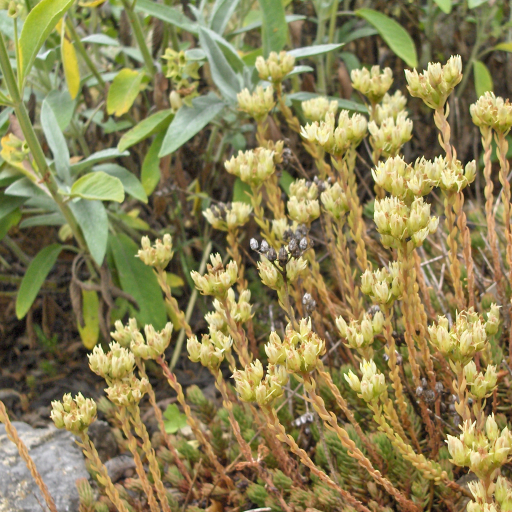
Plant Overview
Known by the charming nickname Creamy Stonecrop, Sedum ochroleucum is a resilient Mediterranean native that looks like a miniature, frosted pine forest spreading across the ground. It is a favorite for rock gardens and "living roofs" because of its ability to thrive where other plants would wither under the sun. This low-maintenance succulent brings a touch of architectural texture to even the harshest garden corners.
🔍 How to Identify
- 🌵 Foliage: The leaves are fleshy, needle-like, and pointed, often appearing in a sophisticated bluish-gray or "glaucous" green.
- ⭐ Flower Clusters: In mid-summer, it sends up tall, sturdy stalks topped with clusters of star-shaped flowers that range from pale primrose yellow to creamy white.
- 🌱 Growth Habit: It forms a dense, carpet-like mat that rarely exceeds 6 inches in height, though the flower spikes can reach up to 10 inches.
🏡 In Your Garden
- 🪨 The "Neglect" Specialist: This plant thrives on a bit of "tough love." It prefers sandy or gravelly soil and actually loses its compact, tidy shape if given too much fertilizer or rich organic matter.
- ☀️ Sun Worshipper: To maintain its striking silvery-blue color, it needs full sun. In the shade, the stems may become "leggy" as they stretch toward the light, making the plant look sparse.
⚠️ Safety & Toxicity
- 🟢 Generally Safe: Sedum ochroleucum is considered non-toxic to humans and most pets, making it a "worry-free" addition to accessible garden beds.
- 👅 Mild Irritant: While not poisonous, the sap can occasionally cause mild skin irritation for those with sensitive skin, and if a curious pet eats a large amount, they might experience a mild stomach upset.
✨ Fun Fact
The name "Stonecrop" comes from an old English tradition of finding these plants growing directly on stones or old stone walls. Because they can survive on almost no soil, ancient folklore suggested they were "born from the rocks" themselves!

Detailed Care Instructions
To grow Sedum Ochroleucum, also known as the "Baby Tears Sedum," you can follow these steps:
- Choose a suitable location: Sedum Ochroleucum thrives in well-draining soil and requires a lot of sunlight. Select a spot that receives full sun to achieve optimal growth.
- Prepare the soil: Ensure the soil is well-draining by mixing organic matter such as compost or perlite to improve drainage.
- Propagation: Sedum Ochroleucum can be propagated through stem cuttings or from seeds.
- Stem cuttings: Take a stem cutting, around 3-4 inches long, from an existing plant. Leave the cutting to dry for a few days to allow the cut end to callous. Once it has calloused, plant the cutting in well-draining soil, burying it about an inch deep. Water sparingly until roots develop.
- Seeds: Sow the seeds directly in the prepared soil surface. Cover them lightly with a thin layer of soil. Keep the soil moist until germination occurs, which usually takes around two weeks.
- Stem cuttings: Take a stem cutting, around 3-4 inches long, from an existing plant. Leave the cutting to dry for a few days to allow the cut end to callous. Once it has calloused, plant the cutting in well-draining soil, burying it about an inch deep. Water sparingly until roots develop.
- Watering: Sedum Ochroleucum has low water requirements and is drought-tolerant. Water sparingly, allowing the top inch of soil to dry out between waterings. Overwatering can lead to root rot, so it's crucial not to let the plant sit in waterlogged soil.
- Fertilization: Sedum Ochroleucum doesn't require much fertilization. If desired, you can apply a balanced, all-purpose fertilizer once a year in the spring. Follow the manufacturer's instructions regarding dosage and application.
- Pruning: Trim back any dead or leggy growth regularly to maintain a compact and bushy shape. This will also encourage new growth and prevent the plant from becoming sparse.
- Transplanting: If your Sedum Ochroleucum outgrows its container or needs to be relocated, carefully lift the plant from the soil, being cautious not to damage the roots. Replant it in a larger pot or a sunny garden bed with well-draining soil.
Remember to regularly inspect your Sedum Ochroleucum for any signs of pests or diseases and address them promptly. With proper care and maintenance, your Sedum Ochroleucum plant should thrive and continue to grow.

Place in a bright room that is sun drenched almost all day. Or directly in a south-facing window.

The best way to water this plant is to thoroughly drench the soil around the base of the plant, making sure that water reaches the roots. Allow the water to soak through the soil and then drain away any excess water. It is important not to overwater this plant as it is susceptible to root rot. Wait until the top layer of soil is dry before watering again. During the winter months, reduce watering and allow the soil to dry out slightly between waterings.
The Sedum Ochroleucum plant should be fertilized once a month during the growing season with a balanced, water-soluble fertilizer. Dilute the fertilizer to half strength and apply it at the base of the plant. Do not over-fertilize as this can lead to excessive growth and weaken the plant. Water the plant immediately after fertilizing to help distribute the nutrients.
The Sedum Ochroleucum plant requires well-draining soil with good moisture retention capabilities. The soil should be nutrient-rich and have a slightly acidic to neutral pH level. The plant prefers sandy loam soil with a pH range of 6.0 to 7.5. The use of organic matter such as compost or leaf mold can improve soil quality. It is important to ensure that the soil is not compacted, as this can limit root growth and lead to poor plant health. Raised beds or containers with drainage holes are ideal for this plant. It is important to provide adequate drainage to prevent the root system from becoming waterlogged.
To propagate this plant, first locate a healthy stem on the parent plant that is a suitable size for propagation. Cut the stem just above a leaf node with a sharp, clean blade. Remove the lower leaves from the stem, leaving only the top few. Dip the cut end of the stem in rooting hormone powder, if desired, to encourage rooting.
Prepare a pot with well-draining soil that is moist but not soaked. Use a pencil or other pointed tool to make a hole in the soil, deep enough to accommodate the stem. Insert the stem into the hole and pat the soil around it to secure it in place.
Water the newly potted stem lightly and place it in a bright, but indirect light location. Keep the soil moist, but not waterlogged, and avoid direct sunlight until new growth appears.
New leaves will begin to grow from the stem within a few weeks, indicating successful propagation. Once the new plant has reached a suitable size, it can be transplanted into a larger container or planted in the garden.








