Plant Overview
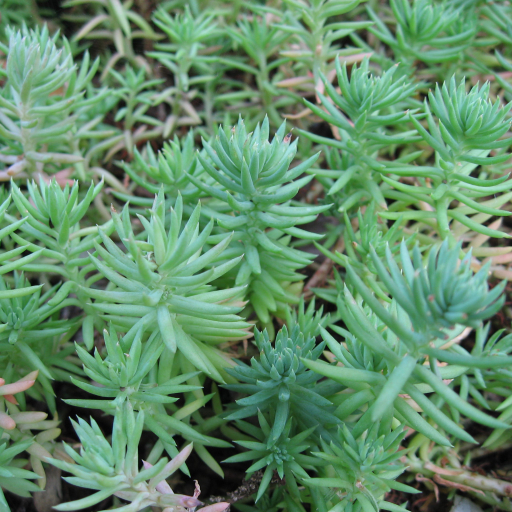
Often called the Blue Spruce Stonecrop or "Jenny’s Stonecrop," this hardy perennial looks like a miniature coniferous forest creeping across the ground. Originating from rocky outcrops across Europe, it is a master of survival that turns harsh, sun-baked landscapes into a lush, blue-green carpet. Its ability to thrive where other plants wither has made it a legendary "filler" for rock gardens and fairy-tale stone walls.
🔍 How to Identify
- 🌵 Foliage Shape: The leaves are fleshy, pointed, and needle-like, closely resembling the needles of a Spruce tree. They are arranged spirally around the stems.
- 🎨 Color Palette: Typically a cool blue-gray or glaucous green, though popular cultivars like 'Angelina' can turn brilliant shades of gold and orange.
- 🌼 Floral Display: In mid-summer, it sends up upright stalks topped with vibrant, star-shaped yellow flowers that form flat-topped clusters.
- 🏃 Growth Habit: It is a low-growing, mat-forming succulent with stems that "reflex" (bend backward or trail) as they grow.
🏡 In Your Garden
- 🧱 The Rock Specialist: Because it naturally grows in crevices, it is perfect for "crevice gardening." It requires very little soil and can actually rot if planted in rich, heavy potting mix—well-draining sandy or gritty soil is its best friend.
- ☀️ Sun Worshiper: To keep its spruce-like appearance tight and compact, it needs full sun. In the shade, the stems become "leggy" and lose their signature architectural look.
- ✂️ Easy Propagation: This plant is an opportunist; any stem that breaks off and touches the soil will likely sprout roots and start a new colony, making it incredibly easy to share with friends.
⚠️ Safety & Toxicity
- 🐾 Pet Friendly: Sedum reflexum is generally considered non-toxic to dogs, cats, and horses, making it a safe choice for low-level groundcover in pet-filled yards.
- 👅 Mild Irritation: While some species of Sedum are historically eaten, ingesting large amounts may cause a mild stomach upset or "peppery" mouth irritation in humans. It’s best admired with the eyes, not the tongue.
✨ Fun Fact
In some parts of Europe, Sedum reflexum was historically used as a "salad herb." It has a slightly tart, peppery crunch, though it was mostly used as a garnish rather than a main course. Today, it’s a superstar of "Green Roof" technology because it can survive extreme heat and wind while insulating buildings!

Detailed Care Instructions
| Soil Ph | Acidic, Neutral |
| Lighting | Full Sun |
| Soil Type | Sandy, Loamy, Well-Drained |
| Bloom Time | Summer, Fall |
| Plant Type | Perennial Herb |
| Sun Exposure | Full Sun To Partial Shade |
| Hardiness Zones | 3-9 |
To grow Sedum reflexum, also known as Blue Spruce Stonecrop or Reflexed Stonecrop, follow these steps:
- Choose a suitable location: Sedum reflexum prefers full sun to light shade. Ensure that the soil is well-drained and not overly moist. It can grow in poor, rocky, or sandy soil conditions.
- Prepare the soil: If your soil is heavy or compacted, amend it with organic matter like compost or well-rotted manure to improve drainage and fertility. Rake the soil to create a slightly loose surface.
- Planting: Dig a hole slightly deeper and wider than the root ball of the Sedum reflexum plant. Place the plant in the hole and backfill it with soil, gently firming it around the base. Make sure the plant is planted at the same depth as it was in the container.
- Watering: Water the plant thoroughly after planting to settle the soil. Afterward, Sedum reflexum is drought-tolerant and only needs watering during prolonged dry periods. Avoid overwatering, as excessive moisture can lead to root rot.
- Mulching: Applying a layer of organic mulch around the plant can help conserve moisture, suppress weed growth, and regulate soil temperature.
- Fertilization: Sedum reflexum is a low-maintenance plant and usually does not require fertilization. However, you can apply a slow-release, balanced fertilizer in early spring if you want to encourage growth and flowering.
- Propagation: Sedum reflexum can be propagated through stem cuttings or by dividing the plant during early spring or fall. This allows you to create new plants from an existing one.
- Pruning: Sedum reflexum does not usually require pruning. However, you can trim back any leggy or damaged stems in late winter or early spring to maintain a compact shape.
- Pests and diseases: Sedum reflexum is generally resistant to pests and diseases. However, it can occasionally suffer from fungal diseases like powdery mildew or root rot. Ensure good air circulation around the plant to minimize the risk, and avoid overwatering.
- Enjoying the plant: Once established, Sedum reflexum will thrive and form a dense mat of succulent, blue-green foliage. In summer, it produces small, yellow, star-shaped flowers that attract pollinators like bees and butterflies.
Remember to check the specific growing requirements for Sedum reflexum in your region, as they may vary slightly depending on the climate and conditions.

Place in a bright room that is sun drenched almost all day. Or directly in a south-facing window.

To water Sedum Reflexum, it is important to avoid overwatering as it can cause root rot and damage to the plant. Before watering, make sure to check the soil moisture level by inserting a finger into the soil. If the soil feels dry to the touch, it is time to water the plant.
When watering Sedum Reflexum, use a watering can or a hose with a gentle stream of water to avoid disturbing the plant's roots. Pour the water slowly and evenly around the base of the plant, making sure to saturate the soil evenly.
After watering, allow excess water to drain out and ensure the soil is not waterlogged. Avoid watering during the hottest part of the day or when the sun is directly on the plant as it can cause the water to evaporate quickly. It is recommended to water Sedum Reflexum sparingly and only when the soil is dry to the touch.
To properly fertilize this plant, use an all-purpose fertilizer in spring and again in mid-summer. Be sure to follow the instructions on the fertilizer packaging and do not over-fertilize, as this can damage the plant. Water the plant thoroughly before and after applying the fertilizer to prevent burning the roots.
The ideal soil for the Sedum Reflexum plant would be a well-draining soil mix that has good fertility. The soil should be light and porous, with good aeration and moisture retention. It should have a slightly acidic to neutral pH level that ranges between 6.0 - 7.5. The soil should also be lean, meaning it should be low in nutrients, as this plant does not require rich soil to thrive. It is recommended to mix coarse river sand or perlite into the soil mix to increase drainage and create a lighter soil consistency. Additionally, the plant prefers a soil mix that is not too heavy or compacted, as this can result in poor drainage and root rot. Thus, it is advisable to avoid clay soils or soils that contain heavy clay particles.
To propagate this plant, you can take stem cuttings in the spring or summer. Choose a healthy stem and cut it to about 4 inches in length. Remove the lower leaves and dip the cut end in rooting hormone. Plant the cutting in well-draining soil and keep it moist. Some growers recommend covering the cutting with a plastic bag to create humidity. The cutting should root in about 2-4 weeks.
Common pests of the reflexed stonecrop include Aphids. Make a habit of checking your reflexed stonecrop frequently for pests so that any infestations can be caught and managed early.








