Plant Overview
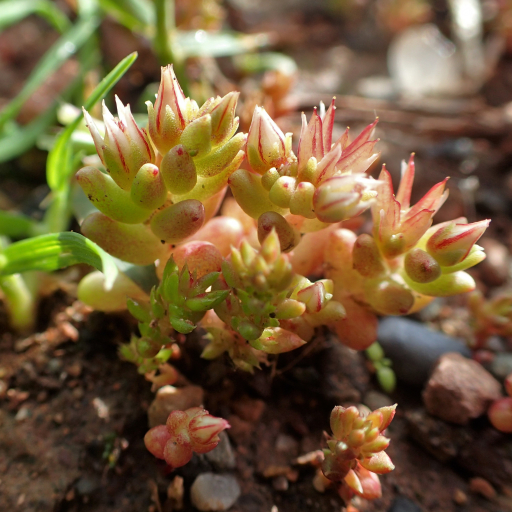
The Red Stonecrop, scientifically known as Sedum rubens, is a master of disguise that shifts from a soft glaucous green to a fiery crimson as the seasons change. Native to the rugged cliffs and sandy soils of the Mediterranean, this resilient succulent is a favorite for rock gardens and "crevice" planting. It is often celebrated for its ability to thrive in harsh, minimalist environments where other plants would quickly wither.
🔍 How to Identify
- 🍃 Fleshy Foliage: The leaves are thick, succulent, and cylindrical (nearly round in cross-section), designed to store water for long dry spells.
- 🎨 The Blush: While the plant begins life with a pale green or bluish tint, it develops deep reddish-purple hues when exposed to intense sunlight or cold stress.
- 🌸 Starry Blooms: In late spring and summer, it produces clusters of small, star-shaped flowers that are typically white or pale pink, often featuring a subtle red stripe on each petal.
🏡 In Your Garden
- ⛰️ The Minimalist: This plant thrives on "tough love" and poor soil. Because it has a shallow root system, it is the perfect candidate for shallow containers, "living walls," or the tiny gaps between paving stones.
- ☀️ Sun for Color: To achieve its famous ruby-red glow, it requires full sun. If kept in the shade, the plant will remain green and may become "leggy" as it stretches out in search of light.
- 💧 Drainage is King: It hates "wet feet." Ensure your soil is gritty and well-draining, as the plant is highly susceptible to root rot if left in standing water.
⚠️ Safety & Toxicity
- 🐾 Low Risk: Sedum rubens is generally considered non-toxic to humans and pets.
- 🤢 Mild Irritation: While not deadly, the sap contains alkaloids that can cause mild stomach upset if large quantities are ingested by curious cats or dogs. Some individuals with sensitive skin may experience slight redness if they come into contact with the sap from broken stems.
✨ Fun Fact
The genus name Sedum is derived from the Latin word sedo, which means "to sit." This is a literal description of the plant's growth habit, as it appears to "sit" or perch itself directly onto stones and walls without needing deep soil to anchor itself!

Detailed Care Instructions
To grow Sedum Rubens, also known as stonecrop or jelly bean plant, follow these steps:
- Choose a suitable location: Sedum Rubens thrives in a well-draining soil and full sunlight. Make sure the chosen spot gets at least six hours of direct sunlight a day.
- Prepare the soil: The plant prefers sandy or loamy soil. Ensure that the soil has proper drainage by adding organic matter like compost or peat moss. If the soil is heavy clay, consider adding sand to improve drainage.
- Planting: Dig a hole slightly larger than the root ball of the Sedum Rubens. Gently loosen the roots before placing the plant in the hole. The crown of the plant (where the roots meet the stems) should be at or slightly above the soil level. Fill the hole with soil and gently pat it down around the plant.
- Watering: Water the plant thoroughly after planting to help the roots establish. Afterward, water Sedum Rubens sparingly as it is a drought-tolerant plant. Overwatering can cause root rot, so allow the soil to dry out between waterings.
- Maintenance: Sedum Rubens is a low-maintenance plant. You can cut back any leggy or dead stems to promote new growth. Fertilize the plant with a balanced, slow-release fertilizer in the spring and again in early summer.
- Propagation: Sedum Rubens can be propagated easily by stem cuttings or by dividing the plant. To take cuttings, snip off a stem and remove the lower leaves. Allow the cutting to dry out for a few days until the cut end calluses over. Then, plant the cutting in well-draining soil. To divide the plant, carefully dig it up and separate the clumps into smaller sections. Replant the divided sections in suitable locations.
- Pests and diseases: Sedum Rubens is generally resistant to pests and diseases. However, keep an eye out for aphids or mealybugs, which can infest the plant. Remove any affected leaves or stems and use an organic pesticide, if necessary.
By following these tips, you can successfully grow Sedum Rubens and enjoy its vibrant foliage and flowers.

Place in a bright room that is sun drenched almost all day. Or directly in a south-facing window.

To water this plant, you should first check if the top layer of soil is dry to the touch. If it is, gently pour water onto the soil until it begins to drain out of the bottom of the pot or out of the soil in the garden. Make sure not to overwater the plant and avoid getting water on the leaves. Allow the soil to dry out slightly before watering again. During periods of drought or extreme heat, you may need to water more frequently.
For best results, fertilize the plant in the spring and summer using a balanced, slow-release fertilizer. Avoid fertilizing in the fall and winter. Apply the fertilizer around the base of the plant, taking care not to get any on the foliage. Water thoroughly after fertilizing.
For the Sedum Rubens plant, it is best to use a well-draining soil mix with a neutral to slightly acidic pH level. The soil should also be able to retain moisture without becoming waterlogged and should have good aeration. It is important to avoid using heavy or clay-based soils as they may lead to poor drainage and root rot. For optimal growth, a mix of coarse sand, perlite, and peat moss can be used. Additionally, it is recommended to avoid using fertilizers with high nitrogen levels as it may lead to excessive foliage growth and reduced flowering.
To propagate this particular plant, the first step is to identify a healthy and mature stem that is at least 2 inches long. Using a sharp and sterile pair of pruning shears, carefully cut the stem at an angle to prevent crushing or damaging the plant tissue.
Next, remove the lower leaves from the stem, leaving only a few pairs of leaves at the top. This helps to reduce water loss and directs the plant's energy towards new growth.
To promote root growth, dip the cut end of the stem in a rooting hormone powder. This helps to stimulate cell division and encourage the development of new roots.
Then, plant the stem in a well-draining potting mix, such as a combination of peat moss and perlite. Gently press the soil around the stem to ensure it is firmly in place and water the plant thoroughly.
Finally, place the potted plant in a warm and brightly lit location, but out of direct sunlight. In a few weeks, new roots should begin to form, indicating successful propagation.
It is important to keep the soil evenly moist but not waterlogged during this time, as too much moisture can cause the stem to rot. After a few months, the new plant will be ready for transplanting to its permanent location.








