Plant Overview
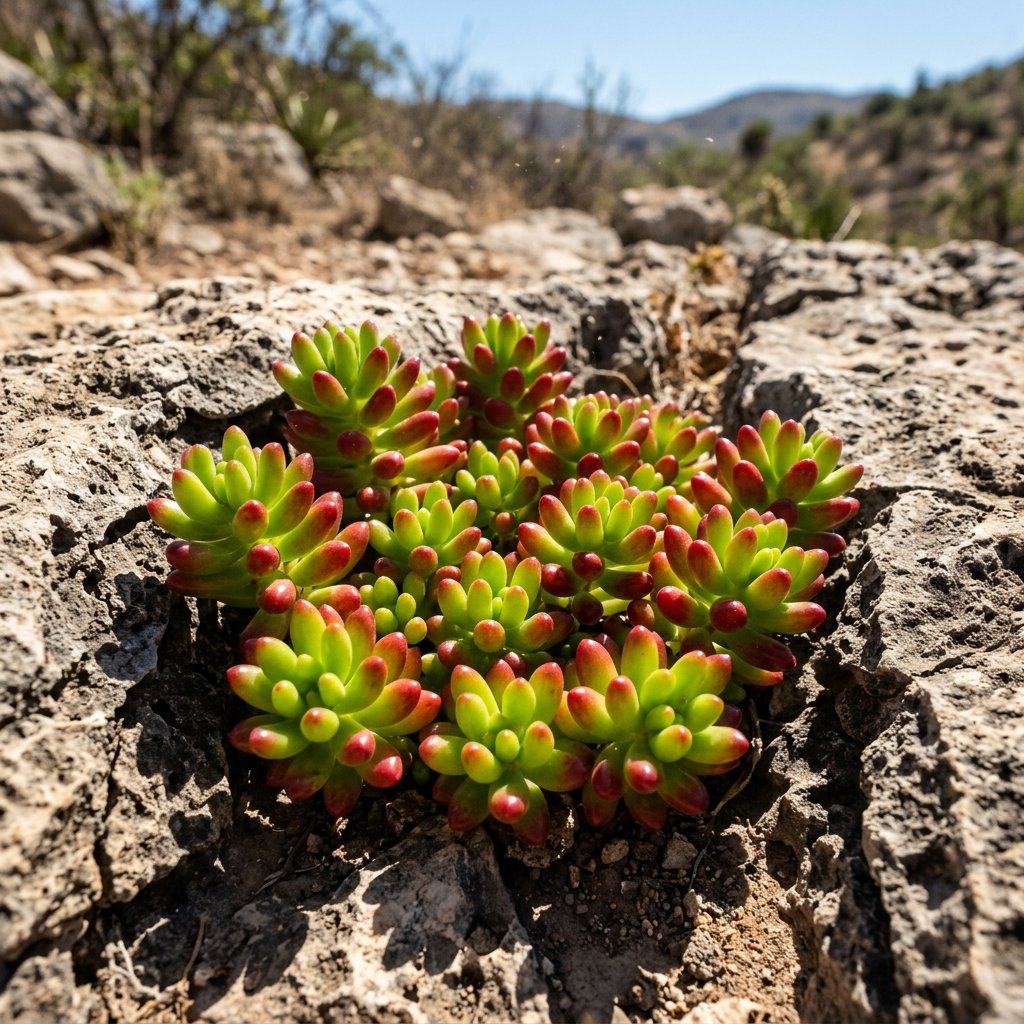
Known as the "Jelly Bean Plant" or "Pork and Beans," this charming Mexican succulent is a master of transformation. Its plump, bean-like leaves look almost good enough to eat, changing from a vivid lime green to a deep, sun-kissed red when exposed to bright light. It is a resilient favorite for beginners, prized for its ability to thrive in rocky crevices and sunny windowsills alike.
🔍 How to Identify
- 🍬 The Leaves: Small, cylindrical, and glossy leaves that resemble colorful candies. They are typically about 2 cm long and grow in a spiraling pattern around the stem.
- 🎨 The "Blush": While the base color is green, the tips turn a brilliant bronze or crimson red when the plant is "stressed" by sunlight or cool temperatures.
- ⭐ The Flowers: In the springtime, it produces clusters of tiny, star-shaped yellow flowers that provide a sharp, beautiful contrast against the reddish foliage.
🏡 In Your Garden
- ☀️ Sun-Driven Color: To get those iconic red tips, this plant needs plenty of direct sunlight. If kept in the shade, it will lose its red hue and become "leggy" as it stretches toward the light.
- 🍃 The "Drop-and-Grow" Strategy: The leaves are very delicate and fall off at the slightest touch. This is actually a survival tactic; almost every leaf that hits the ground will sprout roots and grow into a brand-new plant.
- 💧 Drainage is Key: Like most sedums, it stores water in its leaves and hates sitting in soggy soil. Use a gritty cactus mix and terracotta pots to help the roots breathe.
⚠️ Safety & Toxicity
- 🐾 Status: Toxic to pets (cats and dogs) and mildly irritating to humans.
- 🚫 Details: Ingesting the leaves can cause digestive upset, drooling, or vomiting in pets. Additionally, the sap inside the leaves can cause mild skin irritation or dermatitis for some gardeners, so wear gloves if you are doing extensive pruning.
✨ Fun Fact
The red color isn't just for show—it's actually a form of botanical sunscreen! The plant produces red pigments called anthocyanins to protect its delicate tissues from being damaged by intense UV rays.

Detailed Care Instructions
| Humidity | Dry |
| Lighting | Full Sun |
| Difficulty | Easy |
| Hibernation | Cold Period |
| Temperature | 15°C - 30°C |
| Hardiness Zones | 9A - 11B |
To grow Sedum Rubrotinctum, also known as Jelly Bean plant or Pork and Beans, follow these steps:
- Select the right location: Sedum Rubrotinctum prefers bright indirect light, so place it in a spot where it can receive 4-6 hours of sunlight every day. It can tolerate some direct sun in the morning or late afternoon, but too much can scorch the leaves.
- Use well-draining soil: Sedum Rubrotinctum thrives in well-draining soil. A good mix consists of equal parts of potting soil, sand, and perlite or pumice to ensure good drainage.
- Watering: This succulent is drought-tolerant and can go long periods without water. Allow the soil to dry out almost completely between waterings. When watering, thoroughly soak the soil, but avoid water stagnation or overwatering, as it can lead to root rot.
- Propagation: Sedum Rubrotinctum can be easily propagated through leaf or stem cuttings. Choose a healthy stem or leaf, let it dry for a few days to form a callus, then plant it in well-draining soil. Keep the soil slightly moist until new growth appears.
- Temperature and humidity: These plants prefer warmer temperatures between 65-75°F (18-24°C) but can handle higher temperatures as well. They are not frost-tolerant, so protect them during cold weather. Average indoor humidity is usually sufficient, but provide good air circulation to prevent any fungal issues.
- Fertilization: Sedum Rubrotinctum doesn't require much fertilization. Use a balanced, diluted succulent fertilizer once a month during the growing season (spring and summer). Avoid overfertilizing, as it can lead to leggy growth.
- Pruning: Prune leggy or etiolated growth to encourage a bushier appearance. Trim off any dead or damaged leaves as needed to maintain the plant's overall health.
By following these guidelines, you can successfully grow Sedum Rubrotinctum and enjoy its unique and colorful foliage.

Place in a bright room that is sun drenched almost all day. Or directly in a south-facing window.

To water this plant, it is important to first check the soil for moisture. Stick your fingers into the soil about an inch or two deep to feel for any moisture. If it feels dry, then it is time to water.
When watering, use a watering can with a thin spout or a spray bottle to avoid overwatering. Water around the base of the plant, being careful to not wet the leaves. Allow the soil to completely dry out before watering again, as this plant is susceptible to root rot if it sits in waterlogged soil for too long.
It is also important to provide good drainage for this plant by using a well-draining soil mix. Avoid using heavy soils or adding too much organic matter, as this can also lead to root rot.
To fertilize this plant, first make sure it is in a well-draining soil mix. Then, dilute a balanced liquid fertilizer to half strength and apply it to the soil once a month during the growing season (spring and summer). Avoid fertilizing during dormancy (fall and winter) or when the soil is dry. Over-fertilization can cause damage to the plant, so it's important not to apply too much.
The Sedum Rubrotinctum plant prefers well-draining soil that is high in porosity and contains a mix of organic and mineral materials. This type of plant requires soil that is quick-draining as it is sensitive to waterlogging, which can cause root rot. A suitable soil mix for this plant would include a combination of coarse sand, perlite, and potting soil or cactus soil. It is recommended to avoid using heavy soils that retain moisture, such as clay or loam, which can hold on to excess water and lead to issues with root rot and fungus. Additionally, the soil should not be too rich in nutrients so as not to encourage too much growth or weaken the plant. Adding in some gravel or grit can also help with drainage and prevent the soil from becoming compacted.
Sedum Rubrotinctum can be propagated through stem cuttings or leaf cuttings. Choose a mature and healthy plant to take cuttings from.
For stem cuttings, use a sharp and sterilized knife to cut a piece of stem with several leaves. Allow the cut end to heal over for a few days before placing it in well-draining soil. Water the soil sparingly and keep the cutting in a bright and warm location. Roots should begin to develop within a few weeks.
For leaf cuttings, gently remove a healthy leaf from the plant. Allow the leaf to dry out and callus over for a few days. Then, place the leaf on top of well-draining soil and mist it lightly. Keep the leaf in a bright and warm location, and roots will begin to form from the base of the leaf. Over time, small new plantlets will sprout from the base of the leaf.
Propagation is best done during the plant's active growing season, which is typically in the spring or summer. With proper care and attention, propagated Sedum Rubrotinctum plants will grow into healthy and beautiful plants.
Common pests of the jelly-beans include Mealybugs, aphids. Make a habit of checking your jelly-beans frequently for pests so that any infestations can be caught and managed early.








