Plant Overview
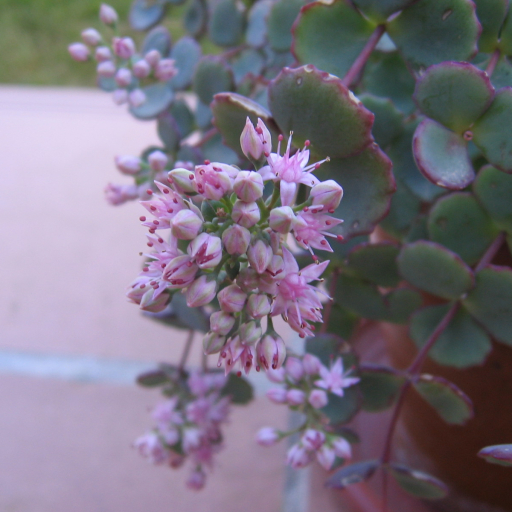
Often called the "October Stonecrop," this Japanese native is a living geometric masterpiece. Its perfectly circular leaves and late-season blooms make it a favorite for those who want their garden to end the year with a "pink bang." In its native Japan, it is cherished for its graceful, cascading habit that resembles a silver waterfall.
🔍 How to Identify
- 🍃 Whorled Leaves: The fleshy, succulent leaves grow in distinctive groups of three around the stem, forming a flat, scalloped circle.
- 🎨 Color Palette: The foliage is a cool, smoky blue-green, often rimmed with a thin line of deep pink or crimson that intensifies during the cooler months.
- 🌸 Late Blooms: In mid-to-late autumn, the tips of the arching stems erupt into dense, flat clusters of tiny, star-shaped bright pink flowers.
🏡 In Your Garden
- 🪨 The Rock Star: Because it naturally grows on rocky cliffs, it thrives in containers, hanging baskets, or rock gardens where its stems can gracefully drape downward without touching wet soil.
- 🧊 Winter Dormancy: Unlike many common houseplants, this is a hardy deciduous perennial. Do not be alarmed when it withers in late autumn; it is simply retreating into the soil to survive the frost.
- 💧 Drainage Over Water: Its thick leaves store water like a canteen. The quickest way to harm it is "wet feet"—it requires gritty, porous soil to prevent root rot during rainy seasons.
⚠️ Safety & Toxicity
- 🐾 Pet Friendly: Good news for pet owners! Sedum sieboldii is generally considered non-toxic to dogs, cats, and horses.
- 👅 Mild Caution: While not "poisonous," the leaves contain trace alkaloids that can cause a mild stomach upset or irritation if a curious toddler or pet decides to ingest a large amount.
✨ Fun Fact
This plant is so reliable and beautiful that it earned the Royal Horticultural Society's Award of Garden Merit. It was named in honor of Philipp Franz von Siebold, a 19th-century physician and botanical explorer who famously smuggled plants out of Japan during a period when the country was closed to the West.

Detailed Care Instructions
Here are some tips on how to grow Sedum sieboldii, also known as October Daphne or Stonecrop:
- Planting: Choose a sunny location with well-draining soil. Sedum sieboldii prefers slightly acidic soil but can tolerate a wide range of soil types. Ensure good air circulation around the plant.
- Watering: Sedum sieboldii is drought-tolerant and prefers dry to moderately moist soil. Water deeply but infrequently, allowing the soil to dry out between waterings.
- Light: Provide at least six hours of direct sunlight per day. The more sunlight the plant receives, the more vibrant its colors will become.
- Temperature: Sedum sieboldii is a hardy plant and can tolerate a wide range of temperatures. It can survive in USDA hardiness zones 4-9, with winter protection recommended in colder zones.
- Propagation: Sedum sieboldii can be propagated by stem cuttings or by division. Take stem cuttings in the spring or early summer and root them in well-draining soil. To divide the plant, gently remove the entire plant from the soil and separate the clumps at the root level. Replant the divided clumps in separate pots or directly in the ground.
- Fertilizing: Sedum sieboldii is a low-maintenance plant and does not require much fertilizer. If desired, you can apply a balanced slow-release fertilizer in early spring.
- Pruning: Sedum sieboldii does not require regular pruning. However, you can trim back any dead or damaged stems in the spring to promote new growth.
- Pests and diseases: Sedum sieboldii is generally resistant to pests and diseases. However, it can occasionally be affected by mealybugs or aphids. Treat any infestations with insecticidal soap or other appropriate insecticides.
With proper care and maintenance, your Sedum sieboldii plant should thrive and grow into a beautiful ground cover or container plant, displaying its attractive blue-green foliage and pink flowers.

Place in a bright room that is sun drenched almost all day. Or directly in a south-facing window.

To water this plant, it is important to first assess the moisture level of the soil. Stick your finger into the soil up to your second knuckle and feel for moisture. If the soil feels dry, it is time to water. Use a watering can or a hose with a gentle stream to water the plant at the base, directly onto the soil. Avoid getting water on the leaves or stem. Allow the soil to drain fully to prevent root rot. It is important not to overwater, as this plant prefers well-draining soil. Watering frequency will depend on the environment and climate, but generally, this plant should be watered no more than once a week.
To fertilize this plant, mix a balanced fertilizer with water and apply it to the soil around the base of the plant. Do this once a month during the growing season, which is typically from spring to fall. Be sure to follow the instructions on the fertilizer packaging for the correct amount and frequency of application. Avoid fertilizing during winter when the plant is dormant.
The Sedum Sieboldii plant is a species of succulent that requires well-drained soil to thrive. The ideal soil type for this plant is a mixture of sand, gravel, and loam soil. The soil should not be too rich in nutrients as this can cause the plant to become leggy and weak. Additionally, it is recommended to add perlite to the soil mix to improve drainage and avoid waterlogging. It is advised to plant the Sedum Sieboldii in a pot with drainage holes to ensure that excess water can freely drain away from the root system. Overall, a well-draining, airy soil mix is crucial for the health and growth of this plant.
There are several ways to propagate this plant, including by stem cuttings, leaf cuttings, division, and seed.
Stem cuttings: Take a stem cutting about 4-6 inches long and remove the bottom leaves. Dip the cut end in rooting hormone and plant in a well-draining soil mix. Keep the cuttings moist and in indirect light until new growth appears.
Leaf cuttings: Remove a leaf from the plant, making sure to include the base of the leaf where it attaches to the stem. Allow the cut end to dry for a day or two, then plant in a well-draining soil mix. Keep the soil moist and in indirect light until new growth appears.
Division: Carefully remove the plant from its pot or garden bed and separate the clumps of stems and roots. Replant the divisions in new pots or garden beds, watering well and keeping them in indirect light until new growth appears.
Seed: Collect the seeds from the plant and plant them in a well-draining soil mix. Cover with a thin layer of soil and keep the soil moist and in indirect light until the seeds germinate and new growth appears.
In general, Sedum Sieboldii prefers well-draining soil and bright, indirect light. Water sparingly, allowing the soil to dry out partially between waterings. This plant is hardy and easy to care for, making it an excellent addition to any garden or indoor collection.
Common pests of the october daphne include Aphids. Make a habit of checking your october daphne frequently for pests so that any infestations can be caught and managed early.








