Plant Overview
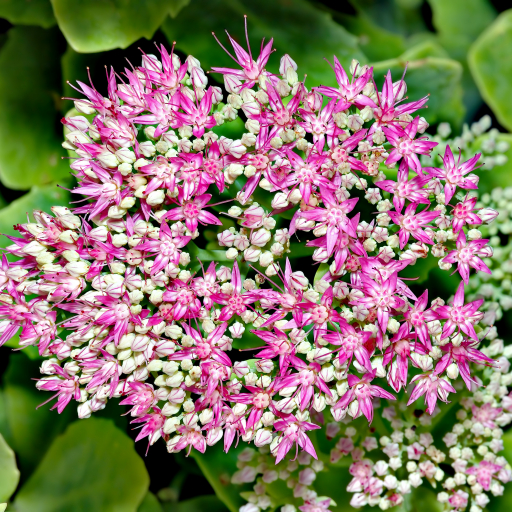
Known as the "Showy Stonecrop" or the "Ice Plant," Sedum spectabile is a late-season superstar that brings life to the garden just as other flowers begin to fade. Originating from China and Korea, this hardy succulent is famous for its broccoli-like flower buds that transform into a sea of vibrant pink. It is a favorite among gardeners who want high-impact beauty with almost zero effort.
🔍 How to Identify
- 🌸 The Flower Heads: It produces large, flat-topped clusters of tiny, star-shaped flowers. These clusters often look like green broccoli heads in mid-summer before "blushing" into pink or magenta by autumn.
- 🍃 Fleshy Foliage: The leaves are thick, succulent, and oval-shaped with a soft, gray-green or silvery hue. They are arranged in pairs or whorls of three along sturdy, upright stems.
- 🏗️ Upright Habit: Unlike creeping stonecrops, this variety grows in neat, mounding clumps that typically reach about 18 to 24 inches in height, providing a structured look to borders.
🏡 In Your Garden
- ☀️ The Sun Worshiper: This plant thrives in full sun. If placed in too much shade, the stems can become "leggy" and weak, eventually flopping over under the weight of their own heavy flower heads.
- 🏜️ Tough as Nails: Because of its succulent leaves, it stores water efficiently and is incredibly drought-tolerant once established. It actually prefers "lean" or poor soil; overly rich soil can make the growth too lush and prone to splitting open in the center.
- 🦋 Pollinator Party: It is one of the best plants for attracting late-season butterflies, especially Monarchs and Painted Ladies, who rely on its nectar for their autumn migrations.
⚠️ Safety & Toxicity
- ✅ Generally Safe: Sedum spectabile is considered non-toxic to humans and is generally safe for dogs and cats.
- 🤢 Mild Irritation: While not poisonous, if a curious pet (or toddler) decides to eat a large amount of the fleshy leaves, it may cause mild stomach upset or vomiting. The sap can also occasionally cause very minor skin irritation for those with sensitive skin.
✨ Fun Fact
The nickname "Ice Plant" comes from the plant's ability to stay remarkably cool to the touch, even on the hottest summer days. Some also believe it refers to the way the leaves can look like they are dusted with a fine layer of frost or flour!

Detailed Care Instructions
Here are some tips on how to grow Sedum Spectabile (also known as stonecrop or ice plant):
- Choose the right location: Sedum Spectabile thrives in full sun to partial shade. Find a spot in your garden or outdoor area that receives at least 6 hours of sunlight per day.
- Prepare the soil: Sedum Spectabile prefers well-draining soil. Amend heavy clay or compacted soil with organic matter like compost to improve drainage and fertility.
- Planting: Dig a hole slightly larger than the root ball of your Sedum Spectabile plant. Place the plant in the hole, ensuring that it sits at the same depth as it was in its nursery container. Backfill the hole with soil and gently tamp it down. Water the plant thoroughly.
- Watering: Sedum Spectabile is drought-tolerant once established. Water the plant sparingly, only when the top inch of soil feels dry. Overwatering can lead to root rot. Water deeply rather than frequently to encourage deep root growth.
- Fertilization: Sedum Spectabile generally does not require heavy fertilization. A balanced, slow-release fertilizer applied in spring should be sufficient. Be cautious not to over-fertilize, as this can promote excessive leaf growth at the expense of flowering.
- Pruning: Sedum Spectabile may benefit from pruning in early spring or late winter to maintain a compact and neat appearance. Remove any dead or damaged foliage and cut back any leggy growth.
- Propagation: Sedum Spectabile can be propagated through division or stem cuttings. Division can be done in spring or fall, and stem cuttings can be taken in spring or early summer. Allow the cut ends to dry for a day or two before planting in soil or rooting hormone.
- Pests and diseases: Sedum Spectabile is generally pest-free, but it can occasionally be susceptible to mealybugs or aphids. Monitor your plants regularly and take appropriate action if an infestation occurs. Provide good air circulation to prevent fungal diseases.
With regular care and a suitable environment, your Sedum Spectabile plant should grow well and provide beautiful blooms.

Place in a bright room that is sun drenched almost all day. Or directly in a south-facing window.

To water this plant, you should first make sure that the soil it is planted in has good drainage. Overwatering can lead to root rot, so it is important to only water when the top inch or so of soil feels dry to the touch. You can use a watering can or hose with a mist or gentle shower attachment to water this plant. Be sure to avoid getting water on the leaves, as this can lead to rot and disease. If you are growing this plant in a pot, be sure to empty any excess water that collects in the saucer underneath the pot to prevent waterlogged soil.
To fertilize Sedum Spectabile plants, follow these instructions:
- Choose a balanced, water-soluble fertilizer with an N-P-K ratio of 10-10-10 or 20-20-20.
- Dilute the fertilizer according to the package instructions. Use a half-strength solution to avoid over-fertilization.
- Apply the diluted fertilizer to the soil around the base of the Sedum Spectabile plant, avoiding direct contact with the leaves or stem.
- Water the plant thoroughly after applying the fertilizer to help it absorb the nutrients.
- Repeat the fertilization process every 4 to 6 weeks during the growing season, which is typically spring to early fall.
- Avoid fertilizing during the dormant winter period, as Sedum Spectabile plants do not require as much nutrients during this time.
- Monitor the plant for any signs of over-fertilization, such as yellowing foliage or stunted growth. If this occurs, reduce the frequency or strength of the fertilizer application.
Remember, always follow the specific instructions on your chosen fertilizer product, as different brands may have varying application rates and schedules.
Sedum Spectabile plant prefers a well-draining soil that is nutrient-rich and has a good balance of organic matter and minerals. The soil should not be too heavy or compacted as it can lead to waterlogged conditions that are not suitable for the plant's growth. A sandy loam soil is recommended as it allows for good aeration and drainage of excess water. The pH of the soil should be between 6.0 to 7.5. The plant needs moderate watering, so the soil should be kept slightly moist but not too wet. It is also recommended to add a layer of mulch around the plant to help retain moisture and suppress weeds. Fertilizers can be added during the growing season to boost the plant's growth, but it is best to use a slow-release fertilizer to avoid overfeeding the plant.
To propagate this plant, one should start by identifying a healthy and well-established parent plant. This can be done by looking for a plant with a sturdy stem, healthy foliage, and the absence of any pests or diseases. Once the parent plant is identified, one should take a cutting of a stem with at least two sets of leaves. Using a sharp, clean pair of scissors or pruning shears, cut the stem at a 45-degree angle just below the second set of leaves.
Remove the bottom set of leaves from the cutting and dip the cut end into rooting hormone powder, which can be purchased at most garden centers. Shake off any excess powder and plant the cutting in a pot filled with a well-draining soil mixture, such as a mixture of perlite and peat moss. Water the cutting thoroughly to settle the soil and help the rooting hormone penetrate the stem.
Place the pot in a warm, bright location, but out of direct sunlight. Keep the soil moist but not soaking wet, and mist the cutting regularly with water to keep the leaves from drying out. The cutting should begin forming roots within a few weeks.
Once the cutting has formed a healthy root system, it can be transplanted into a larger container or planted in the ground. This plant will thrive in well-draining soil with full sun to partial shade. Water the plant regularly, but be careful not to overwater as this can rot the roots.
Common pests of the butterfly stonecrop include Aphids. Make a habit of checking your butterfly stonecrop frequently for pests so that any infestations can be caught and managed early.








