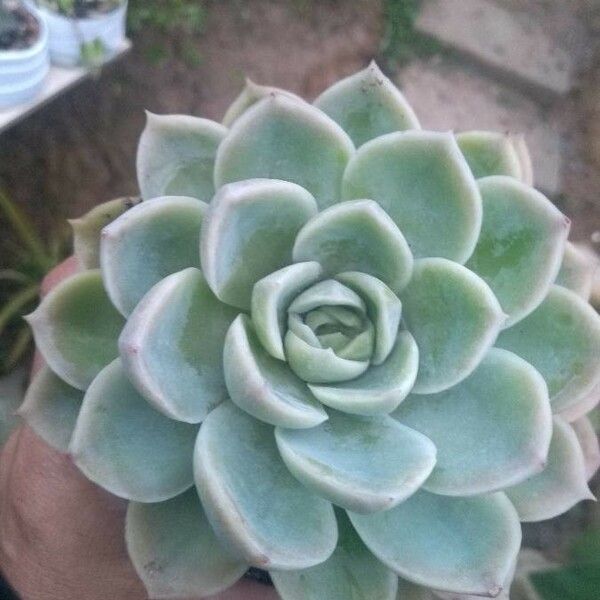
Plant Overview
Often nicknamed the "Sweet Stonecrop," Sedum suaveolens is a rare gem originally found clinging to the steep cliffs of Durango, Mexico. While it is technically a Sedum, it mimics the appearance of a classic Echeveria so perfectly that even seasoned collectors are often fooled until it begins to bloom. Its ethereal, silvery-blue rosettes look as though they were carved from moonlight, making it a prized centerpiece for succulent enthusiasts.
🔍 How to Identify
- 💠 The Rosette: It forms tight, chunky rosettes that can grow up to 6 inches across, appearing much more robust and "fleshy" than your average garden stonecrop.
- ❄️ The Coating: The leaves are draped in a thick layer of farina (epicuticular wax), giving them a soft, matte, ghostly-white or pale blue finish.
- 🌸 The Scent: Its true identity is revealed by its flowers; unlike almost any other Sedum, its small, star-shaped white blooms emit a distinct, sweet fragrance reminiscent of jasmine.
🏡 In Your Garden
- 🏜️ Drainage is King: Because it naturally grows on vertical cliff faces, it is highly sensitive to "wet feet." It requires a very gritty, porous soil mix to ensure water moves away from the roots immediately.
- ☀️ Hands-Off Beauty: While it loves bright light to maintain its compact shape, you should avoid touching the leaves. Finger oils rub off the protective waxy coating, leaving permanent "smudge" marks that won't disappear until the leaf eventually falls off.
⚠️ Safety & Toxicity
- ✅ Pet-Friendly: This species is widely considered non-toxic to cats, dogs, and horses, making it a "worry-free" choice for low-level shelves or coffee tables.
- 👶 Child Safe: It is safe for humans, though the leaves are quite brittle. Keep it out of reach mainly to protect the plant from being accidentally "de-leafed" by curious hands.
✨ Fun Fact
- 🧬 A Genetic Giant: Sedum suaveolens is a biological marvel; it possesses one of the highest chromosome counts of any flowering plant, a trait that botanists believe helps it stay resilient in its harsh, high-altitude home.

Detailed Care Instructions
To grow Sedum Suaveolens plant, also known as Green carpet stonecrop, follow these steps:
- Choose the right location: Sedum Suaveolens prefers full sun to light shade. Find a spot in your garden where the plant can receive at least 6 hours of direct sunlight per day.
- Prepare the soil: The plant prefers well-draining soil. If your garden soil is heavy, amend it with organic matter like compost or peat moss to improve drainage.
- Planting: Dig a small hole in the prepared soil and place the Sedum Suaveolens plant in it. Make sure the crown (where the stem meets the roots) is level with the soil surface. Fill the hole and press gently to ensure good soil contact.
- Watering: Water the newly planted Sedum Suaveolens thoroughly to settle the soil around the root zone. After that, water the plant sparingly as the plant is drought-tolerant and can survive with minimal water. Allow the top 2 inches of soil to dry out between watering.
- Mulching: Apply a thin layer of organic mulch around the plant to help retain moisture, suppress weed growth, and maintain a more even soil temperature.
- Fertilizing: Sedum Suaveolens generally does not require regular fertilization. However, you can apply a diluted, balanced fertilizer once in early spring to promote healthy growth.
- Pruning: Sedum Suaveolens has a low-growing, spreading habit and may not need pruning. However, you can trim back any dead or damaged foliage in early spring to encourage fresh growth.
- Propagation: Sedum Suaveolens can be propagated easily through stem cuttings or by division. You can take cuttings in spring or early summer, allow them to dry for a few days, and then plant them in well-draining soil. Division can be done in late spring or early summer by separating the plant into smaller sections and replanting them.
Following these guidelines should help you successfully grow Sedum Suaveolens in your garden.

Place in a bright room that is sun drenched almost all day. Or directly in a south-facing window.

To properly water this plant, it is important to first determine the type of soil in which it is planted. If the soil is sandy or porous, it will likely require more frequent watering. If the soil is loamy or clay-like, it may be necessary to water less frequently.
When watering, aim to water deeply and thoroughly, allowing the water to soak into the soil around the roots. This can be done using a watering can or hose with a gentle spray attachment. Be sure to avoid getting water on the leaves or stem of the plant, as this can lead to fungal diseases.
It is also important to monitor the moisture level of the soil to prevent overwatering. One way to do this is to stick a finger into the soil up to the second knuckle. If the soil feels dry at this depth, it is time to water again. If it feels moist, wait a few days before watering again.
During hot summer months, it may be necessary to water more frequently to prevent the plant from drying out. However, in winter or cooler months, watering can be reduced.
Overall, it is important to strike a balance between providing enough water for the plant to thrive, while also avoiding overwatering which can lead to root rot and other issues.
Apply a slow-release granular fertilizer in early spring, according to package directions. Water thoroughly after fertilizing. Repeat application of fertilizer in late summer or early fall. Avoid fertilizing during periods of drought or extreme heat, and do not over-fertilize, as this may cause the plant to become leggy or bushy.
For Sedum Suaveolens plant, it is recommended to use well-draining soil with a pH range of 6.0 to 7.5. The soil should be a mixture of sand, perlite, and peat moss to ensure proper drainage and aeration. Avoid using heavy clay soils or soils with poor drainage, as this can lead to root rot and other issues. Additionally, it is important to fertilize the soil with a balanced, slow-release fertilizer during the growing season to promote healthy growth and flowering. Regular watering is also necessary, but allow the soil to dry out slightly between watering sessions to prevent water accumulation and root rot.
To propagate this plant, start by taking stem cuttings of about 2-3 inches in length. Remove the lower leaves from the stem, leaving only a few at the top. Dip the cut end of the stem in rooting hormone powder and plant it in a well-draining potting mix. Water sparingly and keep the soil moist but not too wet. Place the pot in a bright, indirect light, and make sure the temperature is consistently warm. After a few weeks, new roots should start to form, and the plant can be gradually introduced to more sunlight and slightly less water.
Common pests of the sweet smelling sedum include Mealybugs, spider mites, thrips. Make a habit of checking your sweet smelling sedum frequently for pests so that any infestations can be caught and managed early.








