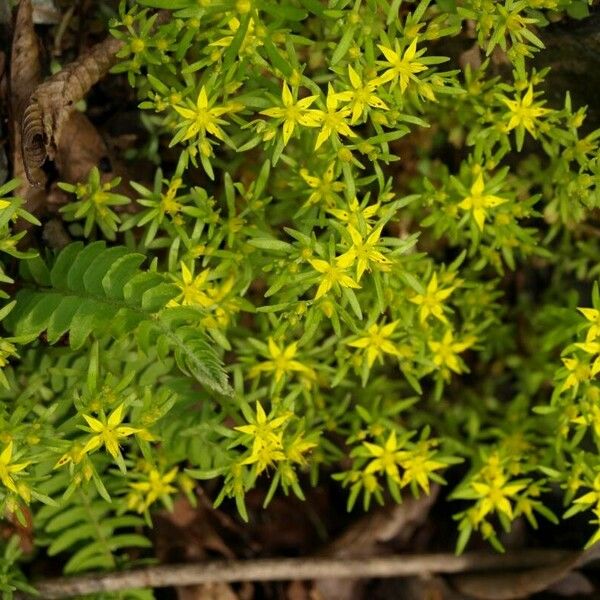
Plant Overview
Often called the "Little-leaved Stonecrop," Sedum subtile is a delicate, moss-like succulent that hails from the rocky slopes of East Asia. Unlike its larger, bolder cousins, this plant creates a soft, plush carpet of bright green that looks almost like a miniature forest floor. It is a favorite among rock garden enthusiasts for its ability to soften hard edges and fill tiny crevices with life.
🔍 How to Identify
- 🍃 The Foliage: Tiny, spatula-shaped leaves are arranged in tight, overlapping clusters. They are succulent and fleshy, usually a vibrant "spring green" color.
- 🌼 The Flowers: In early to mid-summer, it produces clusters of brilliant, star-shaped yellow flowers that sit just above the foliage.
- 🌱 Growth Habit: It stays very low to the ground, rarely exceeding 3-4 inches in height, and spreads via creeping stems to form a dense, mat-like groundcover.
🏡 In Your Garden
- 🪨 The Crevice Specialist: Because it has a shallow root system, this Sedum is perfect for "vertical gardening" in the gaps of stone walls or between pavers where other plants would wither.
- 💧 The Drainage Rule: While it is more tolerant of moist conditions than some desert succulents, it absolutely hates "wet feet." If the soil doesn't drain quickly, the delicate stems can melt away overnight.
- ☀️ Light Flexibility: While most stonecrops crave scorching sun, Sedum subtile is quite happy in dappled shade, making it a versatile choice for gardens with shifting light patterns.
⚠️ Safety & Toxicity
- ✅ Safe for Everyone: This variety is generally considered non-toxic to humans, cats, and dogs.
- 👅 Bitter Defense: While not poisonous, the leaves contain a bitter sap that usually discourages pets from taking more than one curious nibble.
✨ Fun Fact
Sedum subtile is known as a "pioneer species" in its native habitat. It is often one of the first plants to colonize bare volcanic rock, slowly breaking down the stone into soil so that larger plants can eventually follow!

Detailed Care Instructions
Growing Sedum Subtile, like other succulents, can be a rewarding experience as they are relatively low-maintenance and resilient. Here are the steps and considerations for growing Sedum Subtile successfully:
1. Choosing the Right Location
- Lighting: Sedum Subtile thrives in bright, indirect sunlight. They can tolerate direct sunlight for part of the day, but too much can cause the leaves to scorch. A sunny windowsill with some afternoon shade or a well-lit indoor spot is ideal.
- Temperature: They prefer moderate temperatures and can withstand a range of temperatures, but ideally, keep them between 65°F and 75°F (18-24°C). They are relatively cold-hardy for a succulent but be cautious with frost.
2. Soil Requirements
- Well-draining Soil: The most crucial factor is well-draining soil. Use a commercial cactus or succulent mix, or create your own by mixing regular potting soil with sand, perlite, or pumice in equal parts. This prevents waterlogging and root rot.
3. Planting
- Pot Selection: Choose a pot with drainage holes to allow excess water to escape, preventing root rot.
- Planting: If you are planting a cutting, let it dry out and callous over for a day or two before planting to reduce the risk of rot.
4. Watering
- Watering Schedule: Sedum Subtile needs infrequent watering. Water thoroughly when the soil is completely dry. During the growing season (spring and summer), you might water more frequently. In contrast, reduce watering significantly in the dormant periods (fall and winter).
- Water Technique: Water the soil directly rather than the leaves to prevent fungal issues.
5. Fertilizing
- Type of Fertilizer: Use a balanced, water-soluble fertilizer diluted to half strength.
- Frequency: Fertilize sparingly, about once a month during the growing season. Fertilizing too much can lead to leggy growth.
6. Pruning and Maintenance
- Trimming: Trim back any leggy growth to maintain a compact shape. This also encourages new growth.
- Pest Control: Keep an eye out for pests like aphids, mealybugs, or spider mites. Use insecticidal soap or neem oil if necessary.
7. Propagation
- By Cuttings: You can propagate Sedum Subtile from leaf or stem cuttings. Allow the cuttings to callous over before placing them in soil.
- By Division: You can also divide the plant by separating offsets or pups from the main plant. This is usually done during repotting.
8. Repotting
- When to Repot: Repot every 2-3 years or when the plant outgrows its container. Choose a slightly larger pot and replenish the soil.
9. Environmental Conditions
- Humidity: Sedum Subtile prefers lower humidity, typical of most household environments.
- Air Circulation: Ensure good air circulation around the plant to prevent rot and pest problems.
By following these guidelines, you should be able to grow a healthy and attractive Sedum Subtile plant. Just remember that succulents thrive on less rather than more care, so avoid the temptation to overwater or over-fertilize.

Place in a window with dappled sun or a spot in the middle of a room. Or directly in a window facing west or east.

Watering Sedum Subtile properly is essential for maintaining its health and vibrant appearance. These plants are known for their drought tolerance, which means they do not require frequent watering. Here’s a detailed guide on how to water them:
### Understanding the Plant's Needs
- Drought Tolerance: They are highly resistant to dry conditions and can store water in their leaves. Overwatering can be more harmful than underwatering.
- Soil Type: Ideally, they should be planted in well-draining soil. Poor drainage can lead to root rot.
### Watering Guidelines
1. Frequency:
- Growing Season: During the active growing period (spring to early fall), water the plant moderately. The soil should be allowed to dry out completely between waterings.
- Dormant Period: In late fall and winter, reduce watering significantly as the plant’s water needs decrease.
2. Amount:
- Check the soil moisture: Insert your finger about an inch into the soil. If it feels dry, it's time to water.
- Water until the soil is moist but not waterlogged. Make sure the water penetrates to the root zone.
3. Method:
- Direct Watering: Water directly at the base of the plant, avoiding the leaves, to minimize the risk of rot and fungal diseases.
- Soak and Dry Method: Water thoroughly but allow the soil to dry out completely before the next watering. This mimics their natural habitat conditions.
### Environmental Considerations
- Indoor Plants: If you are growing them indoors, consider the humidity and temperature of the room. Avoid placing them near heat sources which can dry them out quickly.
- Outdoor Plants: Take into account the local climate. In particularly rainy seasons, you may not need to water them at all.
### Troubleshooting
- Overwatering Signs: Yellowing, mushy leaves, and root rot indicate overwatering. Allow the soil to dry out and adjust your watering schedule.
- Underwatering Signs: Wrinkled or shriveled leaves signal a need for more water. Water deeply to rehydrate the plant.
By following these guidelines, you can help ensure that your Sedum Subtile remains healthy and thriving.
Sedum Subtile is a hardy and low-maintenance perennial. Here are the fertilizing instructions:
- Time of Year: The best time to fertilize is during the active growing season, which typically spans from early spring to late summer.
- Type of Fertilizer: Use a balanced, slow-release granular fertilizer or a liquid fertilizer with an NPK ratio of 10-10-10 or 20-20-20. Organic options like compost tea can also be beneficial.
- Application Frequency: Apply the fertilizer once at the beginning of the growing season. If you choose to use a liquid fertilizer, dilute it to half the recommended strength and apply it every 4 to 6 weeks during the growing season.
- Application Method:
- Granular Fertilizer: Sprinkle the granules evenly around the base of the plant, avoiding direct contact with the stems and leaves. Lightly scratch the granules into the soil surface and water thoroughly.
- Liquid Fertilizer: Dilute the liquid fertilizer as instructed on the label, then apply it to the soil around the plant’s base. Avoid pouring the solution directly onto the plant itself.
- Granular Fertilizer: Sprinkle the granules evenly around the base of the plant, avoiding direct contact with the stems and leaves. Lightly scratch the granules into the soil surface and water thoroughly.
- Watering: Ensure the soil is moist before applying fertilizer to prevent root burn. Water thoroughly after fertilizing to help distribute the nutrients through the soil.
- Soil Condition: Sedum Subtile prefers well-draining soil. Over-fertilization or poor drainage can lead to root rot or reduced flowering.
- Observation: Monitor the plant for signs of nutrient deficiency such as yellowing leaves or stunted growth. Adjust the fertilization schedule if necessary.
By following these guidelines, you can help ensure your Sedum Subtile thrives with vibrant growth and healthy foliage.
When cultivating Sedum Subtile, it's essential to prioritize well-draining soil to mimic the plant's natural environment. This plant thrives in gritty or sandy soil, which provides excellent drainage and helps prevent root rot—a common issue for many succulent plants.
To create an optimal soil mix, you can combine standard potting soil with gritty materials. A good ratio to use is approximately two parts potting soil to one part coarse sand or perlite. This mix ensures adequate drainage while still providing enough nutrients for the plant.
Additionally, incorporating a small amount of organic matter, such as compost, can enhance the soil's fertility without compromising its drainage capabilities. If you prefer a commercial option, you can use a cactus or succulent soil mix, which is specifically designed to meet the drainage and nutrient needs of these types of plants.
When planting outdoors, ensure the chosen spot has well-draining soil. If the native soil is clay-heavy or poorly draining, consider amending it with coarse sand, gravel, or a gritty soil mix up to a depth of at least 6-8 inches (15-20 cm) to improve drainage. Raised beds or mounds can also be an effective approach to ensure the plant's roots do not sit in waterlogged soil.
In summary, the key to a successful growth environment for Sedum Subtile lies in providing well-draining, gritty soil, either through customized soil mixes or commercial cactus and succulent blends.
Propagating Sedum Subtile, an attractive and hardy succulent, is relatively easy and can be accomplished through a few different methods: stem cuttings, leaf cuttings, or division. Here's a detailed guide for each propagation method:
1. Propagating Through Stem Cuttings:
Materials Needed:
- Clean, sharp scissors or pruning shears
- Small pots or trays
- Well-draining soil mix (cactus or succulent mix)
- Rooting hormone (optional)
Steps:
- Select a Healthy Plant:
Choose a healthy, mature plant with robust stems.
- Take Cuttings:
Using clean scissors or pruning shears, cut a few healthy stems about 3-4 inches long. Make sure each cutting has at least a couple of nodes (places where leaves attach).
- Prepare the Cuttings:
Remove the lower leaves from the stem cuttings, leaving at least two leaves at the top.
- Dry the Cuttings:
Allow the cut ends to dry and callous over for a few days in a warm, dry place. This helps prevent rot.
- Optional Rooting Hormone:
Dip the cut end in rooting hormone to encourage faster rooting, though this step is optional.
- Plant the Cuttings:
Insert the calloused end of each cutting into a pot filled with well-draining soil. Bury the stem about an inch deep, ensuring it is stable.
- Watering:
Water the soil lightly, keeping it slightly moist but not waterlogged. Allow the soil to dry out between waterings.
- Provide Light:
Place the cuttings in a bright location with indirect light. Avoid direct sunlight until roots are established.
- Monitor Growth:
In a few weeks, check for root development by gently tugging on the cuttings. If resistance is felt, roots have formed, and you can gradually acclimate the new plants to more sunlight.
2. Propagating Through Leaf Cuttings:
Materials Needed:
- Clean, sharp scissors or tweezers
- Small pots or trays
- Well-draining soil mix (cactus or succulent mix)
Steps:
- Select Healthy Leaves:
Choose large, healthy leaves from the mother plant.
- Remove the Leaves:
Gently twist or cut the leaves from the stem, ensuring that the entire leaf base is intact.
- Allow to Callous:
Place the leaves in a dry, warm area for a few days until the cut ends callous over.
- Place on Soil:
Lay the calloused leaves flat on top of well-draining soil in a shallow pot or tray. Optionally, you can slightly bury the calloused end in the soil.
- Lightly Water:
Mist the soil lightly to keep it slightly moist but avoid overwatering.
- Provide Light:
Place the tray or pot in bright, indirect light.
- Wait for Roots and Shoots:
In a few weeks, tiny roots and new shoots should begin to grow from the base of the leaves. Once they are sufficiently developed, they can be transplanted to their own pots.
3. Propagating Through Division:
Materials Needed:
- Clean, sharp knife or garden spade
- Well-draining soil mix (cactus or succulent mix)
- Pots for repotting
Steps:
- Prepare the Plant:
Water the plant a day before dividing to make the soil easier to work with.
- Remove the Plant:
Carefully remove the entire plant from its current pot.
- Separate the Clumps:
Using a clean knife or garden spade, gently divide the root clump into smaller sections. Each section should have its own roots and stems.
- Repot the Divisions:
Plant each division into its own pot filled with well-draining soil.
- Watering:
Water the newly potted plants lightly, ensuring the soil is moist but not soggy.
- Provide Light:
Place the pots in a bright, indirect light location. Gradually acclimate the new plants to more sunlight as they establish.
By following these steps, you can propagate Sedum Subtile successfully, ensuring a thriving collection of these succulents.








