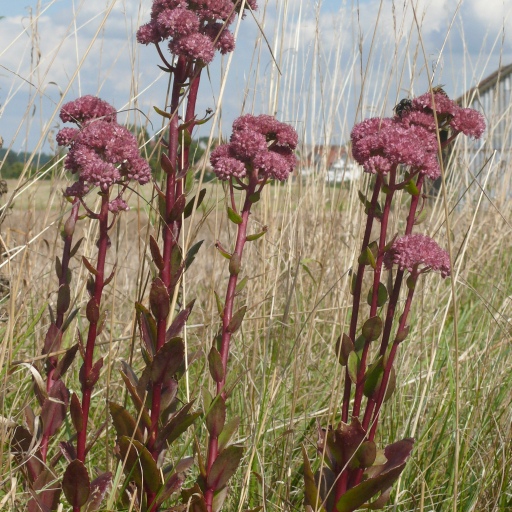
Plant Overview
Meet the "Orpine," a succulent-like perennial that has been a staple in European cottage gardens for centuries. Often called "Livelong" because of its incredible ability to stay fresh even after being uprooted, this plant is the ultimate "set it and forget it" companion for the modern gardener. Its thick, rubbery leaves store water with expert efficiency, making it a champion of the late-summer landscape when other plants begin to wilt.
🔍 How to Identify
- 🍃 Succulent Foliage: The leaves are thick, fleshy, and oval-shaped, often appearing in a soft grey-green or even deep burgundy hue, depending on the variety.
- 🌸 Broccoli-like Clusters: Before they bloom, the flower heads look remarkably like heads of green broccoli. When they open, they reveal a dense "sea" of tiny, star-shaped pink or reddish flowers.
- 🎋 Upright Growth: Unlike its creeping cousins, Telephium grows on sturdy, unbranched stems that stand 1 to 2 feet tall, creating a distinct "clump" in the garden.
🏡 In Your Garden
- 🏜️ Drought Resilience: Because it is a succulent, this plant hates "wet feet." It thrives in lean, well-draining soil. In fact, if the soil is too rich in nitrogen, the plant can become "leggy" and flop over under its own weight.
- 🦋 Pollinator Party: As many summer flowers begin to fade in August and September, Orpine takes center stage. It is a vital late-season nectar source for honeybees and migrating butterflies.
⚠️ Safety & Toxicity
- 🟢 Low Risk: Sedum telephium is generally considered non-toxic to humans and is safe to handle without gloves.
- 🐶 Pet Sensitivity: While not listed as a major toxin, the fleshy leaves contain saponins which can cause mild stomach upset or drooling if consumed in large quantities by curious cats or dogs. It is best treated as an ornamental plant rather than a snack.
✨ Fun Fact
The nickname "Livelong" isn't an exaggeration—in the days before modern refrigeration, people would hang these plants in their homes during the summer, and they would continue to grow and stay green for weeks using only the moisture stored in their thick leaves!

Detailed Care Instructions
To grow a Sedum Telephium plant, also known as Hylotelephium or Stonecrop, follow these steps:
- Choose the right location: Sedum Telephium plants prefer full sun but can tolerate partial shade. Select a well-draining area with sandy or loamy soil.
- Prepare the soil: Amend the soil with organic matter such as compost to improve drainage if needed. Remove any weeds or debris from the planting area.
- Planting: Dig a hole slightly larger than the root ball of the Sedum Telephium plant. Place the plant in the hole and backfill with soil, gently firming it around the roots. Ensure that the crown of the plant (where the stems emerge from the roots) is level with the soil surface.
- Watering: Give the plant a thorough watering after planting to settle the soil. Afterward, water the Sedum Telephium plant sparingly, as they are drought-tolerant and prefer dry to moderate moisture levels. Overwatering can lead to root rot.
- Mulching: Apply a light layer of organic mulch around the plant to help retain moisture, suppress weeds, and regulate soil temperatures.
- Maintenance: Sedum Telephium plants are low-maintenance but benefit from some attention. Remove any dead or damaged foliage regularly. If the plant becomes leggy or crowded, divide it in early spring or late fall to encourage healthier growth.
- Propagation: Sedum Telephium can be propagated through stem cuttings or division. Cut a 3-4 inch stem, remove the bottom leaves, and plant it in well-draining soil. Alternatively, divide the plant by separating its clumps and replanting.
- Fertilization: Sedum Telephium plants typically do not require a lot of fertilization. However, you can apply a balanced, slow-release fertilizer in spring if desired.
- Pests and diseases: These plants are generally resistant to pests and diseases. However, keep an eye out for aphids, slugs, and snails, as they can occasionally be problematic. Treat with organic pest control methods if necessary.
Remember, Sedum Telephium plants are known for their resilience and ability to thrive in less-than-ideal conditions. With proper care and attention, your Sedum Telephium plant should grow and flourish.

Place in a bright room that is sun drenched almost all day. Or directly in a south-facing window.

To properly water this plant, make sure to thoroughly moisten the soil in the pot or garden bed. Wait until the top layer of soil is completely dry before watering again. Avoid overwatering, as this can lead to root rot. Additionally, make sure the plant has adequate drainage to prevent water from pooling in the soil. Consider watering in the morning or late afternoon to prevent the plant from drying out during peak midday heat.
To fertilize this plant, apply a balanced, slow-release fertilizer in early spring before new growth appears. Use a general-purpose fertilizer with equal amounts of nitrogen, phosphorus, and potassium. Apply at a rate of 1 tablespoon per square foot of soil. Water thoroughly after application. Repeat every 6-8 weeks during the growing season. Avoid fertilizing in late summer or fall, as this can promote new growth that may not have time to harden off before winter.
The ideal soil for this plant is a well-draining, nutrient-rich soil with a pH between 6.0 and 7.5. The soil should be composed of a mixture of sand, loam, and clay, with about 50% organic matter such as compost or peat moss. It is important to avoid compacted or heavy soils, as the plant requires good water drainage to prevent root rot. In general, a soil that is slightly alkaline and fertile will support healthy growth and flowering of this plant.
To propagate this plant, take stem cuttings in the spring or summer. Make sure the cutting has at least two leaves and remove any flowers or buds. Allow the cutting to dry out for a few days before planting it in well-draining soil. Keep the soil lightly moist and place the cutting in a location with bright, indirect light. The cutting should root within 2-3 weeks and can be transplanted to its final location once it has developed a strong root system. Alternatively, the plant can also be propagated by division, which involves separating a mature plant into smaller sections with roots and replanting each section in its own pot or location.
Common pests of the livelong include Aphids. Make a habit of checking your livelong frequently for pests so that any infestations can be caught and managed early.








