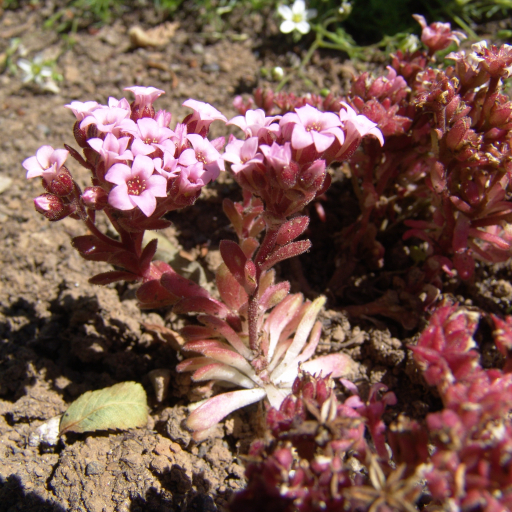
Plant Overview
Known as the Hairy Stonecrop, Sedum villosum is a charming rebel in the succulent world. While most of its cousins crave bone-dry cliffs and scorching sun, this tiny alpine gem prefers the cool, damp whispers of mountain bogs and mossy springs. With its soft, ruby-tinted foliage and starry blossoms, it looks like a delicate treasure dropped from a fairy tale.
🔍 How to Identify
- 🌸 The Flowers: Clusters of small, star-shaped flowers that range from pale pink to a delicate lilac, often featuring a darker pink vein running down the center of each petal.
- ☁️ Sticky Texture: Both the stems and leaves are covered in fine, glandular hairs (hence the name "villosum," meaning shaggy), which give the plant a slightly sticky feel to the touch.
- 🍃 Fleshy Leaves: The leaves are small, cylindrical, and alternate along the stem. They often blush a deep reddish-maroon when exposed to bright light or cooler temperatures.
🏡 In Your Garden
- 💧 The "Wet Feet" Exception: Unlike most stonecrops that rot in wet soil, this species thrives in moist, gritty environments. If you’re planting it at home, think "bog garden" rather than "rock garden"—it needs consistent moisture to mimic its natural sub-arctic habitat.
- 🌱 Short-Lived Beauty: This plant is often a biennial or a short-lived perennial. It focuses its energy on producing a magnificent flush of seeds, so don't be surprised if the parent plant fades after a heavy flowering season; it’s just making room for the next generation.
⚠️ Safety & Toxicity
- 🟢 Non-Toxic Status: Sedum villosum is generally considered non-toxic to humans and common household pets like cats and dogs.
- 👅 Mild Irritation: While not poisonous, the sap of many Sedums contains alkaloids that can cause a mild stomach ache if large quantities are eaten, or slight skin redness in very sensitive individuals. It is best enjoyed with the eyes, not the mouth!
✨ Fun Fact
The sticky hairs covering the plant aren't just for show! Scientists believe these "glandular hairs" help the plant trap a thin layer of humidity around its tissues, protecting this tiny succulent from drying out when the mountain winds pick up.

Detailed Care Instructions

Place in a bright room that is sun drenched almost all day. Or directly in a south-facing window.

Water-loving plants flourish in wet or sloppy soil and near ponds. The extensive root system enables these plants to absorb plenty of water. The surface of the soil should be kept moist at all times. Place your pot in a container filled with water to guarantee that plants get enough water. If the ground becomes dry, it is recommended that you water it well. Plants in smaller pots will need to be watered more frequently. Water the soil in which the plant is standing thoroughly using a watering can.








