Plant Overview
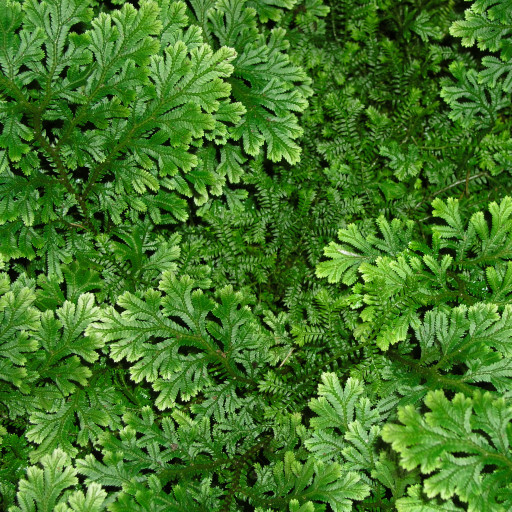
Often called "Spikemoss," Selaginella is a botanical time traveler that has graced the Earth for hundreds of millions of years. Despite its mossy name and fern-like appearance, it belongs to its own unique lineage of ancient "lycophytes." Whether it’s shimmering with a metallic blue hue or curling into a tight ball to survive a desert drought, this plant is a master of adaptation and ancient charm.
🔍 How to Identify
- 🍃 Scale-Like Foliage: Unlike true mosses, Selaginella has tiny, branching stems covered in minute, scale-like leaves that overlap like the shingles on a roof.
- 🧬 Rhizophores: Look for stiff, wire-like structures branching off the main stems. These are "rhizophores," which act as both anchors and roots to help the plant creep across the ground.
- 🌈 Color Variance: While many are deep forest green, species like the "Peacock Fern" (S. uncinata) display a stunning iridescent blue-green shimmer when kept in low light.
🏡 In Your Garden & Home
- ☁️ Humidity Lovers: These plants lack the thick, waxy cuticles of modern plants, meaning they lose water very quickly. They are the "gold standard" for terrariums or humid bathrooms where the air stays consistently moist.
- 🚫 No Direct Sun: In their natural habitat, they carpet the dim forest floor. Direct sunlight will quickly "bleach" or scorch their delicate scales, so they prefer the soft, dappled light of a north-facing window.
- 🏜️ The Resurrection Trick: Some species, like S. lepidophylla, can survive years of total dehydration by curling into a brown, dormant ball. Once placed in water, they "magically" unfurl and turn green within hours.
⚠️ Safety & Toxicity
- ✅ Pet & Child Safe: Most common Selaginella species are considered non-toxic to cats, dogs, and humans, making them a worry-free addition to a household.
- 👐 Physical Fragility: While not chemically dangerous, they are physically delicate. Their stems are brittle and easily broken by curious paws or heavy-handed pruning.
✨ Fun Fact
- Living Fossils: Selaginella ancestors were part of the vast coal forests of the Carboniferous period. They were thriving nearly 300 million years ago—long before the first flower ever bloomed or the first dinosaur walked the Earth!

Detailed Care Instructions
| Lighting | Part Sun |
To grow a Selaginella plant, you can follow these steps:
- Choose a suitable variety: There are many types of Selaginella plants available, so choose the one that you find visually appealing and suits your area's conditions (e.g., indoor or outdoor).
- Provide the right lighting: Selaginella plants thrive in filtered or indirect light. Avoid placing them in direct sunlight as it can scorch their delicate foliage.
- Maintain the right temperature and humidity: Most Selaginella plants prefer a moderately warm environment with temperatures around 65-75°F (18-24°C). They also appreciate high humidity levels, so misting them regularly or placing a tray of water nearby can help maintain humidity.
- Water properly: Selaginella plants like to stay consistently moist but not waterlogged. Water them thoroughly whenever the top inch of soil feels dry, ensuring good drainage to prevent root rot.
- Fertilize occasionally: Use a balanced, water-soluble houseplant fertilizer, following the instructions on the package. Apply it every 2-4 weeks during the growing season, which is usually spring and summer.
- Repot when needed: As your Selaginella plant grows, it may require repotting into a slightly larger container. Use a well-draining potting mix suitable for ferns and provide some additional soil for them to spread and grow.
- Prune if necessary: If your Selaginella plant becomes leggy or starts to lose its compact form, you can trim it back lightly. Pinching off the tips can encourage bushier growth.
- Watch for pests: Keep an eye out for common houseplant pests like aphids, spider mites, or mealybugs. If you notice any infestation, treat it promptly using organic or chemical pest control methods.
Remember that different species of Selaginella may have specific care requirements, so it's always good to research the particular variety you have to provide the best care for your plant.

Place in a dark room with little light, like a dark bedroom or a spot far away from a window or directly in a north-facing window.

To water this plant, it is important to keep the soil consistently moist, but not waterlogged. Allow the top inch of soil to dry out before watering again. Be careful not to oversaturate the soil, as this can cause rot and damage the plant. It is recommended to use room temperature or lukewarm water when watering, and to avoid getting water on the leaves as this can cause spotting and damage. Watering frequency may vary depending on factors such as temperature, humidity, and the size of the pot or container.
The best way to fertilize this plant is to use a balanced liquid fertilizer that is formulated for houseplants. Dilute the fertilizer according to the instructions on the package, and apply it to the soil around the plant once a month during the growing season. It is important not to over-fertilize this plant, as it can be sensitive to nutrient burn. In addition to regular fertilization, it is also important to keep the soil moist but well-drained, as this plant prefers consistent moisture.
The best soil to use with this plant is well-draining soil that is kept moist, but not waterlogged. It should be rich in organic matter and have good aeration to allow oxygen to reach the roots. The soil pH should be slightly acidic to neutral, ideally between 5.5 and 7.5. It is also important to ensure that the soil is free of pests and diseases, as Selaginella can be sensitive to fungal infections. A good potting mix for this plant consists of peat moss, perlite, and coarse sand or grit to improve drainage.
Selaginella plants can be propagated through spores or vegetative propagation. To propagate through spores, collect mature spores and sprinkle them on moist soil. Keep the soil moist and covered with clear plastic to maintain humidity. The spores should germinate within a few weeks.
To propagate through vegetative propagation, take cuttings from the parent plant. Make sure to include the stem and a few leaves. Dip the cut end in rooting hormone and plant in moist soil. Keep the soil moist and covered with clear plastic to maintain humidity. The cutting should begin to root within a few weeks.
Propagation can be done at any time of the year, but spring and summer are the best times for success. It is important to keep the soil moist and humidity high during the propagation process. Once the plant has rooted or the spores have germinated, it can be transplanted to its permanent location.







