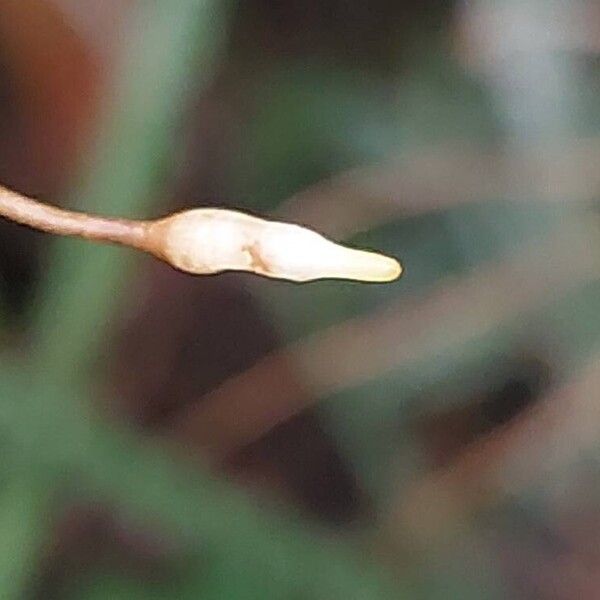
Plant Overview
Often called the Wandering Moon-Cereus, this cactus is a nocturnal acrobat of the plant world. Native to the coastal forests of Mexico, it is a trailing, epiphytic species that loves to "wander" over rocks or through tree canopies. It is most famous for its ghostly, massive white flowers that open for a single night, filling the midnight air with a heavy, sweet perfume to attract moths.
🔍 How to Identify
- 🌵 The Stems: Slender, green, and vine-like. They feature about 5 to 10 low ribs, giving them a rope-like or serpentine appearance as they drape over surfaces.
- 🌸 The Bloom: Incredible funnel-shaped flowers that can reach up to 15 cm in diameter. They feature brilliant white inner petals surrounded by brownish-yellow outer scales.
- 📍 Areoles and Spines: Small, felt-like spots along the stems bear short, needle-like spines that are typically yellowish or brownish, often becoming more sparse as the plant ages.
🏡 In Your Garden
- 🧗 The Need to Climb: Unlike a typical desert cactus, Selenicereus vagans is a climber. In a home setting, it thrives when given a trellis or a moss pole to grip, mimicking its natural habit of scaling tropical trees.
- 🌬️ Airy Roots: Because it naturally grows in rocky crevices or on bark, it is highly sensitive to root rot. It requires a "chunky" soil mix (like orchid bark mixed with cactus soil) to ensure maximum oxygen flow to the roots.
⚠️ Safety & Toxicity
- ✅ Non-Toxic Status: This plant is generally considered non-toxic to cats, dogs, and humans. It does not contain the dangerous alkaloids found in some other succulent species.
- 🌵 Physical Hazard: While not "poisonous," the small spines are sharp and can easily lodge in the skin or a curious pet's paw. It is best placed in a hanging basket or a high shelf away from high-traffic areas.
✨ Fun Fact
The genus name Selenicereus is derived from Selene, the Greek goddess of the Moon. This is a tribute to the plant's "Lunar" lifestyle—its spectacular flowers begin to open at sunset and are usually withered by the time the first rays of morning sun hit the stems.

Detailed Care Instructions

The presence of a dry surface layer of soil does not indicate that the plant requires water. Instead, stick your finger 1-2" (3-5 cm) deep in the soil to feel dampness or moisture content. If the soil seems dry, it's time to water your greens. If the soil is still moist, however, it is better not to water your plant and instead wait a day or two. Overwatering or waterlogging raises the risk of root rot. So if the soil takes longer than a week to dry, check the light conditions because it's likely that the plant isn't getting enough light. It's fine if the upper layer of soil is dry between waterings, but the deeper soil layer should always have some moisture.







