Plant Overview
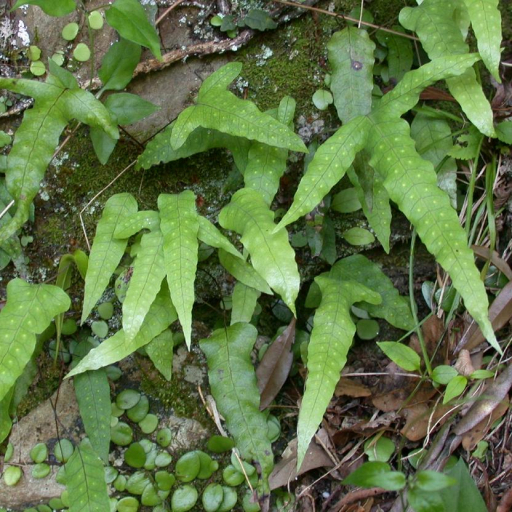
Commonly known as the Spear-Leaved Fern, Selliguea hastata is a prehistoric-looking epiphyte that brings a touch of ancient mountain mist to any collection. Native to the rocky cliffs and forest canopies of East Asia, this fern is a survivor, swapping the delicate, lacy fronds of its cousins for tough, leathery leaves. In its native Japan and Korea, it is often seen "climbing" mossy stone walls, looking like green arrowheads frozen in time.
🔍 How to Identify
- 🗡️ Leaf Shape: The fronds are uniquely "hastate" (spear-shaped) or trilobed, usually featuring one long central point and two smaller lobes at the base.
- 🦎 Texture & Color: Unlike soft ferns, these leaves are thick, waxy, and rigid. They have a deep emerald green color with prominent, raised veins that look like a roadmap.
- 🟠 The Spore Pattern: On the underside of mature leaves, you will find large, circular sori (spore clusters) that turn a striking rusty orange or golden brown, creating a beautiful polka-dot effect.
🏡 In Your Garden
- ☁️ The Epiphytic Habit: In nature, this plant grows on trees and rocks. This means it absolutely hates heavy, water-logged garden soil. It thrives best in a chunky "orchid-style" mix of bark, perlite, and moss.
- 💧 Humidity over Watering: While it enjoys moist roots, it craves high air humidity. If the edges of the "spears" begin to turn brown and crispy, it is likely a sign that your indoor air is too dry.
- 🧗 Mounting Potential: Because it has creeping rhizomes (stems that grow horizontally), this fern is a perfect candidate for mounting on a piece of cork bark or driftwood rather than sitting in a traditional pot.
⚠️ Safety & Toxicity
- ✅ Status: Non-Toxic.
- 🐾 Details: Selliguea hastata is generally considered safe for households with curious cats, dogs, and children. It contains no known irritants or poisons, though it’s always best to discourage pets from chewing on the leathery fronds to avoid digestive upset.
✨ Fun Fact
The specific epithet hastata comes from the Latin word hasta, meaning "spear." This isn't just a fancy name; in ancient Roman times, a hasta was a specific type of heavy thrusting spear used by legionaries, perfectly mirroring the sharp, pointed silhouette of this fern's foliage!

Detailed Care Instructions

Place in a window with dappled sun or a spot in the middle of a room. Or directly in a window facing west or east.

Water-loving plants flourish in wet or sloppy soil and near ponds. The extensive root system enables these plants to absorb plenty of water. The surface of the soil should be kept moist at all times. Place your pot in a container filled with water to guarantee that plants get enough water. If the ground becomes dry, it is recommended that you water it well. Plants in smaller pots will need to be watered more frequently. Water the soil in which the plant is standing thoroughly using a watering can.








