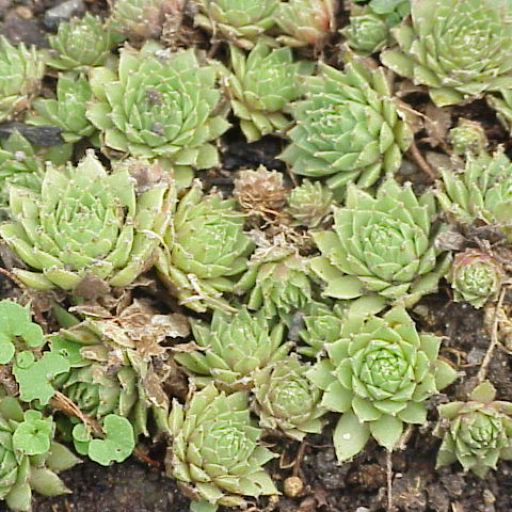
Plant Overview
Known as the Hairy Houseleek, Sempervivum ciliosum is a resilient little survivor from the rocky cliffs of the Balkans. Its name, "Sempervivum," translates to "Always Living," a nod to its incredible ability to withstand frost, scorching sun, and extreme drought. These rosettes look like silver-wrapped jewels, adding a touch of frosty, alpine elegance to any rock garden or container.
🔍 How to Identify
- 🧶 Soft Rosettes: Small, spherical clusters of succulent leaves that stay tightly packed to conserve moisture in harsh environments.
- ☁️ Silvery Fuzz: The entire plant is covered in dense, fine white hairs (cilia) that give it a "furry" or cobwebbed appearance, protecting the leaves from intense UV rays.
- 🌟 Golden Blooms: Unlike many of its pink-flowering relatives, this species sends up a thick, leafy stalk topped with bright, lemon-yellow, star-shaped flowers.
🏡 In Your Garden
- ⛰️ Alpine Roots: This plant thrives in "crevice gardens" or between stone gaps. It prefers gritty, poor soil over rich potting mixes; if the soil is too damp or heavy, its fuzzy coat will trap moisture and cause the plant to rot.
- 🐣 The Mother and Chicks: It spreads by producing tiny "offsets" or babies that circle the central mother plant. While the main rosette dies after it finishes flowering (a cycle called being monocarpic), its legacy lives on through the many "chicks" it leaves behind.
⚠️ Safety & Toxicity
- ✅ Safe & Non-Toxic: Sempervivum ciliosum is generally considered non-toxic to cats, dogs, and humans, making it a worry-free choice for household gardens.
- 🖐️ Handle with Care: While the hairs are soft and not prickly, avoid over-handling the foliage. The oils from your skin can mat down the delicate silver cilia, which the plant uses to breathe and regulate temperature.
✨ Fun Fact
In ancient European folklore, Houseleeks were frequently planted on thatched roofs because people believed they were the "claws of the thunder god" and would protect the home from lightning strikes and fires!

Detailed Care Instructions
To grow Sempervivum ciliosum (Cobweb Houseleek), follow these steps:
- Planting: Select a well-draining soil mix containing equal parts of sand, perlite, and potting soil. Fill a pot or container with this mix, leaving some room for the plant to grow. Alternatively, you can plant it directly in your garden if the soil is sandy and drains well.
- Sunlight: Place the plant in a sunny location where it can receive at least 6 hours of direct sunlight per day. Sempervivum ciliosum prefers full sun but can tolerate some light shade.
- Watering: Allow the soil to dry out between waterings. Overwatering can cause root rot and lead to the plant's decline. Water deeply but infrequently, ensuring that the excess water drains out completely.
- Temperature and humidity: Sempervivum ciliosum is a hardy plant and can withstand various temperature ranges. However, it grows best in temperatures between 60-75°F (15-24°C). It does not require high humidity and can survive in arid conditions.
- Fertilizer: Sempervivum ciliosum is a low-maintenance plant that doesn't require frequent fertilization. Apply a balanced, slow-release fertilizer in early spring, following the package instructions. Avoid over-fertilizing, as it can lead to weak growth.
- Propagation: Sempervivum ciliosum can be propagated by gently pulling off the offsets (small rosettes that grow at the base of the main plant) and replanting them in a separate pot or directly in the garden. Allow the offsets to callus over for a day or two before planting them. Water sparingly until you see new growth.
- Pest and disease control: Sempervivum ciliosum is generally resistant to pests and diseases. However, watch out for mealybugs, aphids, and root rot. In case of infestation, you can use insecticidal soap or diluted neem oil to control pests.
- Maintenance: Remove any dead or decaying leaves to keep the plant tidy. Trim any spent flower stalks after they have finished blooming.
By following these guidelines, your Sempervivum ciliosum should thrive and gradually form clusters of beautiful rosettes.

Place in a bright room that is sun drenched almost all day. Or directly in a south-facing window.

To water this plant, wait for the soil to dry out completely before watering again. When watering, pour water evenly across the soil surface until it begins to drain out of the bottom of the pot. Avoid getting water on the leaves as this can cause rot. During periods of high heat and dryness, increase watering frequency slightly.
To fertilize this plant, use a balanced fertilizer with an N-P-K ratio of 10-10-10. Apply the fertilizer sparingly once every 4 to 6 weeks during the growing season, which is typically in the spring and summer. Avoid getting the fertilizer on the leaves of the plant, instead apply it directly to the soil. Make sure to water the plant thoroughly after fertilizing to help the nutrients penetrate the soil.
Sempervivum ciliosum requires a well-draining soil mix that is rich in organic matter. A combination of sand, perlite and peat moss promotes moisture retention while allowing excess water to drain away from the roots. The soil should have a slightly acidic to neutral pH level and be free of any chemical additives or fertilizers. It is important to avoid using heavy or compacted soils that can retain too much moisture, leading to root rot and other diseases. Additionally, Aim to use a soil mix that is specific to succulent plants, as it will provide the ideal growing conditions for the Sempervivum ciliosum.
To propagate this plant, you can take offsets or baby plants that grow around the mother plant. Carefully remove these baby plants from the mother plant with a sharp knife or garden shears, ensuring that each offset has some roots attached.
Next, prepare a well-draining potting mix and plant the offsets in it. Keep the soil moist but not too wet, and place the pot in a well-lit area with indirect sunlight. The temperature should be cool to moderate, between 55-75°F (12-24°C).
It is important to avoid overwatering the newly planted offsets, as this can cause them to rot. Once they have established roots and growth has begun, you can reduce the frequency of watering and allow the soil to dry out slightly before watering again.
Within a few weeks, the new plants should start to produce their own offsets, allowing you to continue propagating and expanding your collection. With time and proper care, these plants will grow into healthy specimens that can be enjoyed for many years to come.
Common pests of the hens n chicks include Scale insect, mealybugs, thrips. Make a habit of checking your hens n chicks frequently for pests so that any infestations can be caught and managed early.








