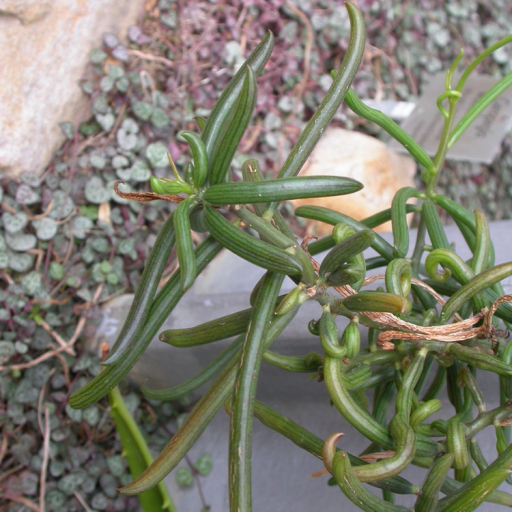
Plant Overview
Hailing from the arid landscapes of Madagascar, Senecio antandroi is often called the "Cylindrical Senecio" or simply "Blue Sticks." It is a striking succulent that looks more like a collection of undersea coral or a bundle of blue-tinted pencils than a traditional garden plant. Its architectural silhouette makes it a favorite for modern xeriscapes and minimalist indoor collections.
🔍 How to Identify
- 🌵 Foliage Shape: The leaves are long, slender, and perfectly cylindrical, tapering slightly at the ends like thin fingers.
- 🎨 Coloration: The plant boasts a soft, glaucous blue-green hue, often covered in a waxy "farina" coating that protects it from intense sunlight.
- 🌼 Blooms: In late summer or autumn, it surprises growers with clusters of small, bright yellow daisy-like flowers that contrast sharply against the blue stems.
🏡 In Your Garden
- ☀️ Light & Color: To maintain its signature silvery-blue color, this plant requires high light levels. In low light, it will turn a dull green and begin to "stretch" (etiolate), losing its compact, upright charm.
- 💧 Drainage Needs: Coming from Madagascar’s rocky regions, it has evolved to survive long droughts. It possesses a shallow root system that is highly susceptible to rot; always use a gritty cactus mix and terracotta pots to allow the soil to breathe.
- ✂️ Growth Habit: It starts upright but can become sprawling and "leggy" over time. Don't be afraid to prune it back in early spring to encourage a bushier, more controlled shape.
⚠️ Safety & Toxicity
- 🚫 Toxicity Status: Like most members of the Senecio genus, this plant contains pyrrolizidine alkaloids, which are toxic if ingested.
- 🐾 Pets & Kids: Keep this plant out of reach of curious cats, dogs, and toddlers. Ingestion can cause lethargy, vomiting, and, in severe cases, liver damage.
- 🧤 Skin Sensitivity: The milky sap inside the stems can cause mild skin irritation for those with sensitive skin. It is best to wear gloves when pruning or taking cuttings.
✨ Fun Fact
Despite its alien, stick-like appearance, Senecio antandroi is actually a member of the Asteraceae family. This means it is a distant relative of the common Sunflower and the humble Daisy, which explains why its tiny flowers look like miniature yellow suns!

Detailed Care Instructions

Place in a bright room that is sun drenched almost all day. Or directly in a south-facing window.

Senecio Antandroi grows in a wild habitat, where it receives little water and is drought-tolerant. Therefore, it's best to avoid overwatering this plant as it can lead to root rot and other water-related diseases. It is recommended to water the plant once a week during its growing season, and even less frequently during its dormancy period.
Before watering, always make sure to check if the topsoil is dry, as this means that the plant needs water. To water the plant, soak the soil thoroughly until the water runs out of the bottom of the pot. Avoid watering the leaves and stem of the plant, as it can cause rot and fungus growth.
It's essential to use well-draining soil and a container with proper drainage holes to prevent overwatering. Also, it's always better to use filtered or distilled water as tap water can contain chemicals that can harm the plant.
Lastly, remember that Senecio Antandroi is a succulent plant that stores water in its leaves. Therefore, it can survive without water for an extended period, making it perfect for those who don't want to water their plants frequently.
Without the need of fertilizer, these plants can thrive and bloom. If a plant requires fertilization, it will display indicators of nutrient insufficiency, such as yellowing leaves. It is safe to apply slightly diluted fertilizers in these circumstances. Over fertilizing, on the other hand, should be avoided because excess nutrients might cause plant mortality. Slow-release fertilizers are therefore advised for these plants.
You may use Cactus Fertilizer for your Dwarf Clone
The ideal soil for the Senecio Antandroi plant is a well-draining mix that is light, porous, and provides good aeration to the roots. The soil should be slightly acidic with a pH level of 6.0 to 6.5.
It is recommended to use a soil mix that is a combination of perlite, coco coir, and vermiculite. This mix will provide adequate drainage and good moisture retention, which is essential for this plant's growth.
Avoid using heavy, compacted soil, as it can lead to waterlogging, root rot, and damage to the plant. Additionally, the soil should be free of any pests, diseases, or weeds that can harm the plant's health.
It is also important to amend the soil with organic matter, such as compost or worm castings, to provide essential nutrients that can promote healthy growth and development. Finally, always ensure that the soil is moist but not waterlogged, as this can also lead to problems with the Senecio Antandroi plant.
Common pests of the dwarf clone include Scale insect, mealybugs, spider mites, thrips. Make a habit of checking your dwarf clone frequently for pests so that any infestations can be caught and managed early.








