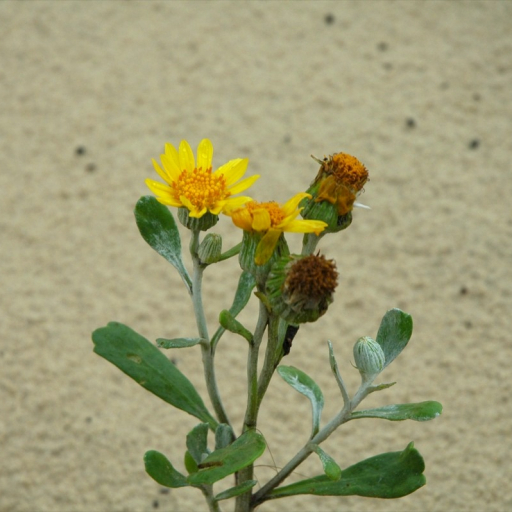
Plant Overview
Known affectionately as the "Silver Creeper" or "Woolly Ragwort," this stunning succulent hails from the sandy Atlantic coastlines of South America. It is a master of disguise, often looking more like a piece of ornate silver jewelry than a living plant. Evolution has gifted it a shimmering velvet coat to survive the harsh salt spray and intense sun of its native dunes.
🔍 How to Identify
- 🍃 The Foliage: Fleshy, paddle-shaped leaves covered in a dense, felt-like layer of silver-white hairs that feel like soft velvet to the touch.
- 🌼 The Flowers: Bright, cheerful yellow daisy-like blooms that emerge on short stems, creating a striking "gold-on-silver" contrast.
- 🌱 Growth Habit: A low-growing, prostrate plant that spreads horizontally, forming a thick, luminous carpet across the ground.
🏡 In Your Garden
- 🏖️ Coastal Resilience: Because it originated in coastal dunes, this plant is incredibly salt-tolerant. It’s a perfect choice for seaside gardens where other plants might wither from the salty breeze.
- ☀️ Sunscreen Coating: That silver "fuzz" (called tomentum) isn't just for aesthetics—it acts as a natural sunblock, reflecting UV rays and trapping moisture close to the leaf to prevent dehydration.
- 💧 Drainage is Key: It hates "wet feet." To mimic its sandy home, ensure your soil is gritty and fast-draining, otherwise, the succulent roots may succumb to rot.
⚠️ Safety & Toxicity
- 🚫 Status: Toxic to humans and pets.
- 🐾 Details: Like many members of the Senecio family, this plant contains pyrrolizidine alkaloids. If ingested, these can cause liver irritation or damage in cats, dogs, and horses. It is best kept as a decorative groundcover away from grazing pets or curious toddlers.
✨ Fun Fact
The name crassiflorus translates to "thick flower," but the plant is most famous for its "halophytic" traits—the rare ability to not only survive but thrive in high-salt environments that would kill most other garden plants!

Detailed Care Instructions
To grow Senecio crassiflorus, also known as the blue chalksticks or blue fingers, follow these steps:
- Select a location: Choose a sunny spot in your garden or a spot with bright indirect light if growing indoors. This plant requires at least 6 hours of sunlight daily.
- Soil requirements: Blue chalksticks prefer well-draining soil. Ensure the soil is sandy or loamy and has good drainage to prevent waterlogging, which can cause root rot.
- Propagation: You can propagate blue chalksticks from cuttings. Take stem cuttings from healthy plants during the growing season, making sure they are around 4-6 inches long. Allow the cuttings to callous over for a few days before planting.
- Planting: Dig a small hole in the soil and place the cutting in it, ensuring at least one node is buried. Gently firm the soil around the cutting to secure it. Keep the soil slightly moist until roots develop.
- Watering: Once established, blue chalksticks are drought-tolerant and need water sparingly. Water the plant only when the soil is completely dry. Overwatering can lead to root rot.
- Fertilization: Blue chalksticks do not require much fertilizer. You can use a balanced, slow-release fertilizer during the growing season, following the instructions on the package.
- Pruning: Prune the plant in early spring to remove dead or wilted stems. This helps maintain the plant's shape and encourages new growth.
- Pests and diseases: Blue chalksticks are generally hardy and not prone to many pests or diseases. However, watch out for mealybugs or aphids and treat them promptly if detected.
- Winter care: If you live in a region with frost or freezing temperatures, it's advisable to bring your blue chalksticks indoors. Place them in a cool, bright location and reduce watering during the winter months.
Blue chalksticks are relatively easy to grow and make stunning additions to rock gardens, containers, and succulent arrangements. They are low-maintenance plants that add visual interest with their silvery-blue, finger-like leaves.

Place in a bright room that is sun drenched almost all day. Or directly in a south-facing window.

To water this plant, you should allow the soil in the pot to dry out completely before watering again. When watering, thoroughly saturate the soil, allowing excess water to drain out of the bottom of the pot. The plant prefers well-draining soil and should not be allowed to sit in standing water. It is also important to avoid getting water on the leaves, as this can cause damage or disease. During the winter months, watering should be reduced to prevent the soil from becoming waterlogged.
- Choose a well-draining potting soil that is rich in nutrients, such as compost or perlite.
- Make sure that the pot being used is at least two inches larger in diameter than the plant's root system.
- Feed the plant every two to three weeks with a balanced liquid fertilizer that has a ratio of 10-10-10.
- Dilute the fertilizer with water, following the instructions on the package.
- Apply the fertilizer to the soil around the plant, avoiding the foliage or stem.
- Water the plant thoroughly after fertilizing to help distribute the nutrients throughout the soil.
- Do not over-fertilize, as this can harm the plant. Follow the recommended dosage on the fertilizer package.
Senecio Crassiflorus plant requires a soil mixture that is well-draining and has good aeration. The soil should be slightly acidic to neutral, with a pH range of 6.0 to 7.0. It is best to use a mixture of light, sandy soil with some organic matter, such as peat moss or leaf mold. Adding perlite or coarse sand can help improve drainage. The plant prefers a soil that is not too rich or heavy, as this can lead to root rot. Regular watering is necessary, but it is important to avoid overwatering, as the plant is susceptible to rot. Feeding with a balanced fertilizer every 2-4 weeks during the growing season can help promote healthy growth.
Senecio Crassiflorus is a hardy perennial plant, native to a number of regions around the world. It's a member of the Asteraceae family, and is known for its attractive foliage and small flowers.
To propagate Senecio Crassiflorus, you can take cuttings from the plant and root them in water or soil. Here are the steps to follow:
- Choose a healthy, mature plant with plenty of stems to take cuttings from.
- Use a clean, sharp pair of scissors or pruning shears to cut a stem from the plant. Make the cut just below a leaf node. The stem should be about 4-6 inches long.
- Remove the leaves from the bottom half of the stem. You want to have a bare stem section to insert into the rooting medium.
- Dip the cut end of the stem in rooting hormone powder. This will encourage the stem to produce roots more quickly.
- Insert the stem into a pot filled with moist, well-draining soil. You can also root the stem in a jar of water if you prefer.
- Keep the pot or jar in a warm, bright location, but out of direct sunlight. The soil should be kept evenly moist, but not waterlogged.
- In a few weeks, you should see new growth on the stem and possibly even roots emerging from the base. Once the stem has established roots, you can transplant it into a larger pot or directly outdoors.
By following these simple steps, you can easily propagate Senecio Crassiflorus and enjoy the beauty of this lovely plant in your own home or garden.
Common pests of the propeller plant include Mealybugs, spider mites, thrips. Make a habit of checking your propeller plant frequently for pests so that any infestations can be caught and managed early.








