Plant Overview
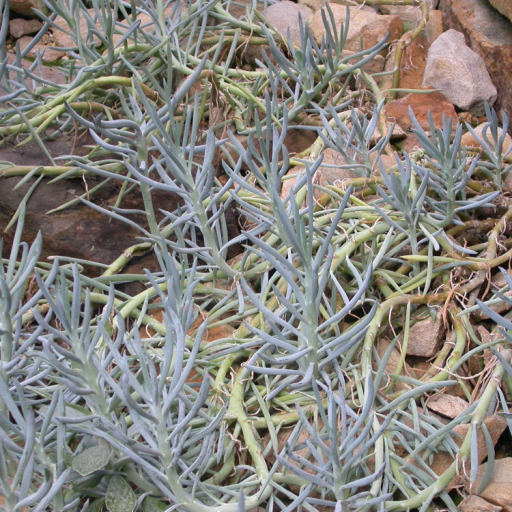
Often called the "Skyscraper Senecio" or "Mount Everest," this South African succulent looks like a cluster of frozen blue flames reaching for the sun. It is a standout in any collection for its intense silvery-blue hue and its unusual vertical growth habit. In its native habitat, it clings to rocky slopes, but in the home, it serves as a stunning, low-maintenance architectural piece.
🔍 How to Identify
- 🌵 The Leaves: Fleshy, blade-like leaves that are distinctly flattened on the sides and taper to a sharp point.
- ❄️ The "Glow": The entire plant is covered in a thick, waxy coating called "farina." This gives it a ghostly, matte blue or silver-grey appearance.
- 📏 Growth Habit: Unlike its low-growing "Blue Chalkstick" cousins, Senecio ficoides grows tall and upright, easily reaching 3 to 4 feet in height if given the space.
🏡 In Your Garden
- ☀️ Sunscreen Secrets: The powdery blue coating isn't just for looks; it acts as a natural sunscreen. To keep that vibrant blue color, the plant needs plenty of direct sunlight. In low light, it will turn green and "stretch" (become leggy).
- 🚫 Hands Off: Avoid touching the leaves whenever possible. The white powder is easily rubbed off by fingers and does not grow back on old leaves, leaving behind permanent green fingerprints.
- 💧 Drainage is King: Because it originates from rocky outcrops, it has a very sensitive root system. It thrives in "neglect" and requires gritty, fast-draining soil to prevent the stems from turning mushy.
⚠️ Safety & Toxicity
- 🐾 Status: Toxic to pets and humans.
- 🤢 Details: Like many members of the Senecio family, it contains pyrrolizidine alkaloids. If ingested by cats, dogs, or horses, it can cause lethargy, vomiting, and in severe cases, liver damage. It is best kept on high shelves away from curious nibblers.
✨ Fun Fact
The waxy farina on the leaves is so effective at reflecting heat and UV rays that the plant can stay significantly cooler than the surrounding air temperature during a scorching desert afternoon!

Detailed Care Instructions
To grow Senecio ficoides, or the blue chalksticks plant, you can follow these steps:
- Purchase a healthy Senecio ficoides plant from a reputable nursery or garden center. You can also try planting from seeds, but this may take longer.
- Select a suitable location for your plant. Senecio ficoides thrives in full sun to partial shade. Ensure the area has well-draining soil.
- Prepare the soil by mixing in organic matter like compost to improve fertility and drainage.
- Dig a hole slightly larger than the pot size of your plant or for the seeds to be planted.
- Place the plant or seeds in the hole, covering the roots or seeds with soil. Press the soil gently around the plant or seeds to secure them.
- Water the plant or seeds thoroughly after planting, providing enough moisture for the soil to settle around them. Avoid overwatering, as this can lead to root rot.
- Water the plant regularly but allow the soil to dry out between waterings. Senecio ficoides is drought-tolerant and prefers to be slightly dry rather than overly moist.
- Fertilize sparingly with a balanced, water-soluble fertilizer during the growing season, about once every two months. Ensure you follow the instructions on the fertilizer packaging for the correct dosage.
- Prune any leggy or trailing growth to maintain a compact and bushy shape. This can be done by pinching off the tips or using clean pruning shears.
- Protect the plant from frost or cold temperatures, as it is sensitive to extreme cold. If winter temperatures drop below 32°F (0°C), move the plant indoors or provide protection, such as covering it with a blanket or using a greenhouse or cold frame.
By following these steps, you should be able to successfully grow the Senecio ficoides plant. Enjoy watching it thrive and grow!

Place in a bright room that is sun drenched almost all day. Or directly in a south-facing window.

To water this particular plant, you should ensure that the soil is thoroughly moist but not waterlogged. Watering frequency will depend on the type of soil, humidity levels, and the amount of sunlight the plant receives. A good rule of thumb is to water when the top inch of soil feels dry to the touch. When watering, try to water at the base of the plant and avoid getting the leaves wet to prevent the occurrence of fungal diseases. It is also important to use room temperature water to prevent shock to the plant's roots. As this plant is native to a particular region, it is recommended to research the plant's requirements before planting to ensure adequate care.
- Choose a well-draining pot or site for planting.
- Mix in a slow-release, all-purpose fertilizer into the soil before planting.
- Water thoroughly after planting.
- Apply a balanced liquid fertilizer every 2-3 weeks during the growing season.
- Avoid over-fertilizing, as this can lead to burned roots and foliage.
- Refrain from fertilizing during the winter months, as the plant is dormant.
Senecio ficoides is a type of plant that requires well-draining soil that is low in organic matter. The ideal soil for this plant would be a sandy or gravelly soil mix with a pH level of 5.5 to 6.5. It also benefits from added perlite or coarse sand to improve drainage and prevent waterlogging. It is important to avoid overwatering this plant and to only water it when the soil is dry to the touch. Additionally, regular fertilization with a balanced, water-soluble fertilizer can help promote healthy growth.
To propagate this plant, select a healthy stem and cut it just below a leaf node. Remove the leaves from the lower part of the stem, leaving only a few at the top. Dip the cut end of the stem into rooting hormone and plant it in moist soil, making sure it is inserted deep enough to ensure the stem is secure. Water the soil and cover the pot with a plastic bag to maintain humidity. Place the pot in a bright, warm spot, but out of direct sunlight. After a few weeks, the stem should begin to develop roots. Once the roots have formed, the plant can be repotted into a larger pot or directly into the ground.
Common pests of the blue chalkstick include Mealybugs, thrips. Make a habit of checking your blue chalkstick frequently for pests so that any infestations can be caught and managed early.







