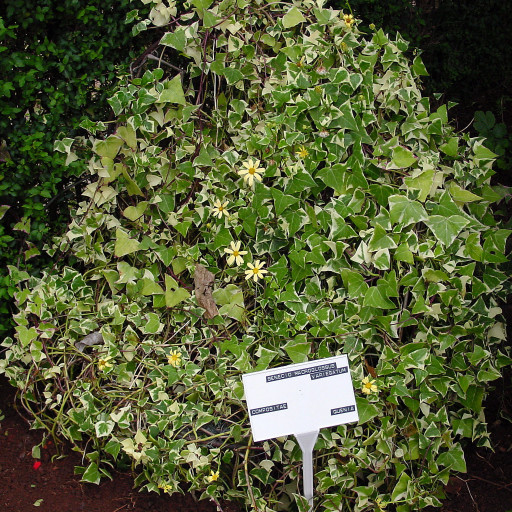
Plant Overview
Often masquerading as a common ivy, Senecio macroglossus—better known as Cape Ivy or Wax Ivy—is actually a succulent in disguise. While it perfectly mimics the classic trailing look of English Ivy, it is a hardy traveler from South Africa with a surprising secret: it is a member of the daisy family. This plant is the perfect "set it and forget it" climber for those who love the lush vine aesthetic but want the low-maintenance resilience of a desert plant.
🔍 How to Identify
- 🍃 The Waxy Foliage: The leaves are thick, succulent, and incredibly glossy. They are shaped like sharp-edged triangles (deltoid) and feel much sturdier and "fleshier" than true ivy.
- 🌼 Surprise Blooms: Unlike true ivy, which has inconspicuous green clusters, this plant produces charming, pale yellow, daisy-like flowers, typically appearing in winter or spring.
- 🌿 Purple Hues: The slender, flexible stems often take on a beautiful purplish-maroon tint, especially when the plant is grown in bright, indirect sunlight.
🏡 In Your Garden
- ☀️ The Sun-Seeker: Because it is a succulent, it craves significantly more light than standard ivies. If the stems become "leggy" or the gaps between leaves get very long, it’s a sign the plant is stretching toward a light source.
- 💧 Drought Resilience: It stores moisture in its fleshy leaves, making it very forgiving of a missed watering. It hates "wet feet," so ensure the soil is completely dry before giving it a soak; overwatering is the quickest way to cause root rot.
- 🧗 A Gentle Climber: Unlike English Ivy, which uses "sticky" aerial roots to cling to walls, Cape Ivy climbs by twining its stems. This makes it a much safer choice for indoor trellises or hanging baskets, as it won't damage your paint or masonry.
⚠️ Safety & Toxicity
- 🐾 Toxic to Pets: This plant is considered toxic to cats, dogs, and horses. It contains pyrrolizidine alkaloids, which can lead to liver complications if ingested in significant amounts.
- 👶 Child Safety: While not usually fatal in small doses, ingestion can cause stomach upset and vomiting. It is best kept in a hanging basket out of reach of curious toddlers.
- 🧤 Skin Sensitivity: The sap can be a mild irritant for some individuals. If you are pruning heavily, wearing gloves is a good precaution to avoid "sap itch."
✨ Fun Fact
The specific name macroglossus translates to "large tongue." This isn't about the leaves, but rather the unusually long, tongue-like petals (ray florets) that make up its yellow daisy flowers!

Detailed Care Instructions
| Humidity | Normal |
| Lighting | Full Sun |
| Difficulty | Medium |
| Temperature | Min 24°C |
| Hardiness Zones | Min 10 |
To grow Senecio Macroglossus (also known as wax ivy or variegated German ivy), you can follow these steps:
- Select a healthy and well-established Senecio Macroglossus plant or purchase one from a reputable nursery.
- Choose a suitable location for the plant. Senecio Macroglossus prefers bright, indirect sunlight, but it can also tolerate some shade. Avoid placing it in direct sunlight as it may scorch the leaves.
- Make sure the soil is well-draining. Use a well-draining potting mix or amend the soil with perlite or sand to improve drainage.
- Water the plant regularly, but do not overwater. Allow the top inch of soil to dry out before watering again. Aim to keep the soil evenly moist, but not waterlogged.
- Fertilize the plant occasionally. Use a balanced, liquid fertilizer diluted to half strength, and apply it during the growing season (spring and summer) about once every two to three weeks.
- Provide support for the Senecio Macroglossus to climb or trail on. You can use a trellis, a moss pole, or let it cascade down from a hanging basket.
- Prune the plant periodically to maintain its shape and promote bushier growth. Pinch off the tips of the stems to encourage branching.
- Monitor for any pest infestations, such as mealybugs or spider mites, and treat them promptly if detected. Use an appropriate insecticidal soap or other organic pest control methods.
- Consider propagating the Senecio Macroglossus through stem cuttings if you want to create more plants. Take 4-6 inch long stems, remove the lower leaves, dip the cut end in rooting hormone, and plant them in moist, well-draining soil. Keep them in a warm and humid environment until roots develop.
By following these steps, you should be able to successfully grow Senecio Macroglossus.

Place in a bright room that is sun drenched almost all day. Or directly in a south-facing window.

To ensure the adequate watering of this plant, one should take into consideration a few factors. Firstly, the pot or container used to house the plant should have drainage holes to prevent waterlogging. Secondly, the frequency of watering would depend on the season and the plant's growth phase. During the active growing season, one should water the plant when the top inch of soil is dry to the touch. In contrast, during the dormant season, the plant should be watered sparingly. Additionally, the water used should be at room temperature and not too cold to avoid shocking the plant's roots. Finally, it is always beneficial to monitor the plant's growth and appearance to determine whether it needs watering or not.
- Choose a good-quality fertilizer that is rich in nitrogen and phosphorus.
- Dilute the fertilizer according to the instructions on the packaging.
- Apply the fertilizer to the soil around the base of the plant, avoiding any contact with the leaves or stems.
- Water the plant thoroughly after fertilizing to help the nutrients penetrate the soil and reach the roots.
- Repeat the fertilization process every four to six weeks during the active growing season.
The best type of soil to use for this plant is a well-draining soil mixture that is rich in organic matter. It should be slightly acidic, with a pH of around 6.0 to 6.5. Avoid using heavy soils that retain water, as this can lead to root rot. A mixture of equal parts peat moss, perlite, and potting soil can provide the ideal growing conditions for this plant. Be sure to amend the soil with fertilizer or compost to provide nutrients for the plant to thrive.
To propagate this plant, take a cutting from the stem of a healthy plant using clean, sharp pruning shears. The cutting should be about 6 inches (15 cm) long and should have several sets of leaves. Remove the lower leaves from the cutting, leaving only the top few. Dip the bottom of the cutting in rooting hormone powder and plant it in a pot filled with well-draining soil. Water the cutting thoroughly and cover it with a plastic bag to create a humid environment. Keep the cutting in indirect light and maintain the soil's moisture level by misting the soil occasionally. After two to three weeks, the cutting should have developed roots. Remove the plastic bag and continue to care for the plant as usual.
Common pests of the natal-ivy include Mealybugs, spider mites, aphids, thrips. Make a habit of checking your natal-ivy frequently for pests so that any infestations can be caught and managed early.








