Plant Overview
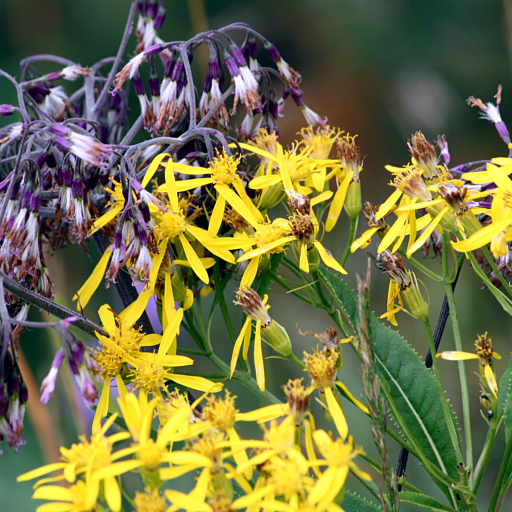
Often called the Woodland Ragwort, Senecio nemorensis is a golden sentinel of the forest edge. Native to the mountain ranges and damp woodlands of Europe and Asia, it acts as a bright beacon for pollinators in dappled sunlight. While it looks like a friendly common wildflower, it possesses a rugged, hardy character that allows it to thrive in high altitudes where more delicate "daisies" might struggle.
🔍 How to Identify
- 🌼 Sunny Blooms: It features loose clusters of bright yellow, star-shaped flowers. Each flower head has distinct "petals" (ray florets) that give it a classic daisy-like appearance.
- 🍃 Saw-Toothed Leaves: The foliage is lance-shaped and long, featuring sharp, serrated edges that look almost like the teeth of a saw.
- 📏 Stately Stems: It grows remarkably upright and sturdy, often reaching heights of 3 to 5 feet, allowing it to peek over tall grasses and ferns.
🏡 In Your Garden
- 🌲 The Shade Specialist: Unlike many sun-hungry ragworts, this species prefers the cool, moist environments of forest margins. It is perfect for a "wild" corner of the garden where other flowers might find it too dim.
- 🦋 Pollinator Banquet: It is a vital nectar source for hoverflies, bees, and several species of specialist moths. If you want to support local biodiversity, this plant is an excellent host.
- 💧 Moisture Seeker: It hates drying out. If the soil becomes too sandy or parched, the leaves will quickly wilt, signaling its need for a deep drink and some organic mulch.
⚠️ Safety & Toxicity
- 🚫 Toxic Alkaloids: Caution is required. Like most members of the Senecio genus, this plant contains pyrrolizidine alkaloids, which can cause cumulative liver damage if ingested.
- 🐾 Livestock & Pets: It is particularly dangerous for horses and cattle if it finds its way into hay. While it is rarely eaten fresh due to its bitter taste, it should be kept out of reach of curious pets and children.
✨ Fun Fact
- 🧬 A Botanical Puzzle: Senecio nemorensis is part of a "species complex," meaning it is so good at adapting to its environment that botanists often struggle to tell it apart from its close relatives. It frequently hybridizes, creating unique local versions of itself across different mountain ranges!

Detailed Care Instructions
To grow Senecio nemorensis (also known as Mountain Groundsel or Old Man of the Mountain), follow these steps:
- Choose the right location: Senecio nemorensis prefers full sun to partial shade. Ensure the planting area has good drainage, as excessive moisture can cause root rot.
- Prepare the soil: The soil should be well-draining and rich in organic matter. If the soil is heavy or clay-like, incorporate compost or well-rotted manure to improve its texture and fertility.
- Sow seeds or plant cuttings: You can propagate Senecio nemorensis from seeds or cuttings. If starting from seeds, sow them directly into the prepared soil during spring or fall. Cover the seeds lightly with soil and gently water them.
- Watering: Provide regular watering to keep the soil evenly moist until the seeds germinate or the cuttings establish roots. Once established, Senecio nemorensis is moderately drought-tolerant and can tolerate dry spells.
- Fertilizing: Senecio nemorensis generally doesn't require excessive fertilization. However, you can apply a balanced, slow-release fertilizer during the growing season to promote healthy growth.
- Pruning: To maintain a neat appearance, remove any dead or damaged leaves and stems. Prune back the plant in early spring to encourage new growth.
- Pests and diseases: Senecio nemorensis is relatively resistant to pests and diseases. However, it can occasionally be susceptible to aphids or powdery mildew. Monitor the plants regularly and take appropriate action if any issues arise.
- Mulching: Apply a layer of organic mulch around the plant to help retain moisture, control weeds, and regulate soil temperature. Avoid mulching too close to the plant's stem to prevent rot.
- Division: If the plant becomes crowded or leggy, you can divide it in early spring or fall. Gently dig up the clump, separate the sections, and replant them in the desired locations.
- Winter care: Senecio nemorensis is hardy in USDA zones 4-9. It can tolerate mild frosts but may benefit from a layer of mulch or straw for added protection during harsh winters.
Remember to research and follow any specific care instructions for the particular variety or cultivar of Senecio nemorensis you're growing, as different varieties may have slight variations in their requirements.

Place in a bright room that is sun drenched almost all day. Or directly in a south-facing window.

To water this plant, first, you must ensure that the soil is dry at least 1 inch deep before watering. This plant prefers a moderate amount of water, so avoid over-watering it. When watering, pour water gently onto the soil and ensure that it reaches the plant's roots. Avoid getting water on the foliage as this can lead to rot. Let the soil drain and remove any excess water from the saucer or tray. Water this plant once a week during its growing season and reduce watering during the winter months.
To fertilize this plant, choose a balanced, water-soluble fertilizer with an N-P-K ratio of 10-10-10 or 20-20-20. Mix the fertilizer according to the package instructions and apply it to the soil around the base of the plant. Water the plant thoroughly after fertilizing to help it absorb the nutrients. Fertilize every four to six weeks during the growing season, which is typically from spring to fall. Be careful not to over-fertilize, as this can damage the plant's roots and foliage.
Senecio Nemorensis plants prefer a well-draining soil that is rich in nutrients. The soil should be moist but not overly waterlogged, as this can lead to root rot. A good mix for this plant would include a blend of organic matter such as peat moss and compost, as well as perlite or vermiculite to improve drainage. It is also beneficial to add a slow-release fertilizer to the soil during planting, as this will provide the plant with a steady supply of nutrients over time. Overall, a soil that is light, loose, and well-aerated is ideal for Senecio Nemorensis plants to thrive.
Senecio Nemorensis can be propagated through stem cuttings. Choose a healthy stem and cut it at a 45-degree angle using a sharp, clean pair of scissors or pruning shears. Remove any leaves from the bottom 1-2 inches of the stem, and dip the cut end into rooting hormone powder. Plant the cutting in moist soil in a small pot, and keep it in a warm, bright spot out of direct sunlight.
Keep the soil moist, but not waterlogged, and cover the pot with a clear plastic bag to create a mini greenhouse. This will help to retain moisture and create a humid environment for the cutting. After a few weeks, roots should begin to form. Once the cutting has established roots, remove the plastic covering and gradually acclimate the plant to normal room conditions.








